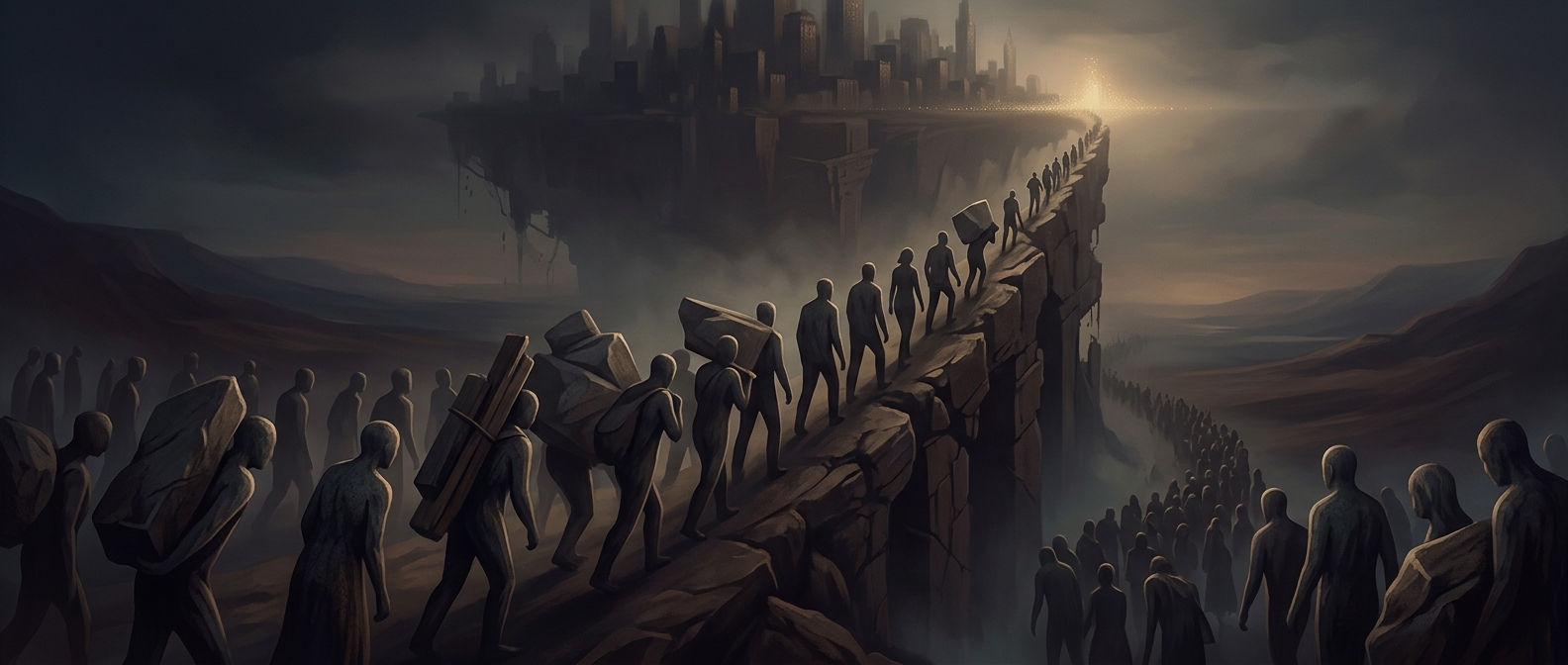
Why a harvest can fail to become progress
A household living close to the edge faces a timing problem, not simply a lack of ambition. Grain kept back for planting is grain that cannot be eaten now. A tool may raise next season’s output, but buying or making it can mean going without food today. When immediate needs are pressing, the future gain may not be a realistic option.
This is a surplus constraint: investment requires something left after basic needs are met. Without that margin, families may have to use up seed, sell tools, or take on obligations to get through a bad stretch. Those choices can make the next harvest harder to produce, tightening the constraint again.
Why the cycle can persist
The problem is especially severe when a household has little protection against a failed crop, illness, or other disruption. A family with savings can absorb a setback and still plant; one with none may have to sacrifice the resources needed to recover. Even a productive investment can therefore be too risky if failure would threaten immediate survival.
This helps explain why models of growth that emphasize saving and investment can miss the starting point. They describe how resources might build future output, but the path depends on having room to postpone some consumption—and on being able to bear the risk. A small surplus is not just extra food; it is the margin that makes future-oriented choices possible.