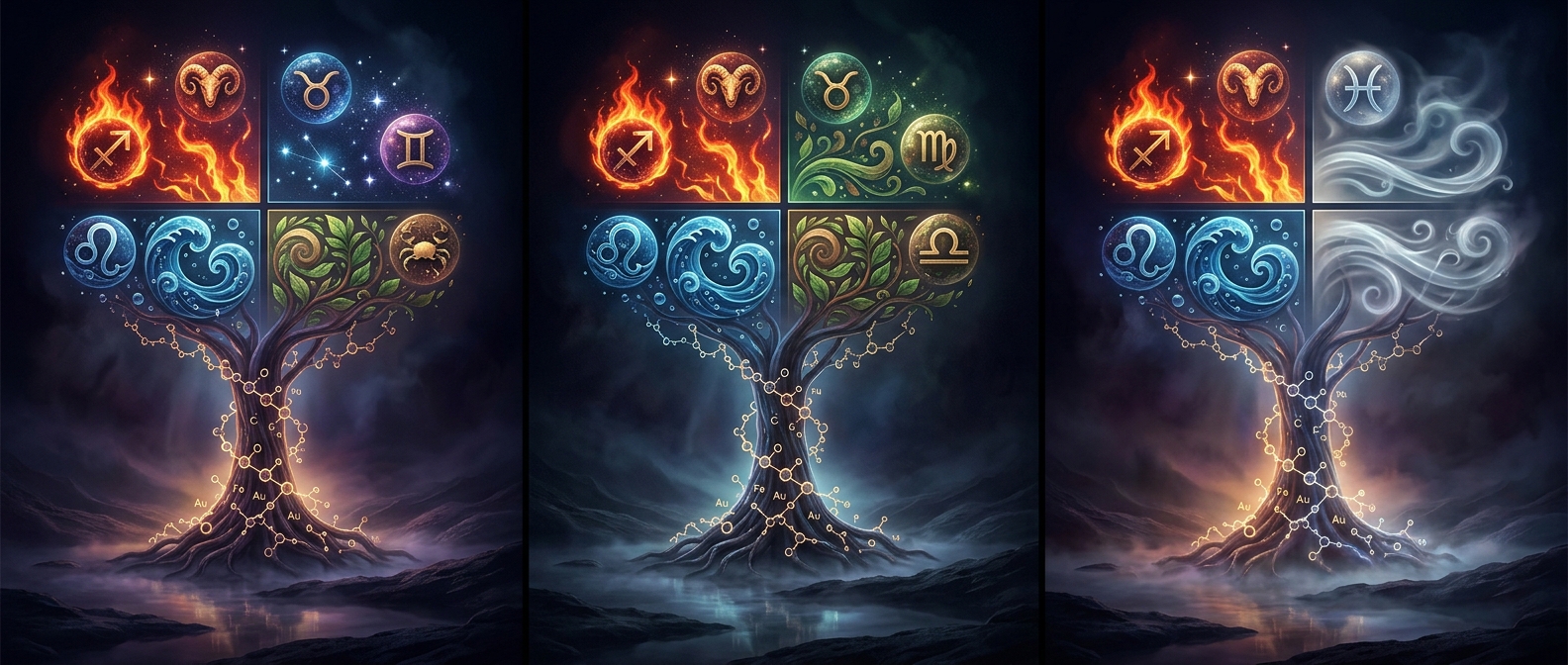
Four elements as a map of temperament
In astrology, Fire, Earth, Air, and Water are not chemical ingredients. They are symbolic categories used to describe styles of behavior and to organize the zodiac’s twelve signs. Each element groups three signs, giving astrologers a shorthand for comparing supposed temperaments.
The symbolism draws on an ancient way of describing the world through broad qualities rather than modern chemistry. Fire suggests energy and initiative; Earth, practicality and steadiness; Air, thought and communication; Water, feeling and intuition. These are interpretive associations within astrology, not measurements of a person’s personality.
Why Fire and Air are paired
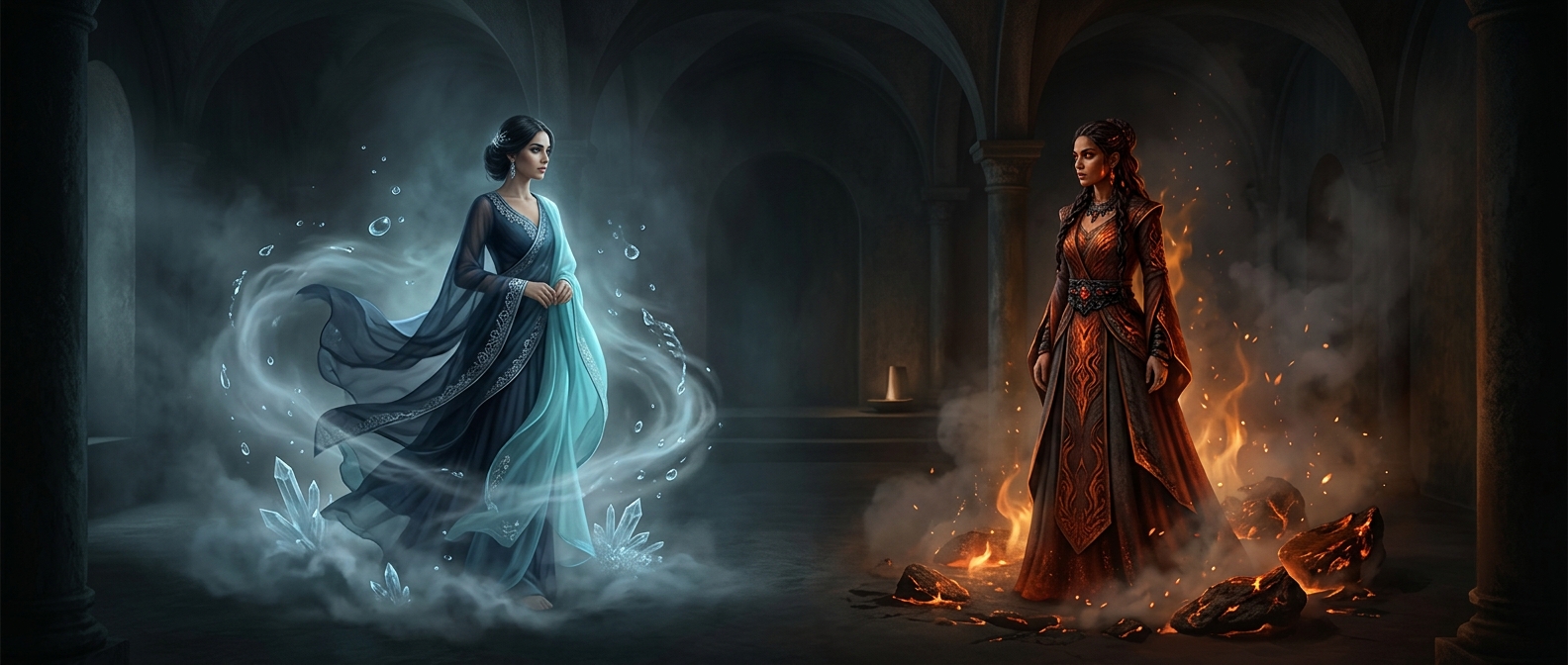
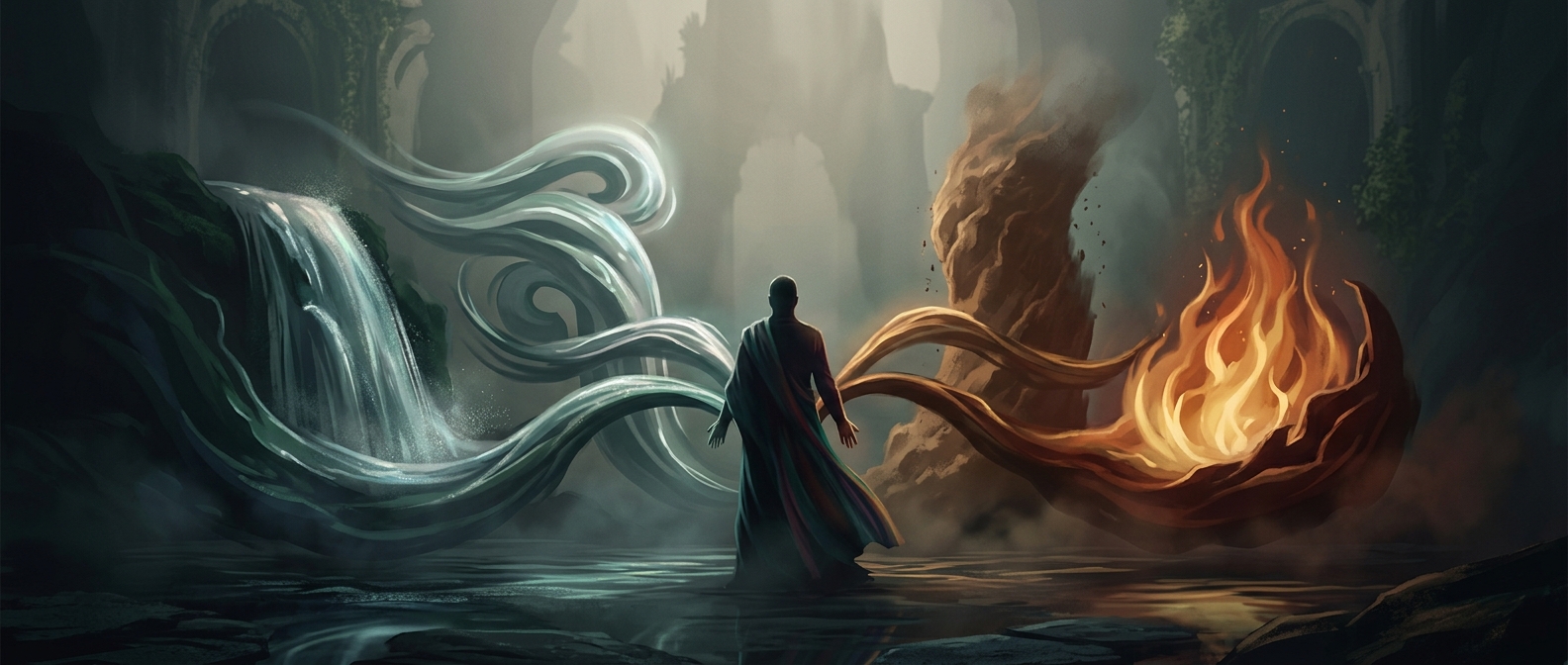
The compatibility logic often follows the elements’ familiar physical imagery: air can feed a flame, so Fire and Air signs are treated as mutually energizing. In astrological readings, that can mean one person’s drive is complemented by another’s sociability or quick thinking. Earth and Water are commonly linked in a similar way: water nourishes the ground, while earth gives it form.
These pairings are a symbolic framework, not a chemical explanation or a guarantee that two people will get along. The periodic table classifies matter by atomic structure; astrology’s elements classify signs by traditional associations. The shared word “element” can make the systems sound related, but they answer entirely different questions.
A symbolic system, not a chemistry chart
That difference explains why astrology does not add oxygen, carbon, or other chemical elements to its categories. Its four elements are inherited metaphors for interpreting character and compatibility, not an attempt to describe what stars, people, or the physical world are made of. When an astrologer says a pairing works because “air feeds fire,” the claim belongs to that symbolic language—not to a prediction derived from the periodic table.