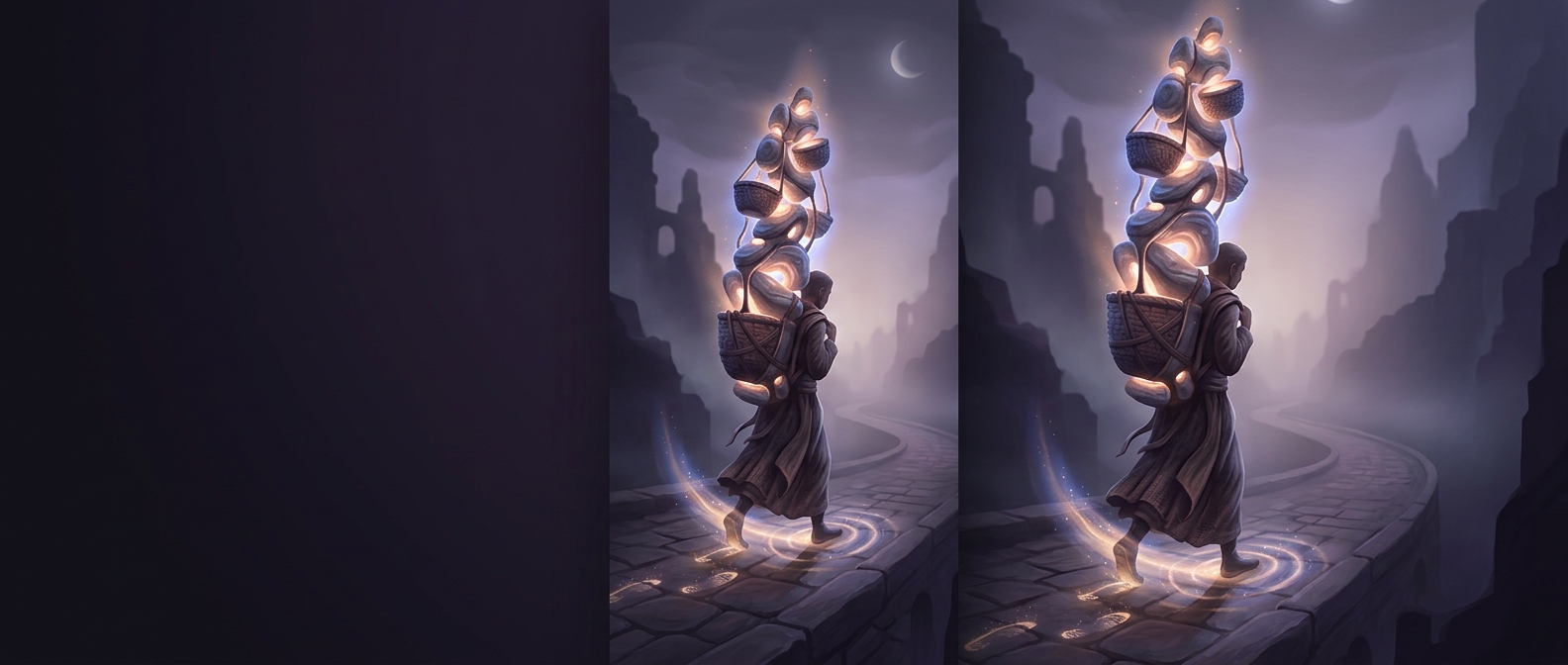
The Strap Makes the Head Part of the Load-Bearing System
A head strap used for carrying loads is often called a tumpline. It runs across the forehead and connects to a pack or bundle, so the load can hang behind the carrier rather than sit directly on the upper back. The strap transfers the bundle’s pull to the head; the carrier then adjusts posture and balance to keep the weight from tipping them backward.
That arrangement changes where pressure is felt, but it does not make the load effortless. The strap presses on the forehead, and the neck and torso must steady the head and body under the pull. A carrier may lean forward to counter the weight behind them, keeping the combined load and body balanced over the feet.
Why Turning the Head Can Destabilize It
While walking straight, the strap, head, and load can remain aligned. Turning the head changes the direction of the strap’s pull, even if the bundle itself is still moving forward. The heavy load may resist that change or swing slightly, twisting the carrier’s neck and shifting the force off-center.
That small shift matters because a load held behind the body has leverage: its weight can create a turning force around the carrier’s balance point. The carrier may need to slow down, steady the bundle, or turn the whole body rather than pivot the head alone. The practical lesson is that with a head-borne load, looking aside can move more than the gaze—it can disturb the balance of the load itself.