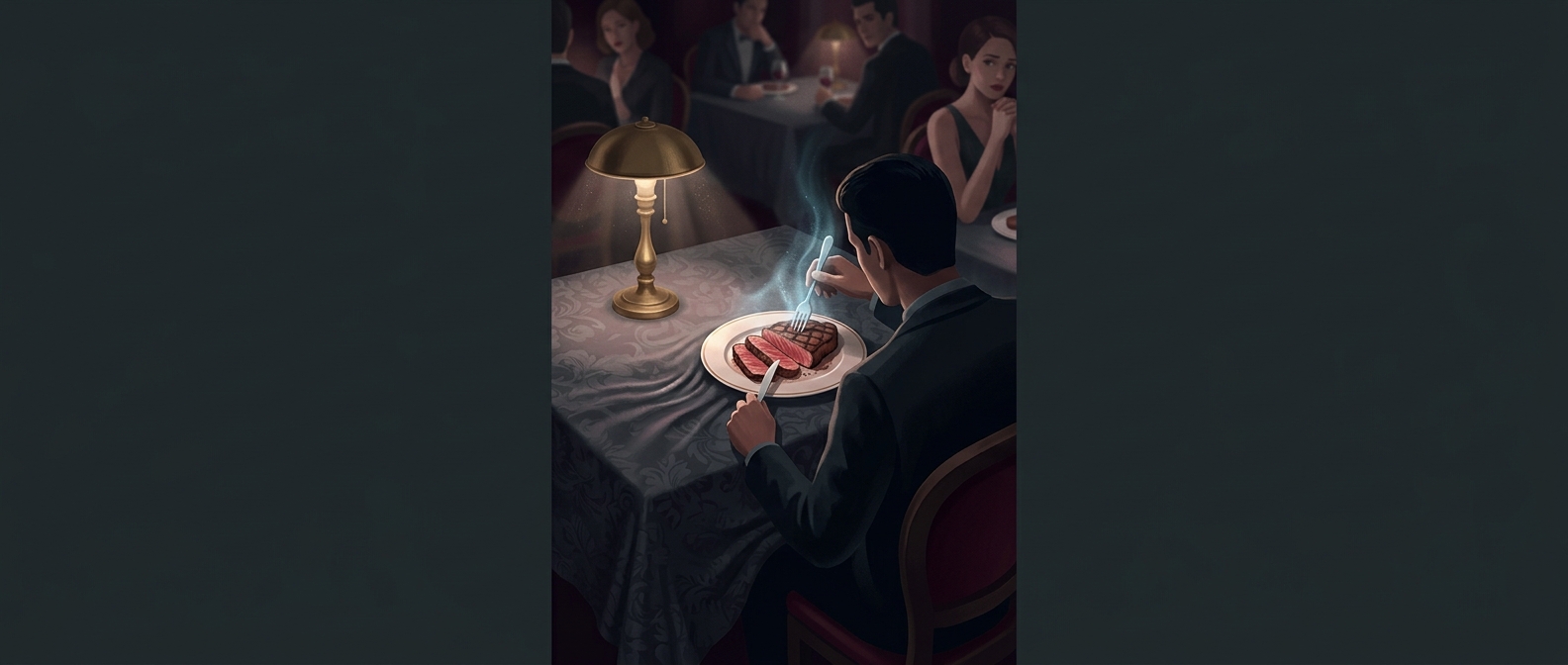
Why a fork stays low over the plate
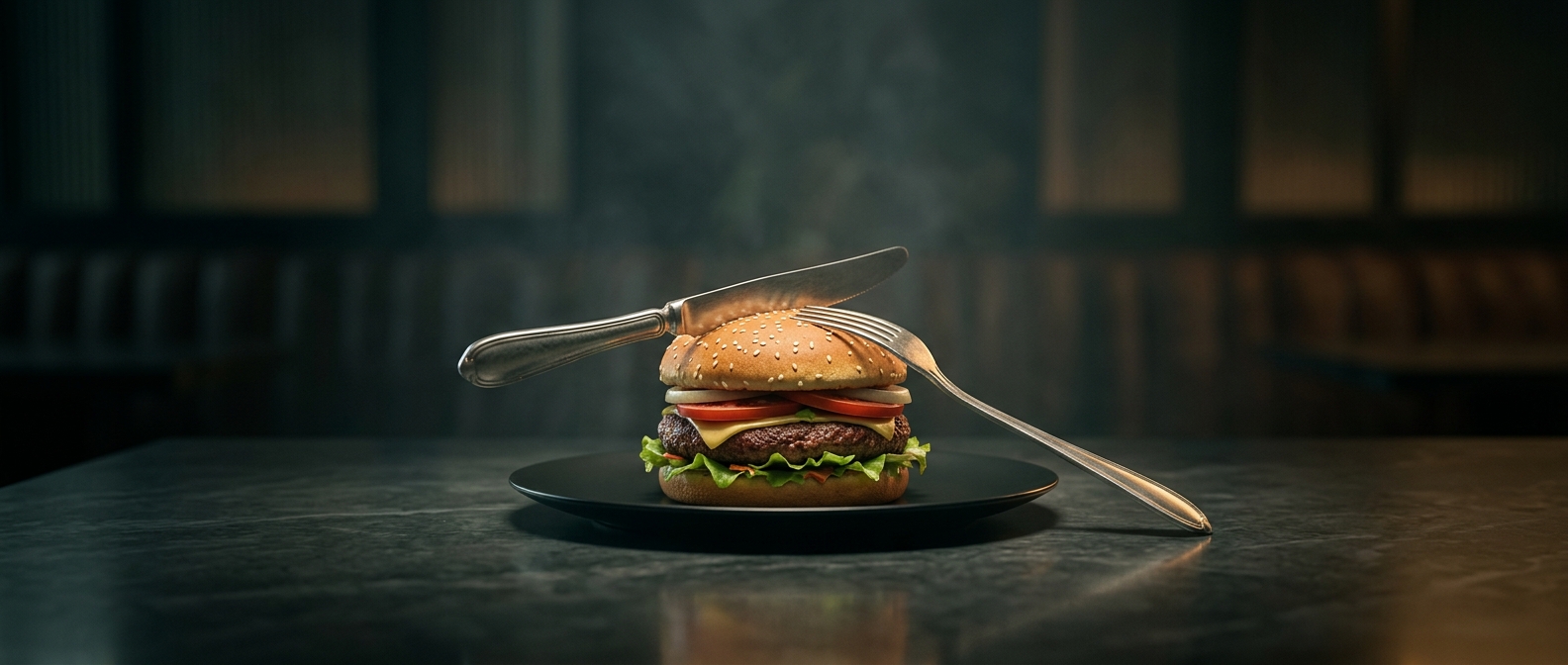
At a French table, the fork is generally used to steady a piece of meat while the knife cuts off a bite. The fork’s tines point down, and the knife does the cutting; the diner then eats the small piece rather than lifting a large chunk speared through its center.
That restrained movement is part of the impression the custom conveys. A forceful stab can look less controlled than holding the meat in place, especially during a formal meal. The distinction is not “never touch meat with a fork,” but how the fork is used.
A practical cue for visitors
Keep the fork angled down as you cut, and avoid treating it like a skewer for picking up a whole piece. This also makes the knife-and-fork sequence smoother: the fork steadies the meat, the knife separates a manageable bite, and the fork carries that bite to the mouth. At a restaurant, following that rhythm is a simple way to avoid an unnecessarily conspicuous gesture.