Why plain rice is treated differently from a finished dish
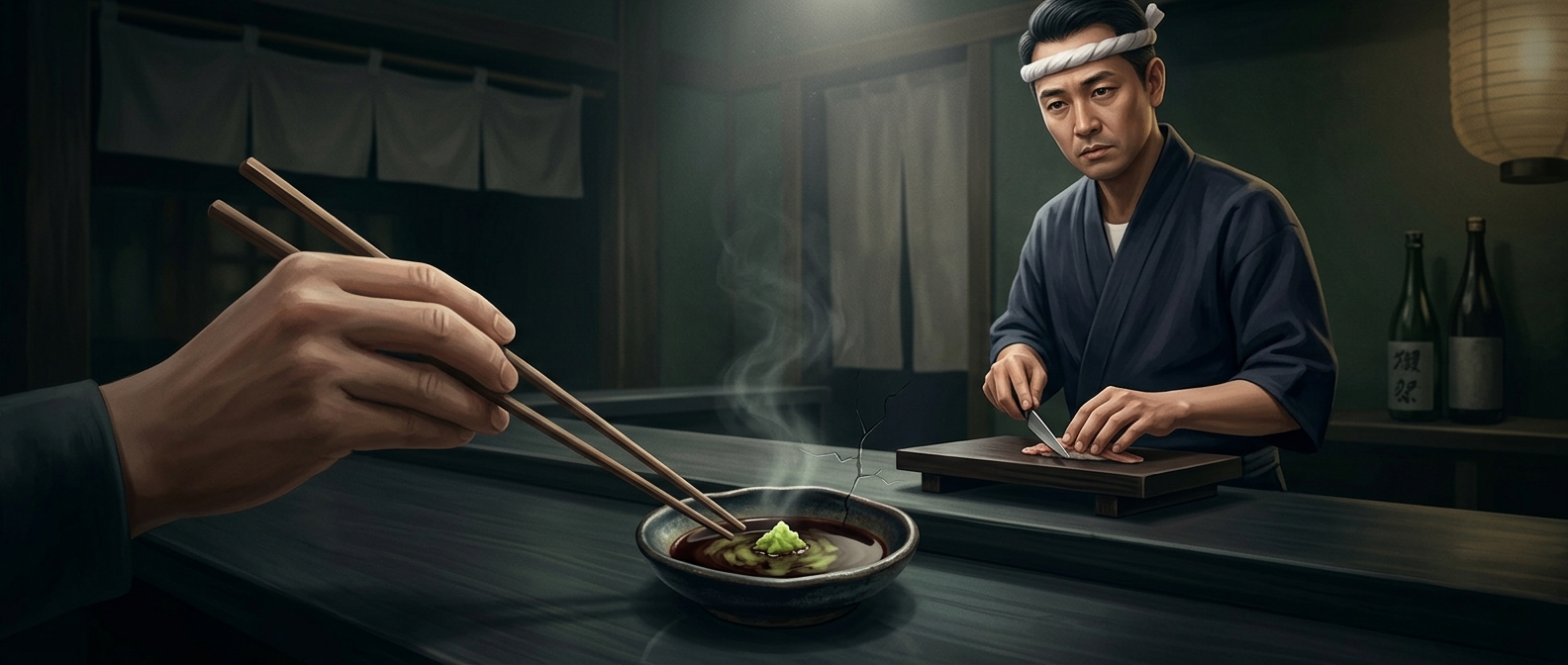
In a Japanese meal, a bowl of steamed rice is often served as its own accompaniment, not as a blank base waiting for seasoning. Its mild flavor balances stronger dishes, and its texture is part of the meal. Pouring a strong, salty sauce over plain rice can therefore suggest that the rice itself is not worth tasting as prepared.
That impression depends on context. Soy sauce is entirely at home in many rice dishes, including seasoned bowls and egg mixed with rice. The distinction is between adding it as part of a dish and covering a bowl of plain rice at the table.
The gesture can carry more meaning than the flavor
Rice preparation involves choices about the grain, washing, water, and cooking. A diner may not intend any criticism, but seasoning the whole bowl can look like rejecting those choices—rather like reaching for a condiment before trying a carefully prepared food. It is a possible breach of table manners, not a universal rule or a guaranteed insult; households and individual preferences differ.
A safer approach is to taste the rice first and add seasoning only if it suits the meal. That small pause leaves room to appreciate the rice on its own, while recognizing that soy sauce belongs in plenty of other rice dishes.