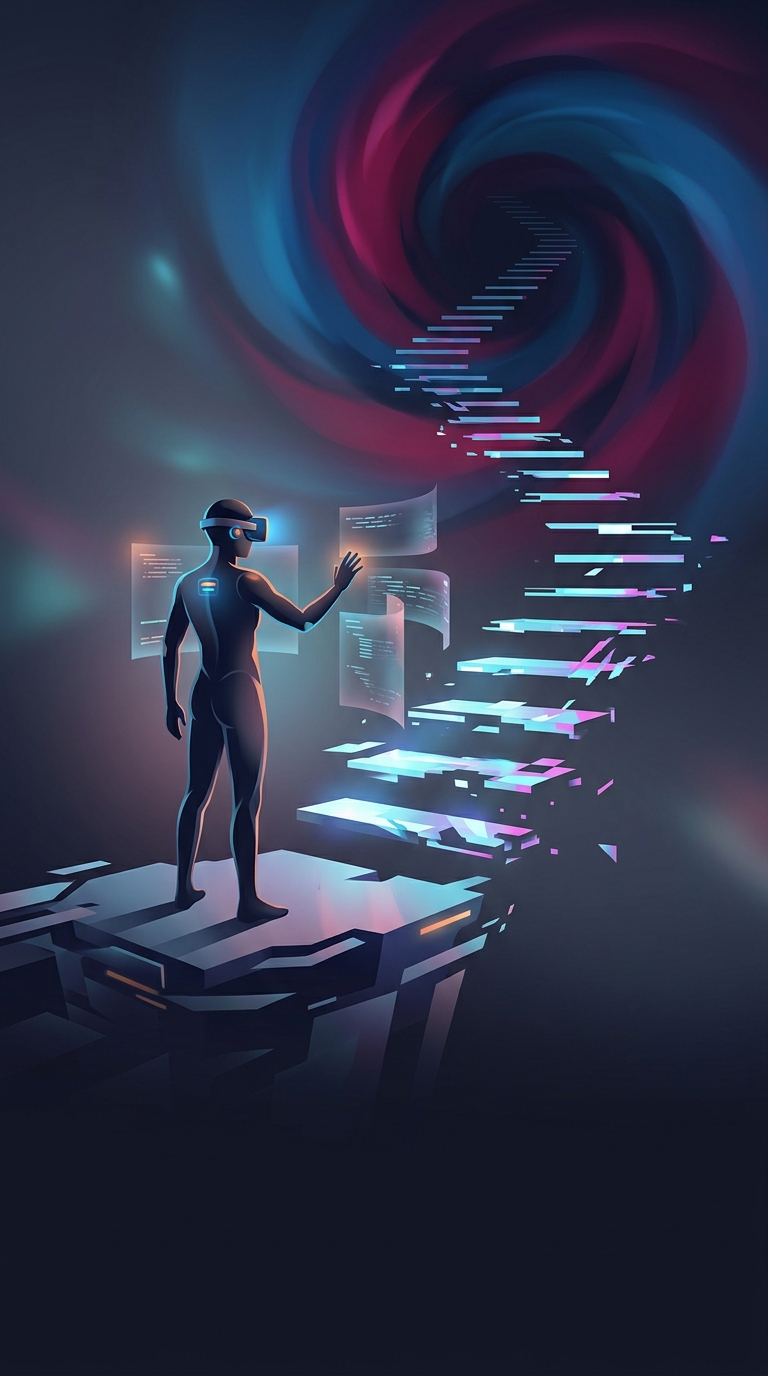
Stairs make the body notice the illusion
A staircase asks for a kind of movement that most VR games cannot deliver directly. In a room-scale game, a player may physically walk a few steps, but the play area is far smaller than a typical game world. To climb a long flight, the game usually has to move the virtual player upward with a controller or by shifting the environment around them.
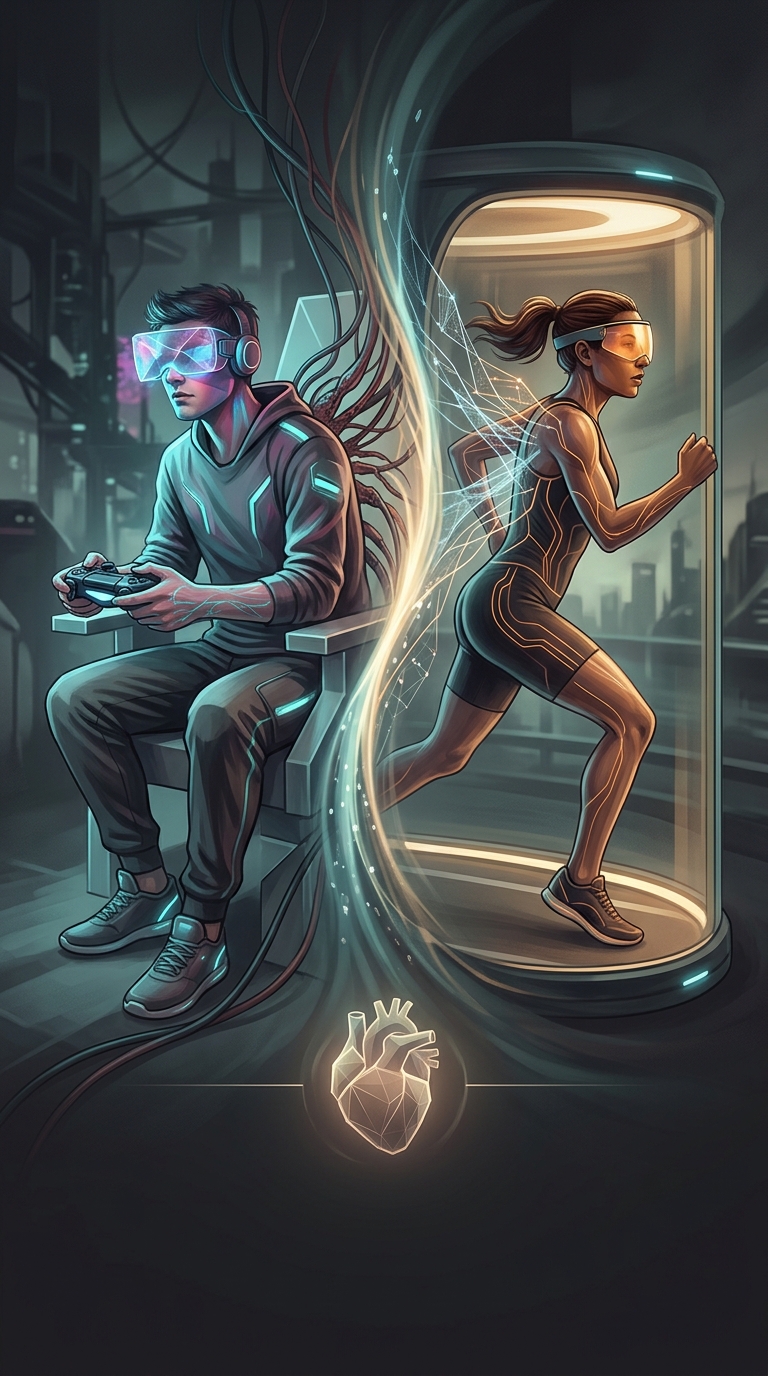
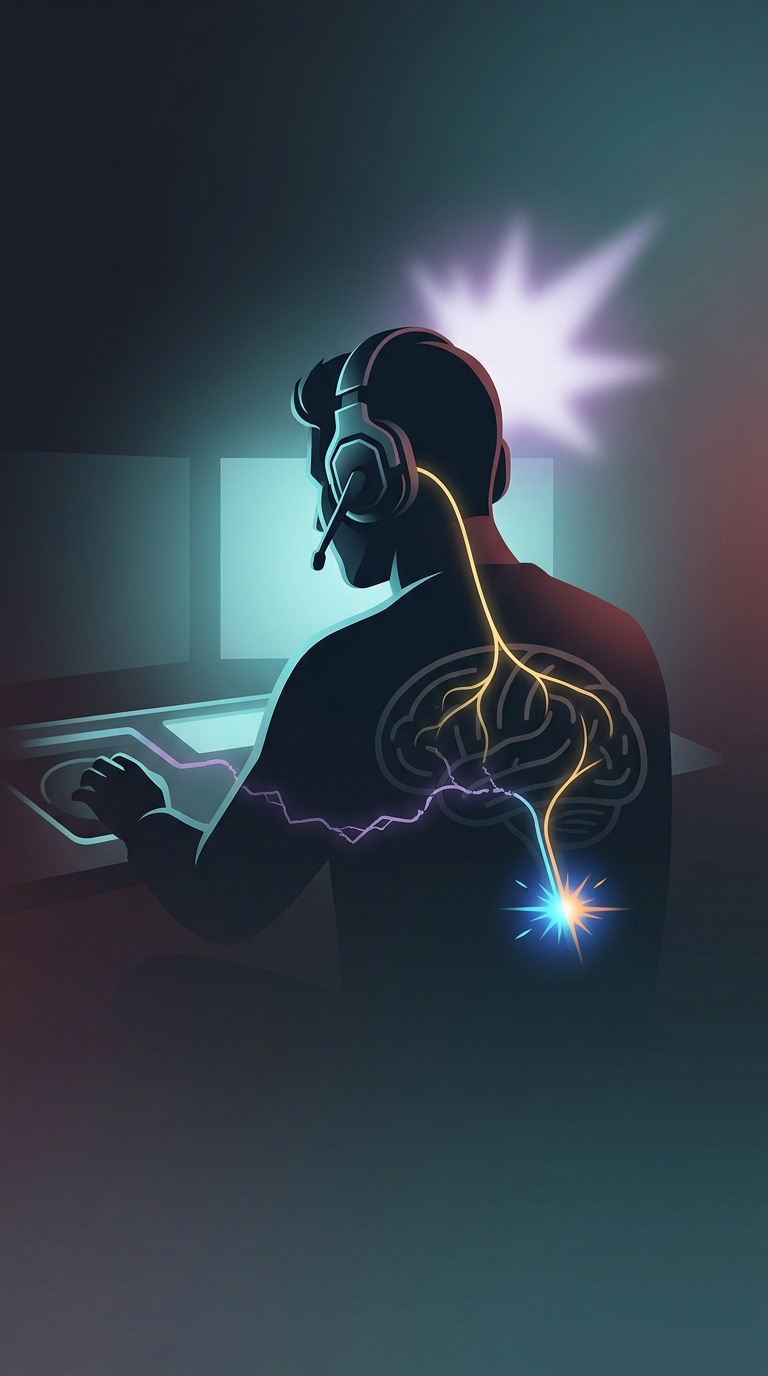
That creates a mismatch: the eyes see the body rising and advancing, while the inner ear and legs feel little or no corresponding motion. The brain uses those signals to judge movement and balance. When they disagree, some players feel disoriented or nauseated—a form of motion sickness familiar from smooth joystick movement in VR.
A staircase magnifies the problem
On flat ground, a game can often disguise virtual travel with a brief fade, a teleport, or a short stretch of controller-driven movement. Stairs make the transition conspicuous. The player sees each step pass beneath them, expects the body to bob and the feet to land, and may instinctively try to step along. If the virtual camera instead glides upward, the visual motion is hard to ignore.
Making the stairs physically climbable is not a simple fix. A headset blocks much of the real world, so a player cannot safely use an ordinary staircase without carefully designed physical boundaries and supervision. And a simulated staircase that does not match the floor underfoot can invite a dangerous misstep.
Designers trade realism for control
Developers can still include stairs, but they often soften the problem: the character climbs automatically, movement pauses at landings, or the player teleports to the next level. Those choices reduce discomfort and make movement predictable, though they can weaken the feeling of personally climbing.
So stairs are not absent because they are impossible to build. They are costly because they combine visual movement, balance expectations, and real-world safety in a small space. A plain ramp, elevator, or teleport may be less convincing as architecture—but much easier to experience comfortably in a headset.