A screen turns movement into a tempting target
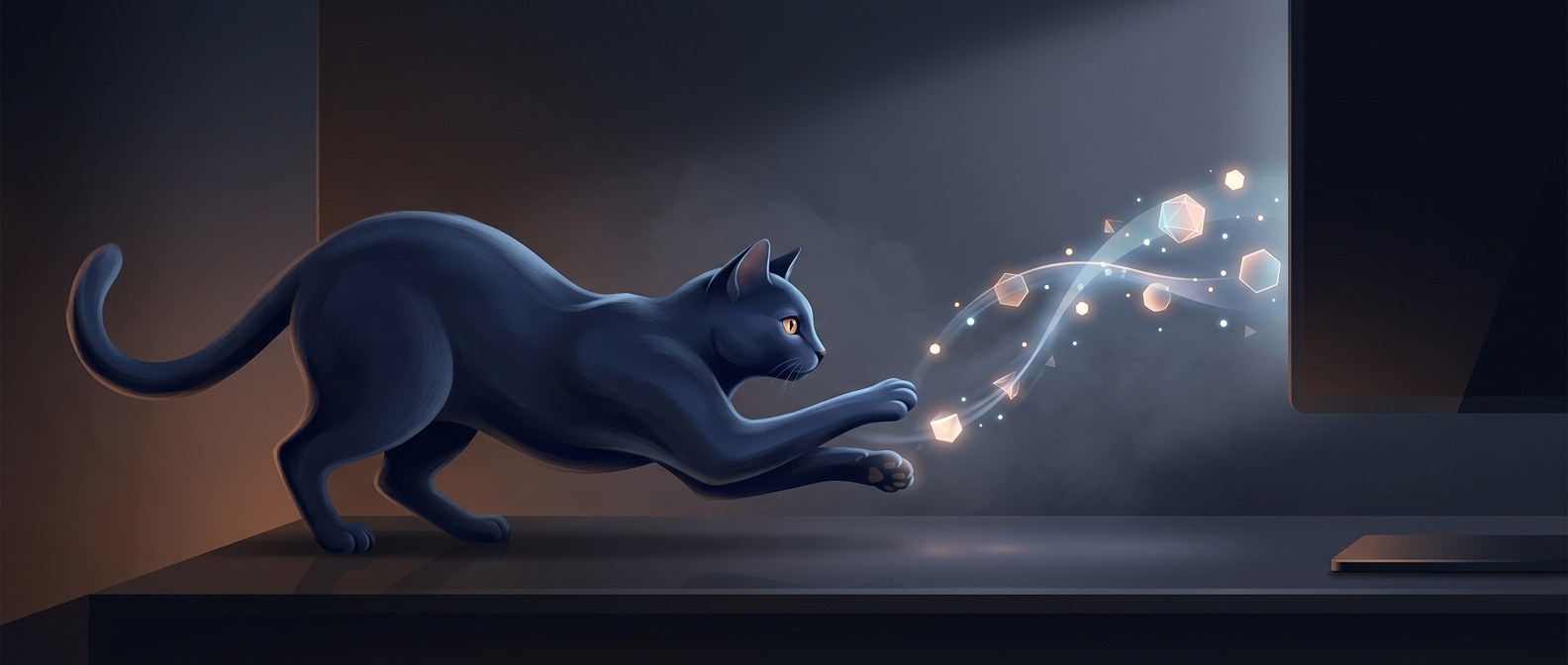
A cat watching a video may see a small shape dart across the display and respond with a pounce or paw swipe. The motion resembles the quick, unpredictable movement of prey, which can trigger the cat’s instinct to track and catch it. The screen does not need to look like a perfectly convincing animal; sudden movement can be enough to hold a cat’s attention.
The image offers pursuit without a catch
A real chase provides feedback: the target changes direction, makes contact, or escapes. A picture on a screen cannot do those things. The cat can see the shape move, but its paw meets a flat surface, and the image carries on according to the video rather than reacting to the cat.
That mismatch helps explain why a cat may keep striking at the display—or lose interest after repeated attempts. The screen preserves the visual cue that starts the chase while withholding the physical result that would complete it.
Why the barrier matters
The glass or plastic is more than a safety barrier; it separates what the cat sees from what it can touch. A moving image can invite the same first step as a hunt, but it cannot become prey in the cat’s paws. So the attack is directed at an apparent target that is visually present and physically unreachable.