A real dog gave Dogmeat his small movements
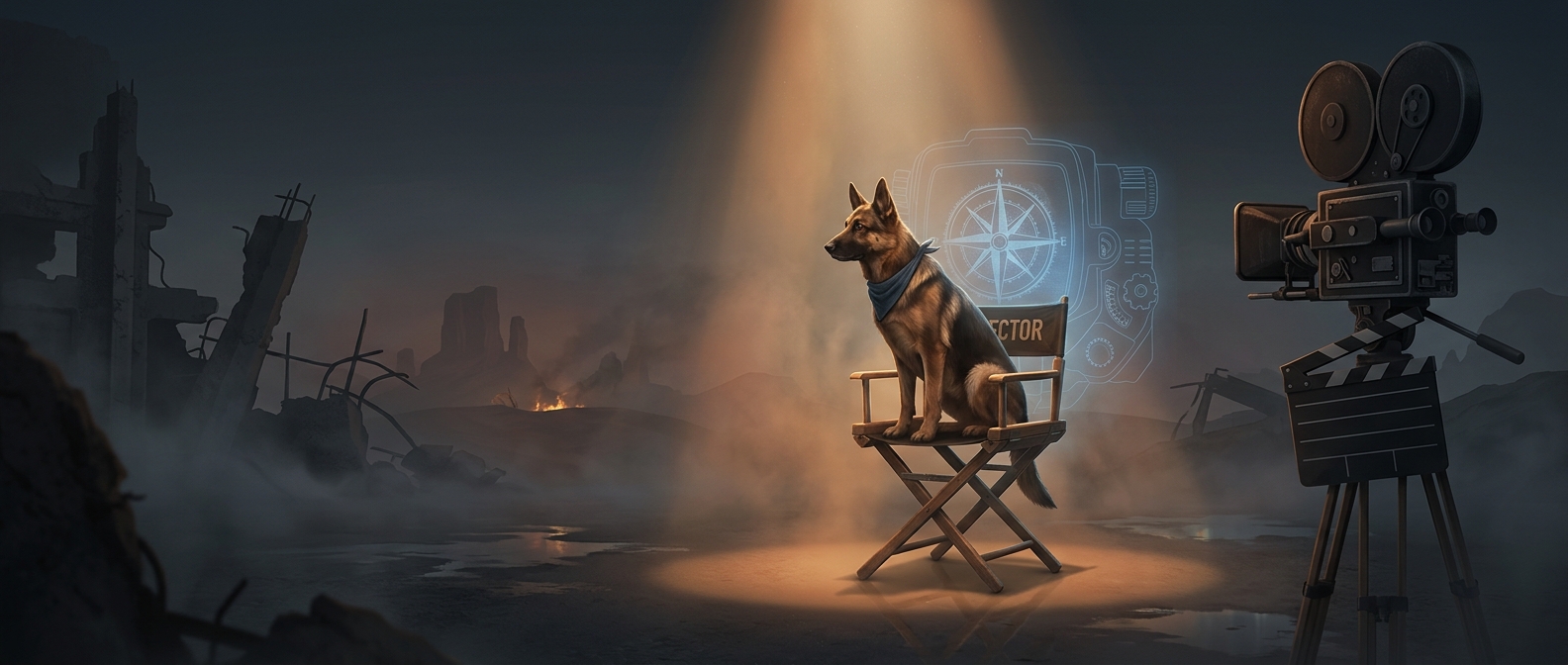
Dogmeat’s personality was shaped not only by what the game lets him do, but by how he behaves when nothing urgent is happening. The lead designer brought his German shepherd to the studio, giving the team a living reference for the companion’s animations and idle behavior—the little motions a character makes while waiting or standing nearby.
That kind of reference helps turn a broad idea, “a dog companion,” into recognizable physical behavior. A real dog does not hold a perfectly still pose between actions; its attention shifts, its posture changes, and it reacts to the space around it. Observing those details gives animators material to adapt into a game character, where every movement must be clear enough to read on screen and fit the game’s technical limits.
Observation becomes character
The result is more than a set of functional actions. A companion who moves like an animal can feel present even when the player is not directing him. Those quiet intervals help sell the relationship: Dogmeat is not merely a tool that follows commands, but a creature sharing the player’s journey.
The memorable detail is how modest the source was. A designer’s pet, brought into the studio, could inform the moments between the dramatic ones—the pauses that make a digital companion feel less like a collection of commands and more like a dog.