A status display built into the fiction
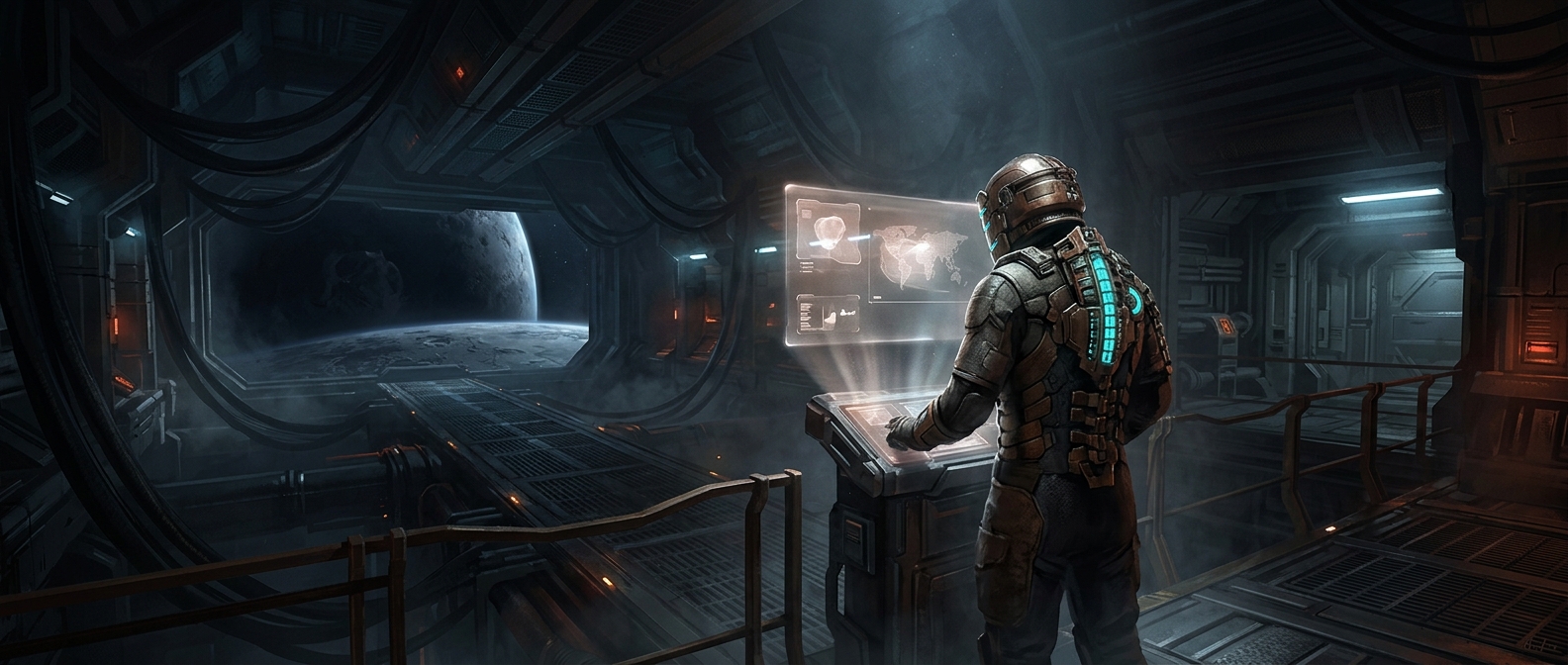
In Dead Space, information players usually read in a screen overlay is presented as part of the scene. Game designers call this a diegetic interface: a display that belongs to the game world rather than floating above it. Isaac’s health is shown along the back of his suit, and ammunition is displayed on the weapon, so checking either feels like looking at equipment he is actually carrying.
That choice changes how players gather information. In many games, health and ammo stay fixed at the edge of the screen, always available in the same place. Here, players have to look toward Isaac or his weapon. The interface remains tied to the character’s body and actions instead of occupying a separate layer over the action.
Immersion has a readability cost
Keeping the screen clear can make the environment feel less like a game board and more like a space Isaac is moving through. It also makes status information part of the game’s visual language: the suit is not just clothing, but equipment that communicates how he is doing.
The tradeoff is that useful information is less detached and instantly legible than a conventional HUD—a heads-up display that overlays symbols on the screen. Players must notice the in-world indicators while managing threats and movement. Dead Space turns that small act of checking a weapon or suit into part of being Isaac, rather than pausing to read a separate dashboard.