A modeling adjustment became part of Lara’s design
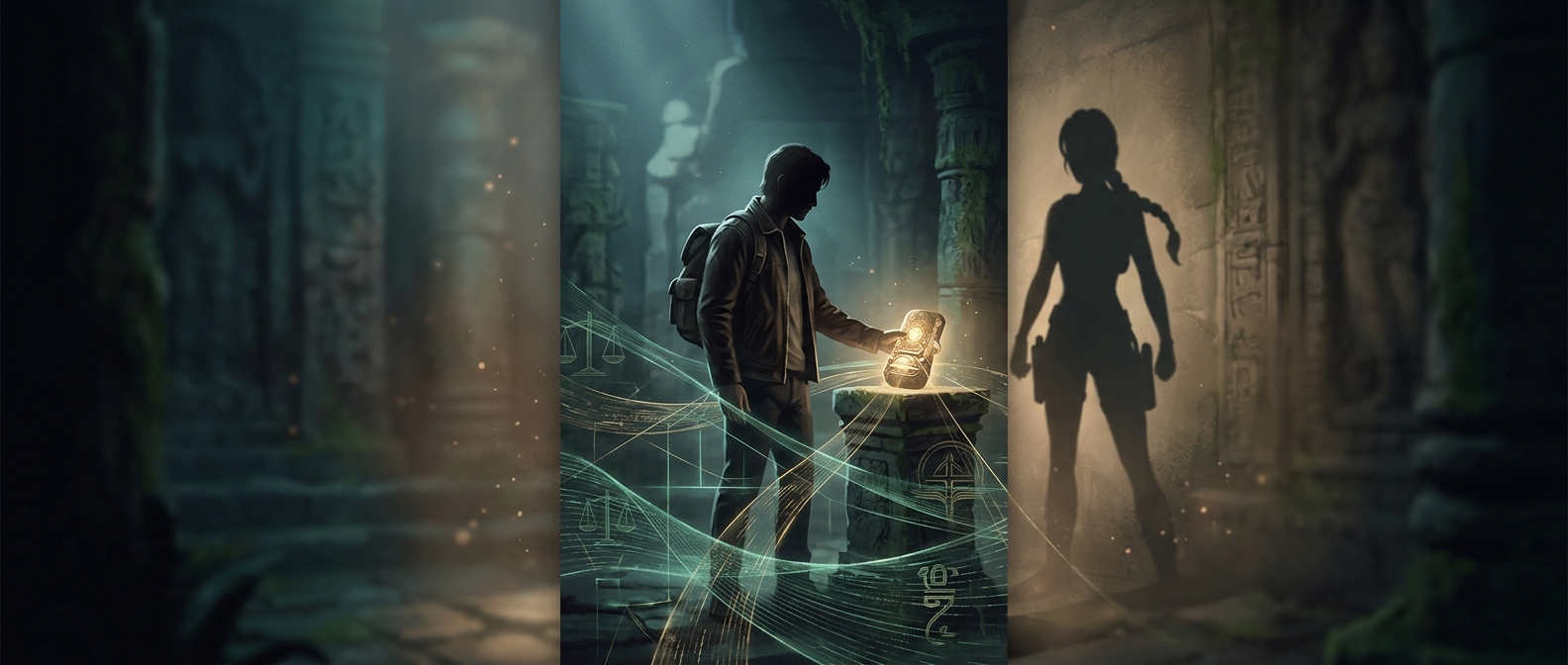
Lara Croft’s exaggerated proportions began during the creation of the first Tomb Raider, released in 1996. The game’s designer, Toby Gard, has described enlarging her chest by accident while adjusting the character’s 3D model: a mouse movement changed the setting far more than he intended. The team decided to keep the result.
That origin matters because it was not a carefully planned statement about Lara’s personality or role. It was a modeling mishap that became a deliberate design choice once the developers saw the character on screen.
A silhouette built to read at a glance
The original game had to make Lara recognizable through a small, angular 3D model. Her distinctive outline helped players pick her out as she moved through detailed environments. The same exaggerated shape also made her easy to recognize in promotional art, where the character could be shown larger and with more detail than the game itself allowed.
The design had consequences beyond readability. Lara’s body became a prominent part of how the game was marketed, and critics argued that it encouraged players to see her as a sexualized image rather than as an adventurer. That tension followed the series as later games revised her appearance and presentation.
From accident to lasting controversy
The proportions were not simply an unavoidable result of early game technology: the developers could have changed the model. The important turn was that an accidental adjustment looked distinctive enough to keep—and, in a game poised to reach a broad audience, that visual choice became inseparable from the character’s public image. A brief tweak in a low-polygon model helped shape a debate about how games portray their women protagonists.