A control surface built around the thumb
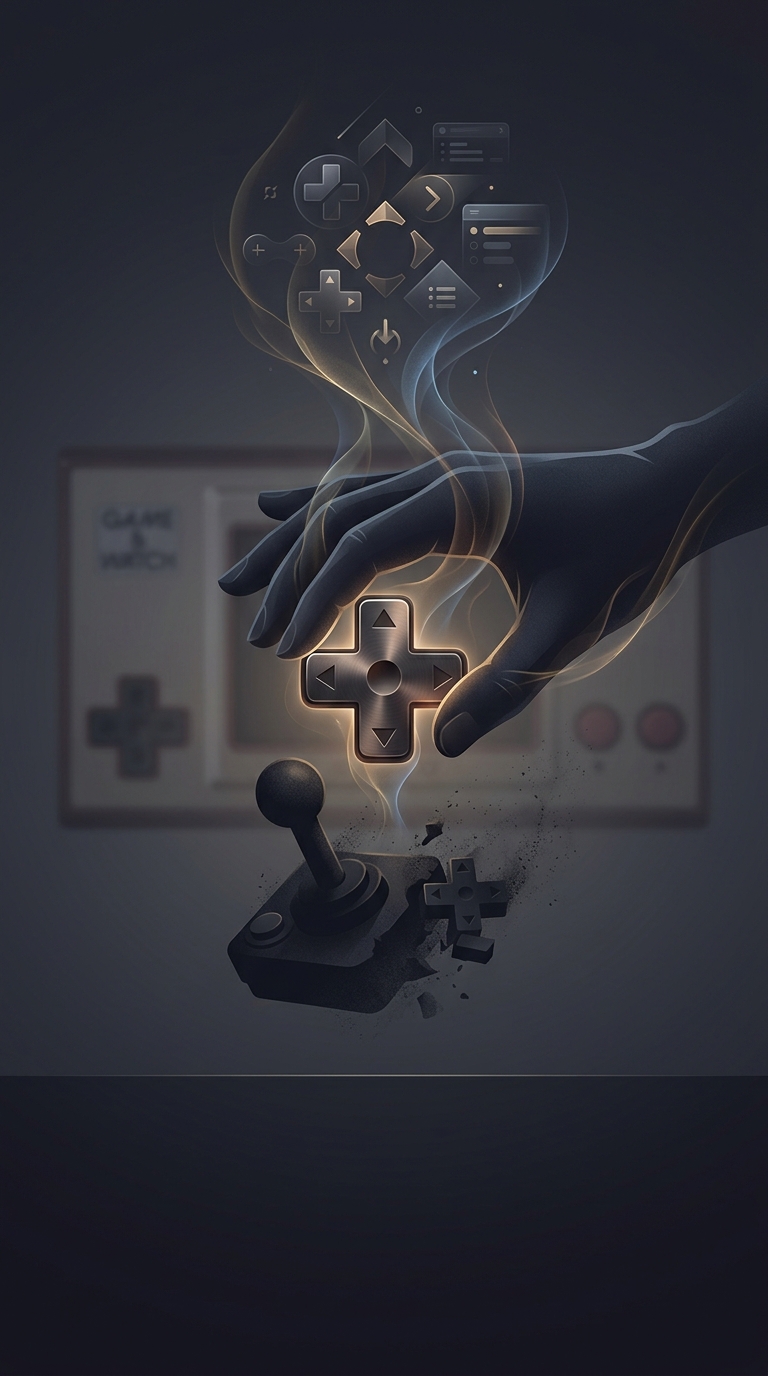
A joystick works by tilting a raised stick in different directions. That gives the player a physical lever to grip, but the stick needs room to move and can snag or feel awkward on a small handheld. Yokoi’s cross-shaped pad solved the space problem by making the player’s thumb itself the moving part: press one arm of the cross to signal a direction, then lift to release it.
The change was more than shrinking a joystick. A raised control invites continuous movement—tilt it a little or a lot—while a directional pad gives clear, discrete inputs: up, down, left, or right. Its shallow shape could sit nearly flush with the device, leaving the front available for the screen and other controls. The player could steer with a thumb without having to grasp a separate stick.
Why the shape traveled beyond games
The cross also made direction easy to read by touch. Players could find the center, then press toward the direction they wanted without looking down at the control. On games that allowed it, pressing between two arms could register a diagonal movement, extending the pad’s usefulness without adding a larger mechanism.
That simple vocabulary—press a direction, release, press another—proved useful wherever a device needed movement through a limited set of choices. Game menus, settings, and other digital interfaces could use the same familiar motions as gameplay. The D-pad’s lasting advantage was not merely that it fit in a pocket; it turned a spatial problem into a compact, repeatable set of thumb presses.