A Game Boy Came Back From a Gulf War Bombing
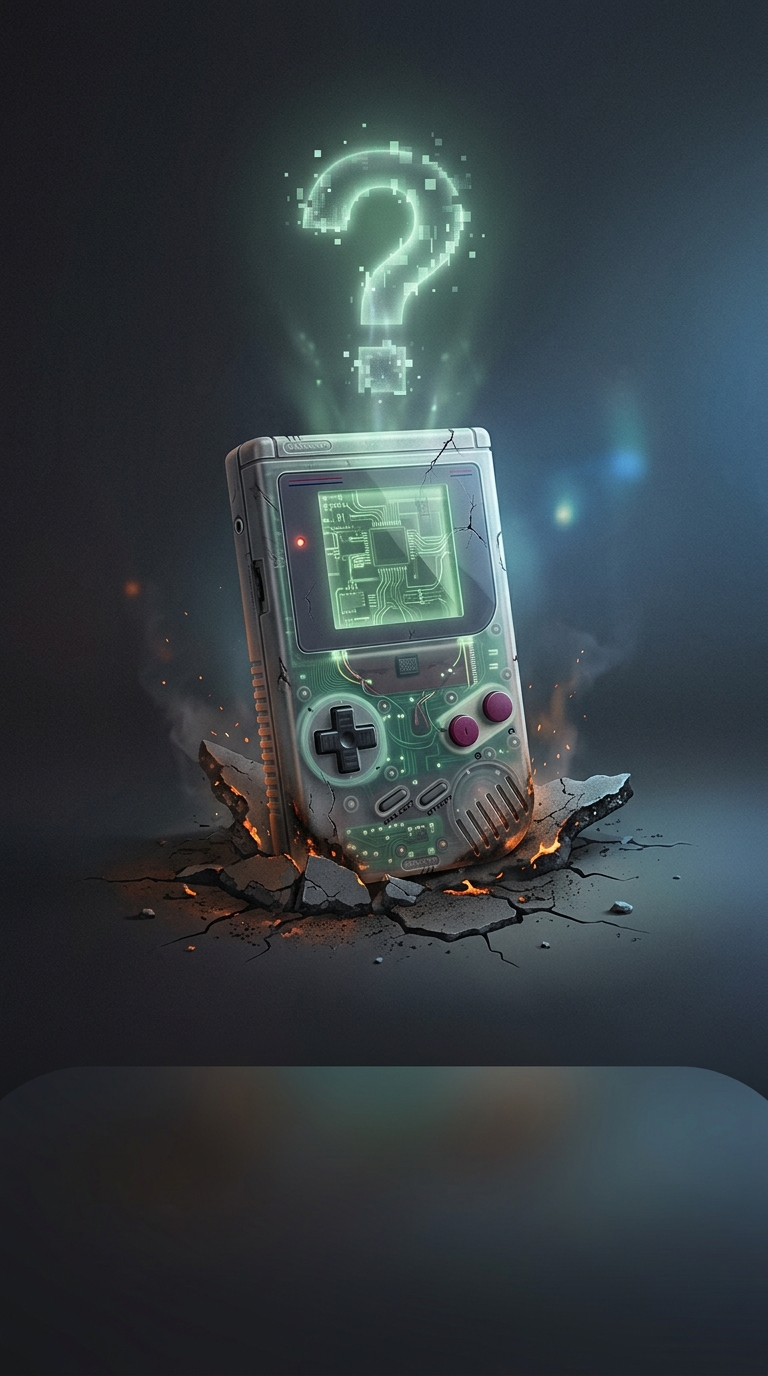
The famous battered Game Boy had been in a barracks during the Gulf War when the building was bombed. Its casing was scorched and warped, but the handheld still worked. The damaged unit was later sent to Nintendo and became a display piece—a striking example of a portable game system surviving an event far beyond ordinary drops and knocks.
What Survived—and What Didn’t
The story is memorable because the damage is visible: this was not a pristine console that merely passed a durability test. The shell took the heat and blast, while the device’s essential electronics remained usable. That does not mean a Game Boy was bombproof; it means this particular machine emerged from extraordinary damage with its core function intact.
Its survival helped make the original Game Boy’s reputation for toughness tangible. Instead of relying on a technical claim, Nintendo could point to a real, scarred machine—and the contrast between its battered exterior and working controls made the story hard to forget. The lesson is less that a handheld could withstand a war zone than that a small game device once returned from one still ready to play.