How the Game Boy Advance SP Lit the Screen
The original Game Boy Advance SP solved a familiar problem for handheld games: the screen was hard to see in a dim room. Unlike a modern phone display, the SP’s screen did not produce its own light. Its early lighting system sent light across the front of the display, making the pixels easier to see without an external lamp. A later SP version used a true backlight, which shines from behind the screen.
That distinction aside, the practical change was simple: players no longer had to aim a separate light at the game. Before the SP, many Game Boy players used clip-on accessories nicknamed “worm lights,” whose flexible arms could be positioned over the screen. The built-in light removed that extra piece of gear—and the need to keep it pointed in just the right direction.
A Clamshell Made the Upgrade More Useful
The SP folded shut, placing the screen against the controls for protection when the console was put away. Open it, and the screen and buttons were ready together; close it, and the display was less exposed to scratches in a bag or pocket. The compact shape also made it easier to carry than the original, flat Game Boy Advance.
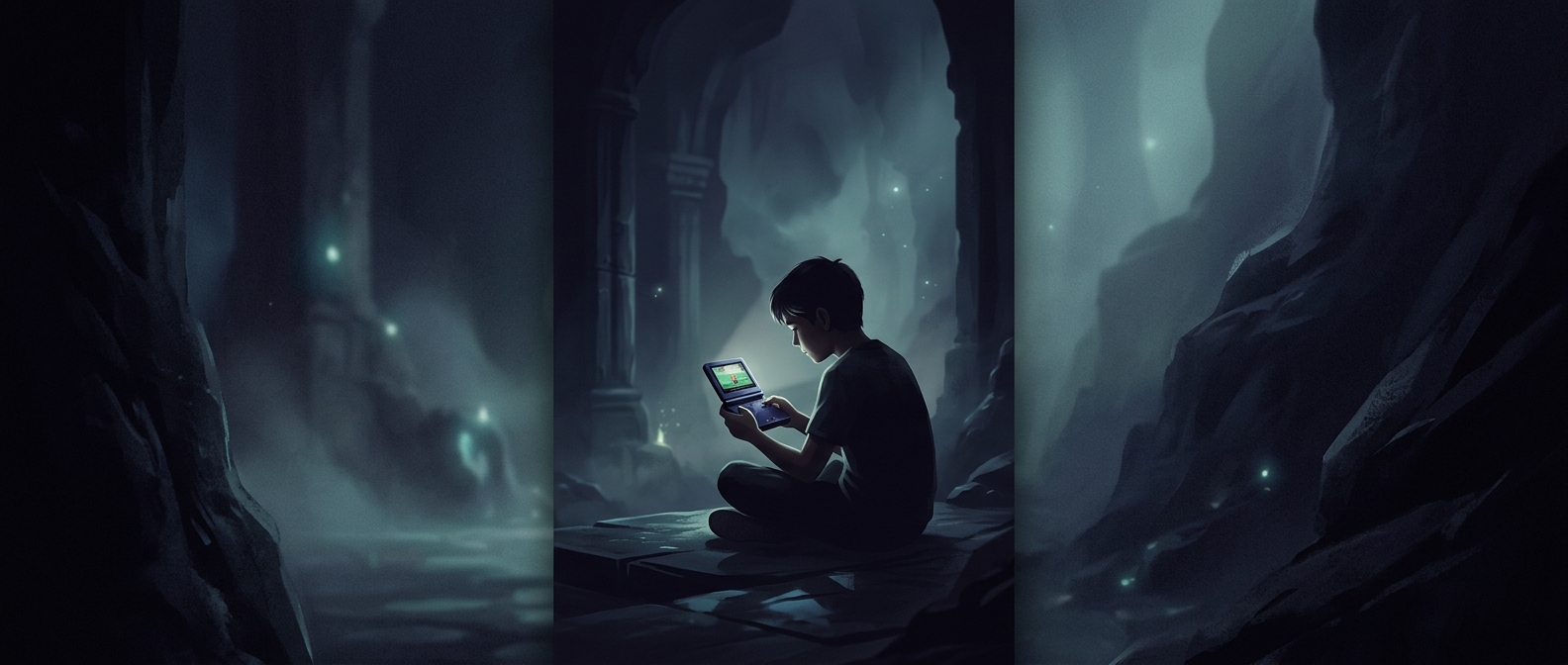
That design mattered in the dark as much as it did on the go. A player could open the console and see the game without arranging a lamp, while the hinge held the screen at a usable angle. The SP turned low-light play from a setup problem into an ordinary part of using the handheld: open the lid, switch on the light, and keep playing.