Paper folds became a blueprint for polygon ships
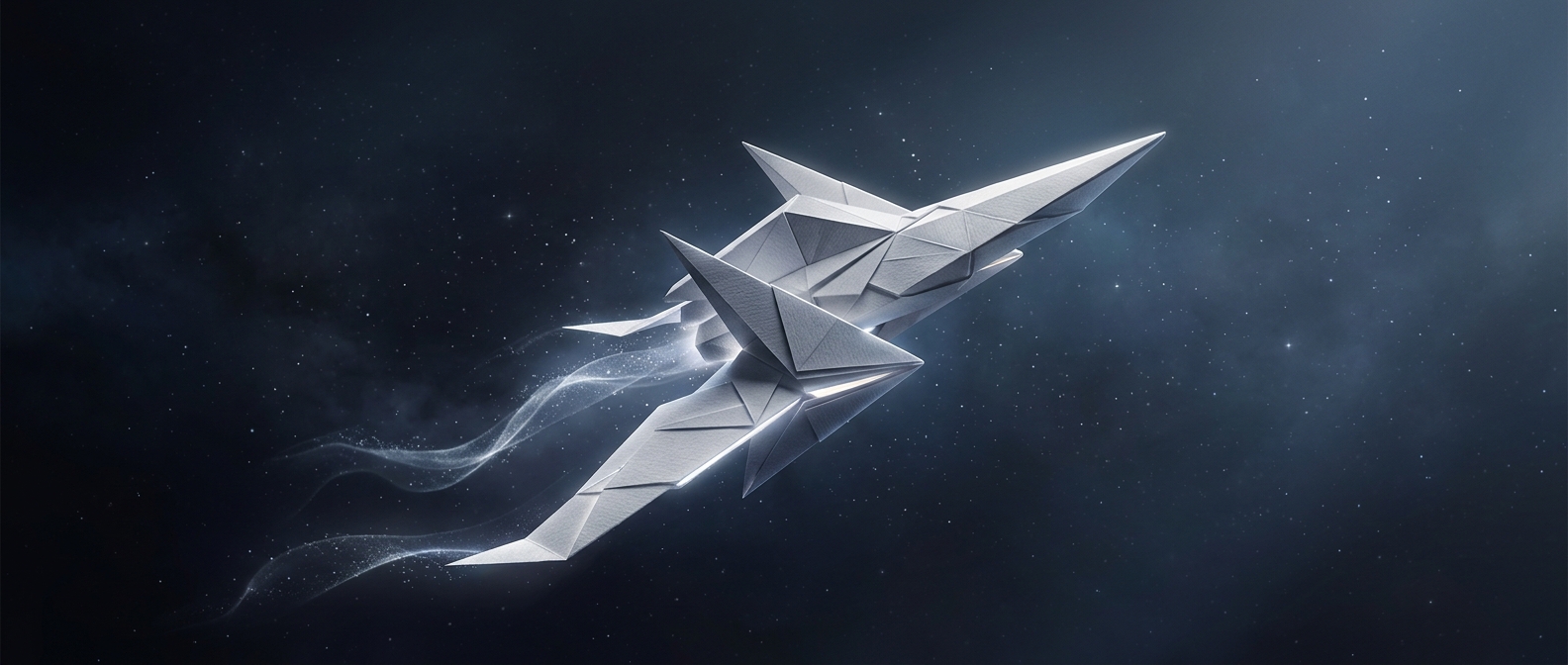
Before the ships existed as digital models, their creators folded paper versions to explore their shapes. A folded model makes a design’s surfaces visible: each crease creates a plane, and each plane changes how the craft looks from another angle. The team could then map digital polygons—the flat-sided pieces used to build a 3D computer model—onto those forms.
That translation was more than tracing an outline. A ship that looks convincing from the side can become hard to recognize when it turns. Working from a physical model lets designers inspect the silhouette and the arrangement of its faces in three dimensions, then decide which planes should define the digital version.
Why the faceted look mattered
Polygon-based graphics build a shape from flat surfaces rather than continuous curves. That made the ships’ angular appearance part of the design language: their wings, fuselages, and other features could read as distinct planes, not just details painted onto a smooth form.
The paper models thus served as practical guides between two ways of thinking about a spacecraft: as a physical object made of folded surfaces and as a digital object made of polygons. The result was a design process in which the ships’ distinctive geometry began with something creators could hold and turn in their hands.