Why a Disc-Golf Basket Has Hanging Chains
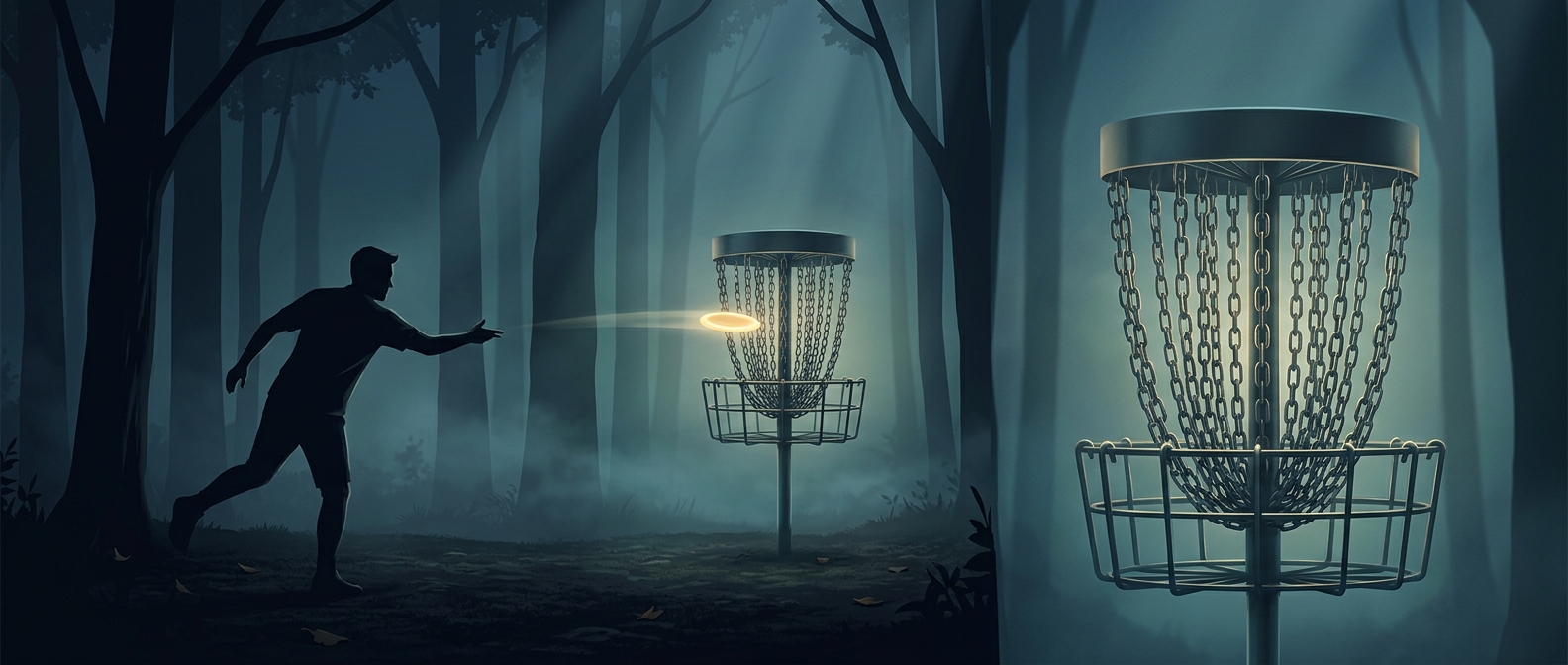
A flying disc arrives with both forward motion and spin. If it struck a rigid surface, it could bounce away almost as quickly as it arrived. A chain assembly offers a more forgiving target: the links move on impact, swinging and shifting as they take up some of the disc’s momentum.
That movement also helps redirect the disc downward. Rather than simply stopping it dead, the chains can snag its rim or interrupt its flight so gravity carries it into the metal tray below. The tray then keeps a caught disc from sliding back out.
A Catch Depends on More Than Stopping the Disc
The chains have to slow the disc without launching it back out or letting it slip through. A hit near the center may push links aside; an off-center hit can catch the rim and turn the disc toward the basket. The result depends on the disc’s speed, angle, and contact point, as well as how the chains move.
That is why the basket is a system rather than just a target: the chains absorb and redirect motion, while the tray provides a place for the disc to settle. A throw that reaches the chains is not automatically a made shot—the disc still has to lose enough of its motion to stay in the basket.