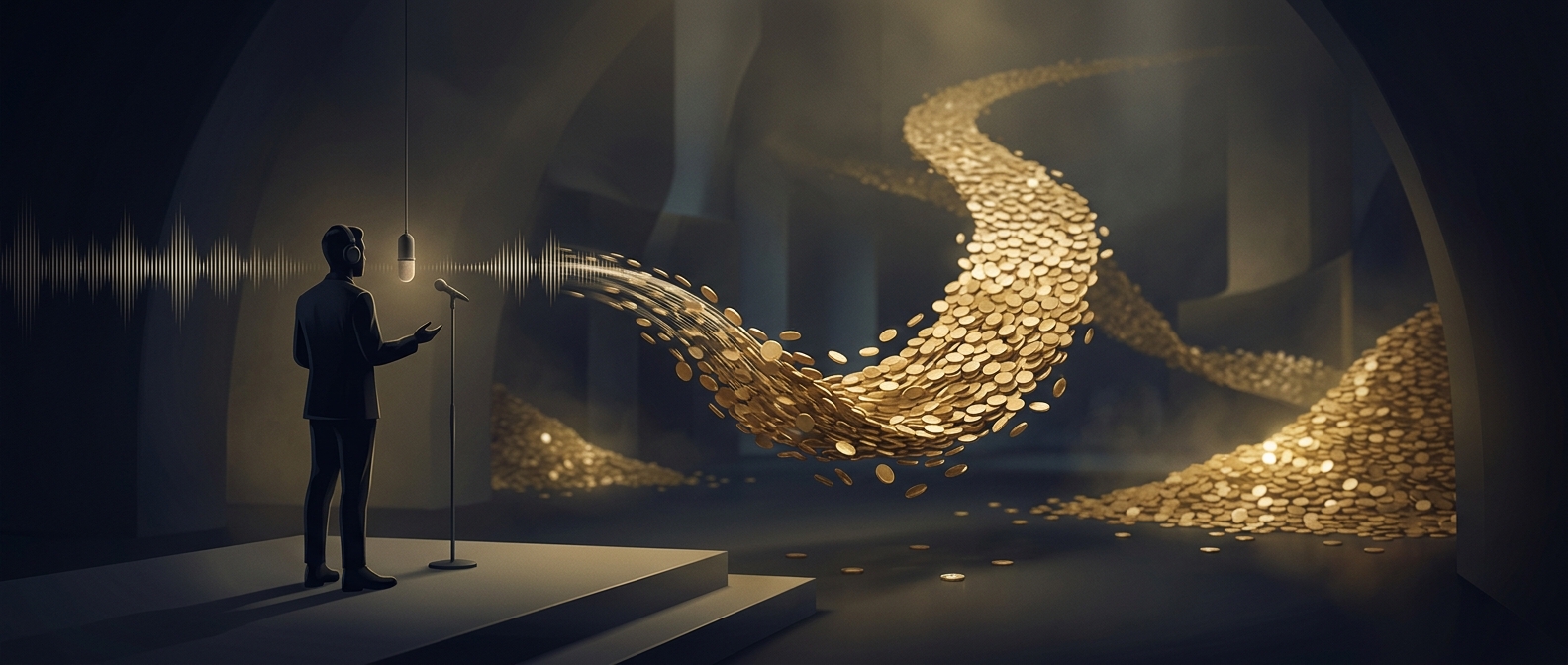
The costly part happens before the first sale
An audiobook is closer to a small audio production than to a spoken version made automatically from a printed page. Someone has to perform the text, capture clean sound, and shape the recording into a consistent listen: correcting mistakes, removing distracting noises, and balancing levels. A long book can require many hours of finished audio, so the work grows with the length and complexity of the manuscript.
Those are largely up-front costs. The publisher may need to pay for narration and production before knowing how many listeners will buy the finished recording. A printed book also has costs—design, typesetting, and printing among them—but a printing run spreads much of that work across many copies. Once a recording is complete, making another digital copy costs little; the expensive effort was creating the master recording in the first place.
The format changes the cost equation
Printing costs recur for each physical copy: paper, ink, binding, shipping, and storage. An audiobook avoids those physical expenses, but it adds a performance that a print edition does not need. A book with multiple voices, unusual pronunciations, or demanding material may take more production work than a straightforward narration.
The price a reader sees is not simply a bill for studio time. It also reflects how publishers and retailers sell the format, what listeners are willing to pay, and how revenue is shared. So an audiobook can cost more even though it is delivered digitally: its production requires skilled human work that must be completed before the first listener presses play.