Garlic as a guardian at the threshold
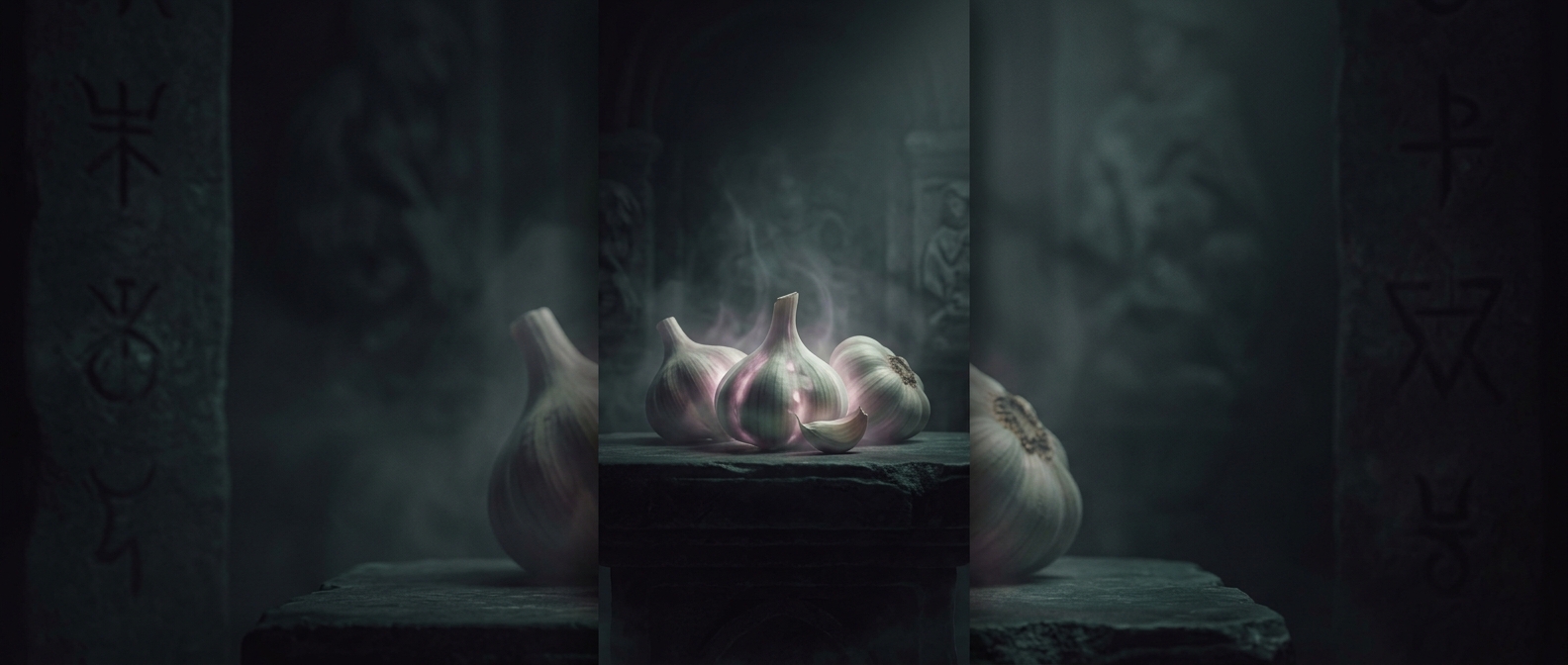
In vampire folklore, garlic worked less like a weapon than a warning sign: its strong smell made it seem powerful enough to keep dangerous beings away. Hanging bulbs over a doorway put that protection at the boundary between the household and the outside world—the place an unseen threat would have to cross.
The practice belongs to a wider tradition of treating pungent or striking objects as protection. Garlic’s odor comes from sulfur-containing compounds released when the cloves are cut or crushed. People did not need to know the chemistry for the smell to feel forceful, memorable, and out of the ordinary.
Protection, not proof of worship
Calling garlic “worshipped” can blur an important distinction. In protective customs, an object may be valued, displayed, or treated with respect because people believe it can repel harm; that does not necessarily mean they worship it as a god. Likewise, vampire stories and customs varied across places and periods, so the familiar image of garlic at a doorway should not be taken as evidence of one universal ancient practice.
The lasting appeal is easy to understand: a humble kitchen ingredient became a visible household safeguard. A row of bulbs over the door turned an invisible fear into something concrete—and made the entrance itself feel defended.