How the Praetorian Guard Sold Rome’s Purple
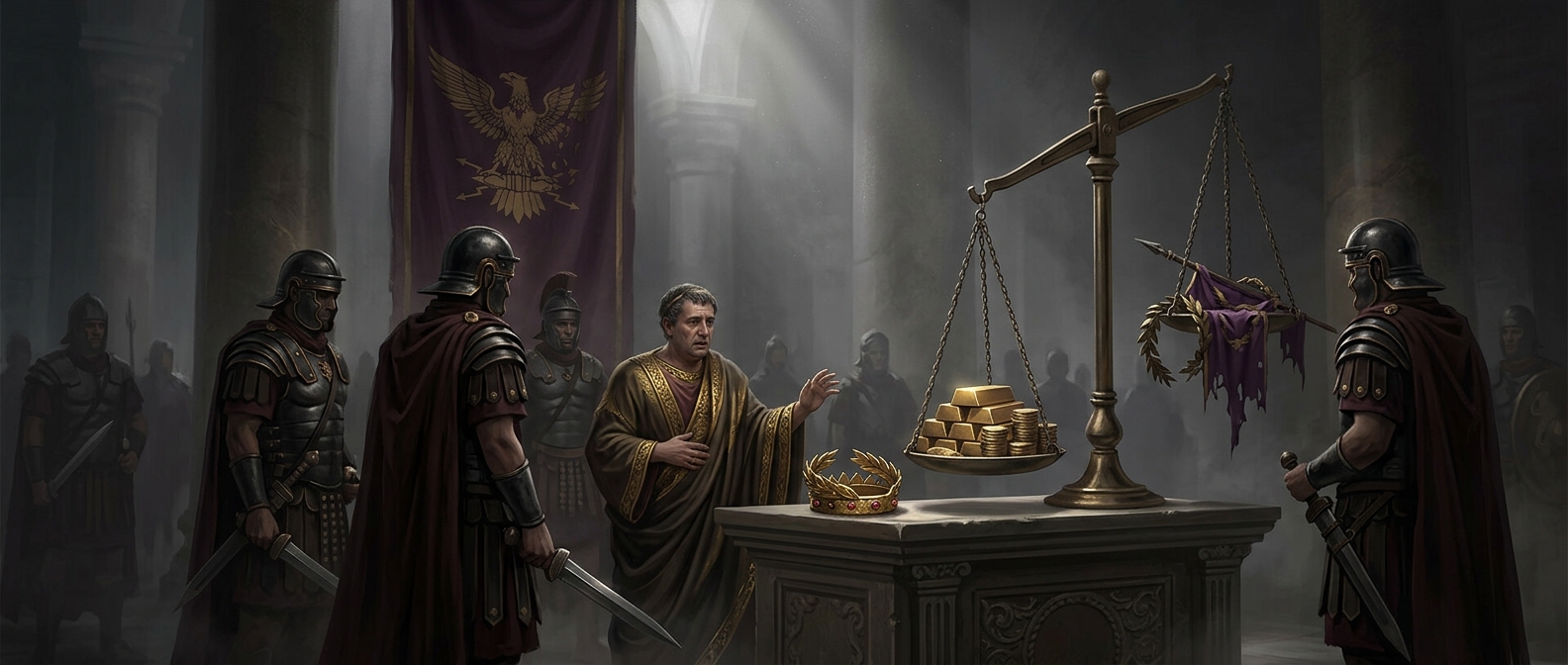
When Emperor Pertinax was killed in 193 AD, the Praetorian Guard—the soldiers assigned to protect the emperor and Rome—had more than a vacant palace to offer. In practice, the guards controlled access to the capital and could make or break a ruler. They invited bidders to promise them a payment, known as a donative, in return for backing the next emperor.
The contest was between Didius Julianus, a wealthy senator, and the city prefect, Titus Flavius Sulpicianus. According to ancient accounts, each raised his offer from outside the guards’ camp. Julianus won by promising more. It was an auction in the political sense: the prize was the soldiers’ support, not a title put up for sale through any formal Roman procedure.
Why the Bid Could Not Buy Lasting Power
The guards could place Julianus on the throne, but their approval did not command the allegiance of every Roman army. Soldiers stationed far from the capital had their own commanders and could choose a rival. Julianus’s purchase therefore created an immediate problem: he owed a large reward to the men who had installed him, while other forces had little reason to accept his rule.
That weakness became decisive when the provincial armies backed competing claimants. Septimius Severus marched on Rome, and Julianus was killed after roughly two months as emperor. Severus then took control of the capital and dismantled the Praetorian Guard as it had existed.
The episode shows the cost of treating political loyalty as a one-time transaction. The guards could sell Julianus the appearance of authority in Rome; they could not sell him the support of an empire’s armies.