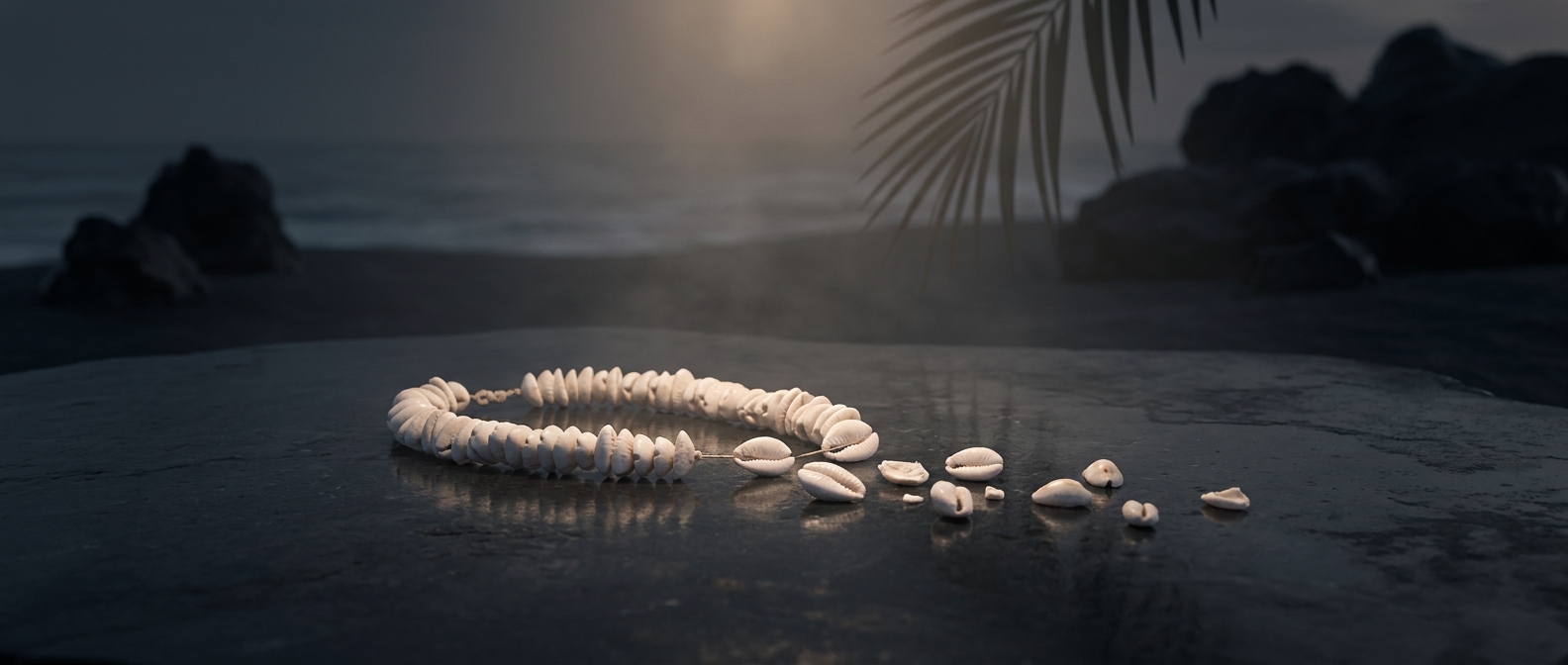
A beach’s natural beads
“Puka” is a Hawaiian word for a hole. The name refers to small pieces of cone shell whose pointed tips have broken away, leaving openings that can be threaded together. Waves and sand can wear shells down, though necklaces sold as puka jewelry may also use shells that have been shaped or drilled to make them more uniform.
The pale fragments make a simple, high-contrast strand: each piece is small, but together they form a distinctive band of white around the neck. That look was closely associated with Hawaii’s beaches and surf culture, giving the necklace a local identity that traveled easily in a suitcase.
A souvenir that advertised its origin
A necklace is portable, wearable, and visible. Unlike a postcard tucked away at home, it lets the wearer carry a piece of a trip into everyday life—and invites other people to ask where it came from. The shell material and the name “puka” tied the accessory to Hawaii, even when the wearer was far from the islands.
That association also made the strand an easy shorthand for a tropical getaway. Its meaning depended less on elaborate craftsmanship than on recognition: pale shells, beach imagery, and the wearer’s story about where they had been. The same visibility that made it an appealing souvenir could later make it feel conspicuously tied to a particular vacation or fashion moment.