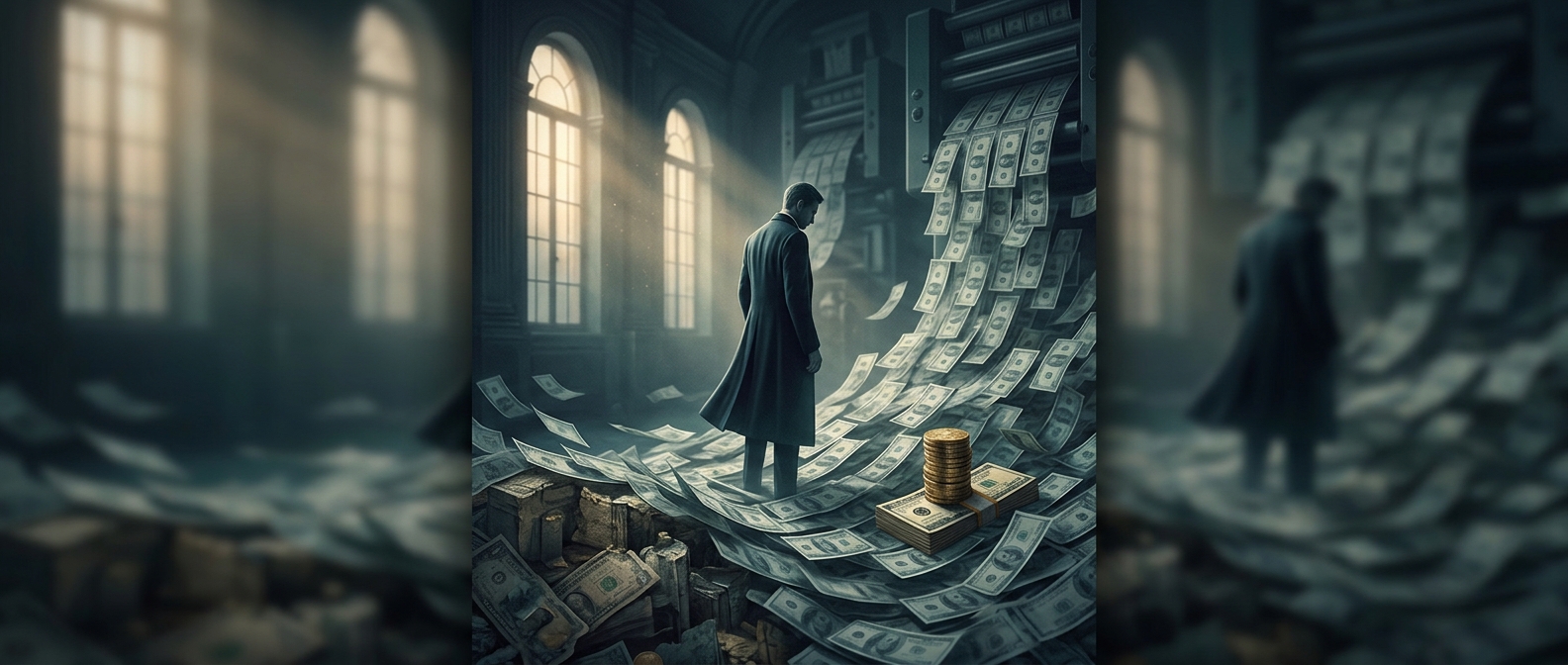
Why More Money Can Weaken a Dollar
A banknote does not lose value because the ink or paper changes. Its purchasing power falls when prices rise: the same dollar then buys less food, fuel, or rent than before. The key issue is not simply how many bills are printed, but whether the amount of money people can spend grows faster than the goods and services available to buy.
Imagine an economy producing roughly the same number of goods while households and businesses suddenly have more money to spend. Buyers compete for limited supplies, and sellers can raise prices. If money and production expand together, however, a larger supply of money does not necessarily cause the same pressure on prices.
How New Money Reaches Prices
Physical cash is only one part of the money people use. Most payments move through bank accounts, and lending and government spending can also increase the money available to households and businesses. A central bank may influence these conditions through interest rates and other tools; it does not have to send newly printed notes directly to everyone.
The effect is neither automatic nor immediate. New money may sit in bank reserves or savings rather than spur purchases, and price changes can take time to spread through the economy. If spending rises while factories, workers, or supply chains cannot quickly provide more, price increases become more likely. If production can respond, some of the added demand may lead to more output instead.
That is why a dollar in a wallet remains the same dollar, even as its reach changes. The practical loss shows up at the checkout: when prices rise broadly, cash saved for later buys less than it did before.