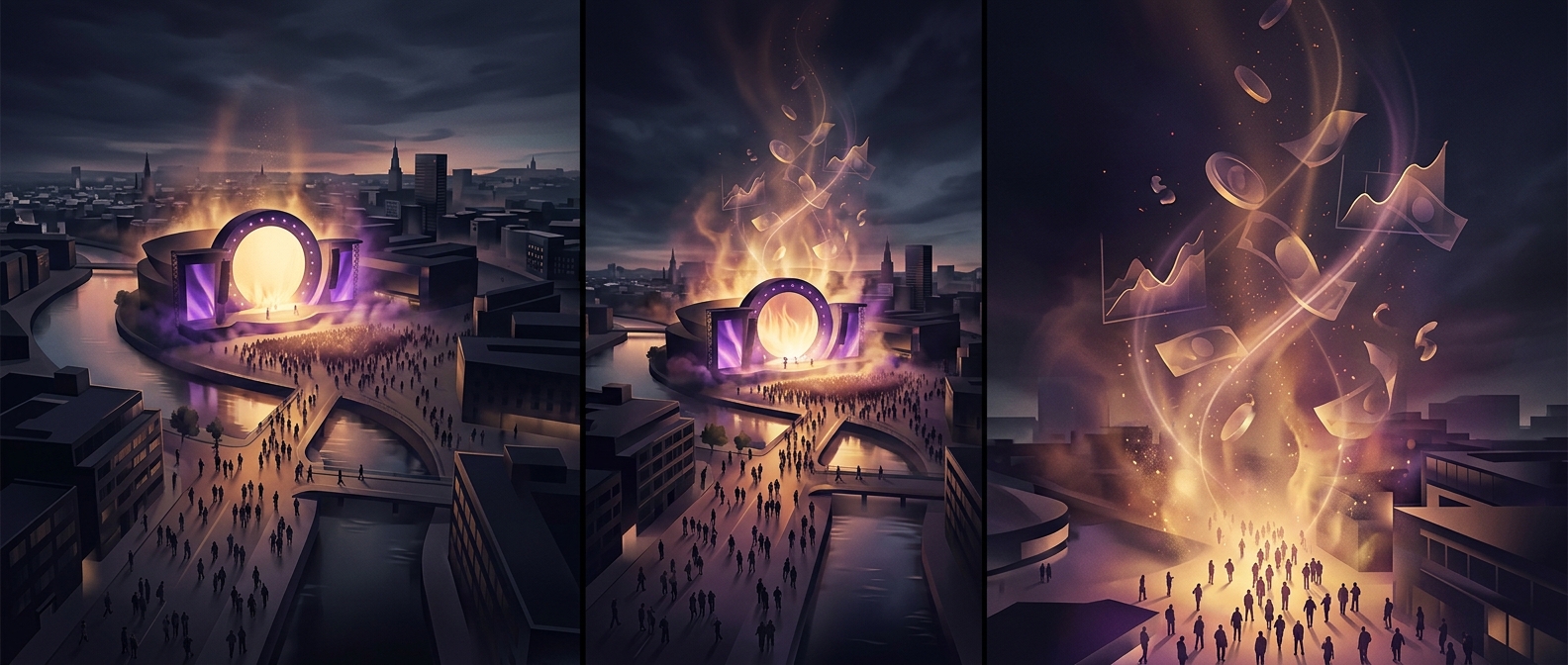
How a concert can reach the inflation index
A hotel room is a perishable service: once a night has passed, an unsold room cannot be stored and sold later. In the short run, the number of rooms in a city is also difficult to expand. When a wave of concertgoers arrives at once, hotels can respond to the surge by raising rates, especially as cheaper rooms sell out and remaining bookings are made at higher prices.
That change can matter beyond travelers’ bills. Consumer-price measures track the prices households pay for a basket of goods and services, including accommodation. If sampled hotel prices jump during the measurement period, they can push up the recorded inflation rate—even though the increase is concentrated in one place and a brief stretch of time.
A temporary spike is not the same as lasting inflation
The effect depends on both the size of the price change and how accommodation prices enter the index. A busy concert weekend does not mean prices across the whole economy have accelerated; it can still make a particular month’s reading look higher. When the event passes and demand eases, hotel rates may fall back, so the bump need not persist.
That is why a global tour can leave a mark in an economic statistic without changing the underlying cost of living for long. The same limited supply that makes rooms costly for fans can turn a few crowded nights into a visible, temporary signal in the inflation data.