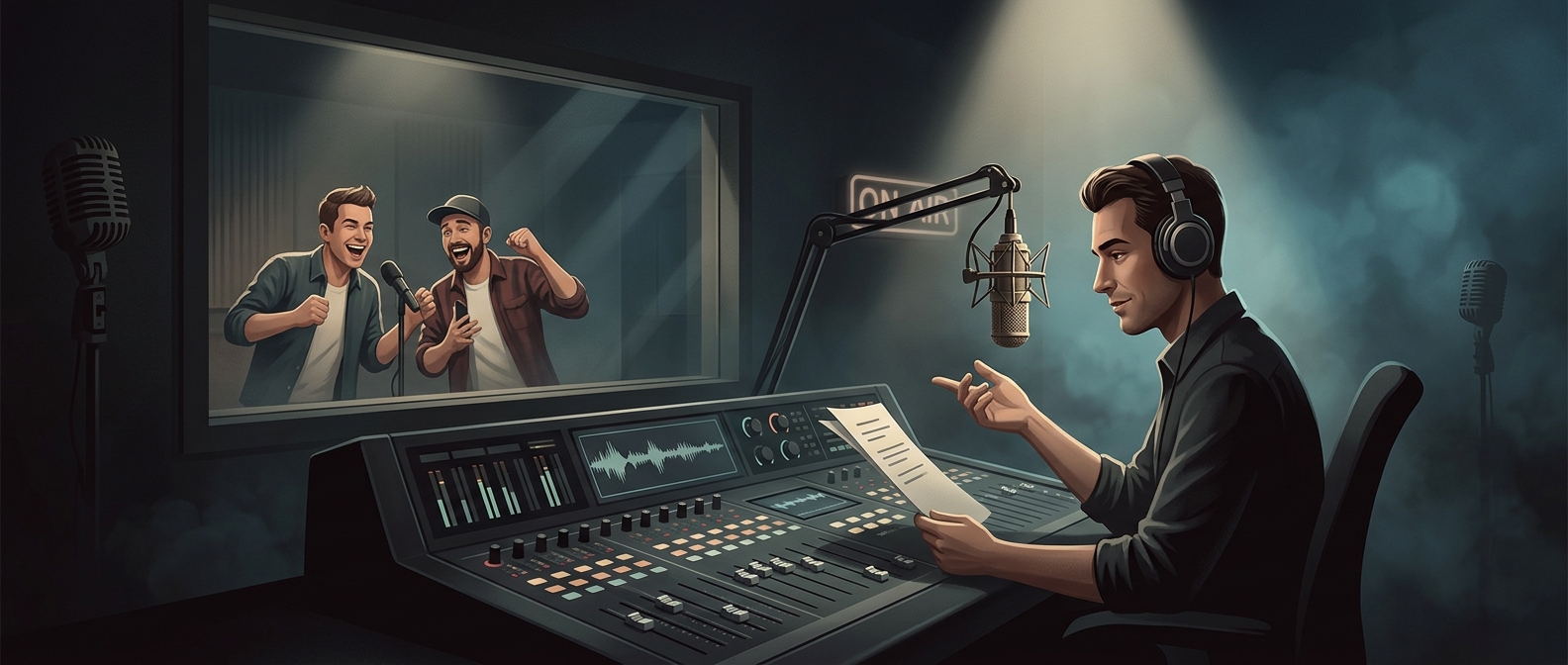
How a “Prank Call” Is Built for Broadcast
A convincing radio prank needs more than a funny voice. It needs a person on the other end who can react naturally—and permission to turn that exchange into entertainment. Using a paid voice actor solves both problems: the performer knows the premise, and the station can arrange the recording for broadcast rather than airing a private person’s unsuspecting call.
The actor’s job is to make the situation feel as if it is unfolding in real time. A caller might introduce an ordinary request, then let the performer’s irritation grow into an exaggerated outburst. The “enraged grandma” works because the contrast between a familiar, everyday voice and an unexpectedly fierce reaction is immediately legible to listeners.
Why the Performance Matters
A real stranger could hang up, become genuinely distressed, or object to having a private conversation broadcast. A performer can sustain the comic escalation while staying within the setup. That gives the hosts a more reliable exchange to shape into a segment, and it avoids treating an unaware person’s reaction as the punchline.
The result depends on a small illusion: listeners hear the spontaneity of a call, while the people making the segment control the performance. The prank is in the scene, not in deceiving an unsuspecting caller.