Why the pause feels longer than the question
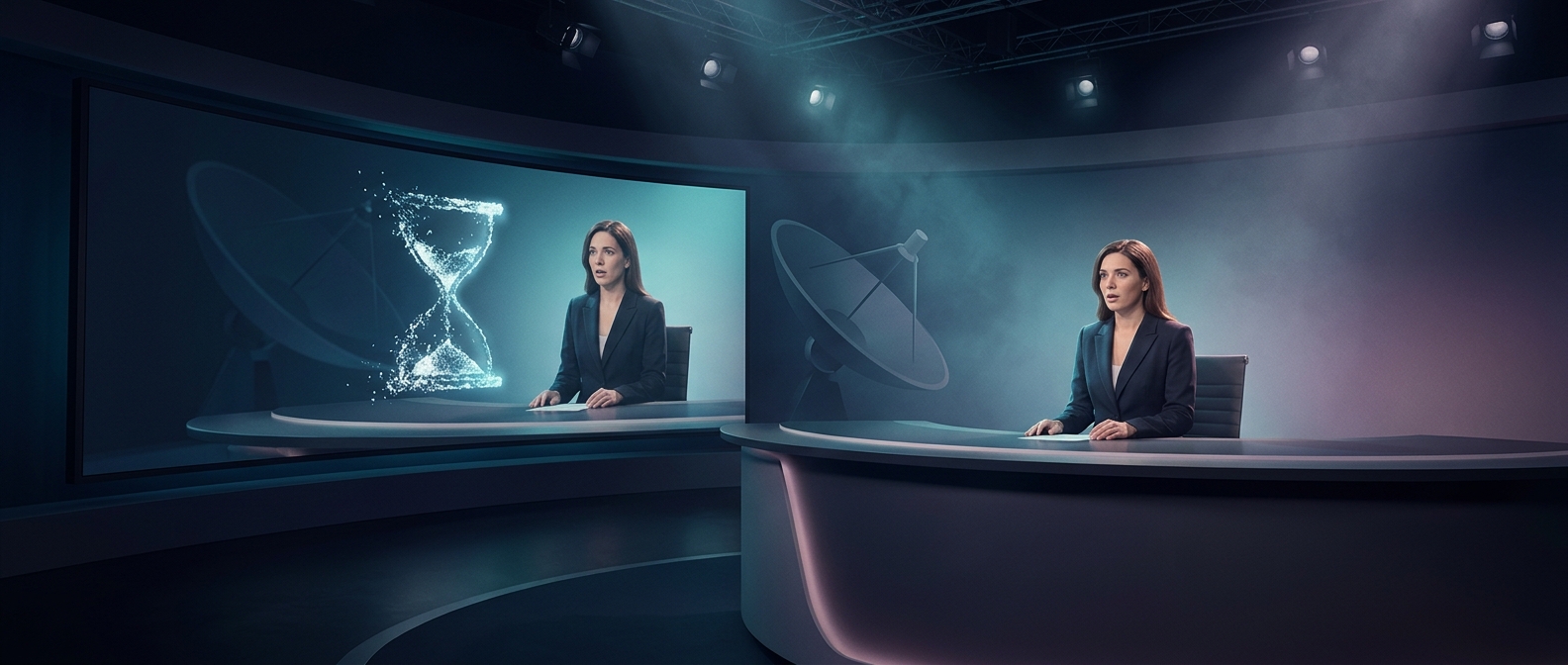
Many live television links use satellites in geostationary orbit, which appear to hover over the same spot on Earth. They sit about 36,000 kilometers above the equator. A studio’s signal must travel up to the satellite and back down to the remote guest’s receiver; the guest’s reply makes the same trip in reverse.
Radio waves travel at the speed of light, but that distance still adds up. The question can take roughly a quarter of a second to reach the guest, and the answer takes about as long to return. Audio encoding and other equipment can add more delay. The gap is especially noticeable when viewers compare it with a nearby studio conversation, where sound arrives almost immediately.
The delay changes how people take turns
In ordinary conversation, a speaker can hear the end of a sentence and begin replying almost at once. With a satellite link, the interviewer may finish speaking and hear nothing for a beat. If they assume the guest did not hear the question, they may repeat it; meanwhile, the guest has already started answering. Their voices then collide, making both harder to understand.
Broadcasters compensate by leaving space after questions and waiting for the remote guest to finish before speaking again. The pause can look like hesitation, but often it is simply the time required for the sound to make its journey—and for each person to learn that the other has finished.