Why an Acceptance Speech Has a Clock
An award show is a live schedule, not just a string of celebrations. Each speech occupies time reserved for the next presenter, category, performance, or commercial break. If one winner runs long, the delay can ripple through the rest of the broadcast, leaving producers fewer options to recover the schedule.
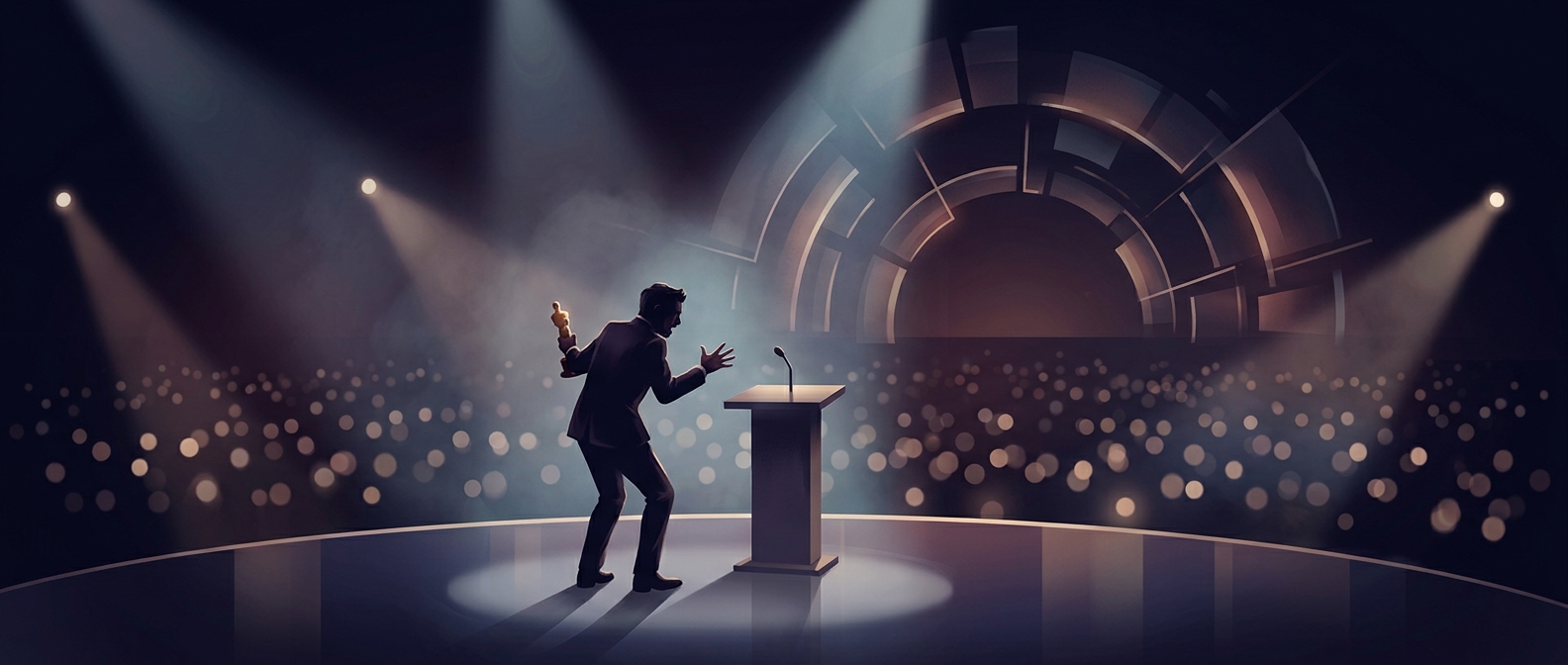
That makes the acceptance speech a tiny piece of event production as well as a personal moment. A winner may be trying to thank collaborators, family, and people who helped make the work possible, while the crew is preparing the next segment. Music, a fading microphone, or an usher’s cue can signal that the available time is ending; the exact method varies by show.
The Pressure Is Part of the Moment
The rush can make even a prepared speaker stumble. In the seconds after a win, someone may be deciding whom to name first, remembering a list, and reacting to the crowd—all while watching for a cue to leave. The resulting panic is not simply nerves: it comes from having to make a lasting, public choice under a hard production limit.
That limit also shapes what audiences hear. Winners often prioritize names they fear leaving out, while longer acknowledgments may be cut short or moved elsewhere. The ceremony’s most human moment is therefore squeezed between two competing needs: giving a winner room to speak and keeping the live show moving.