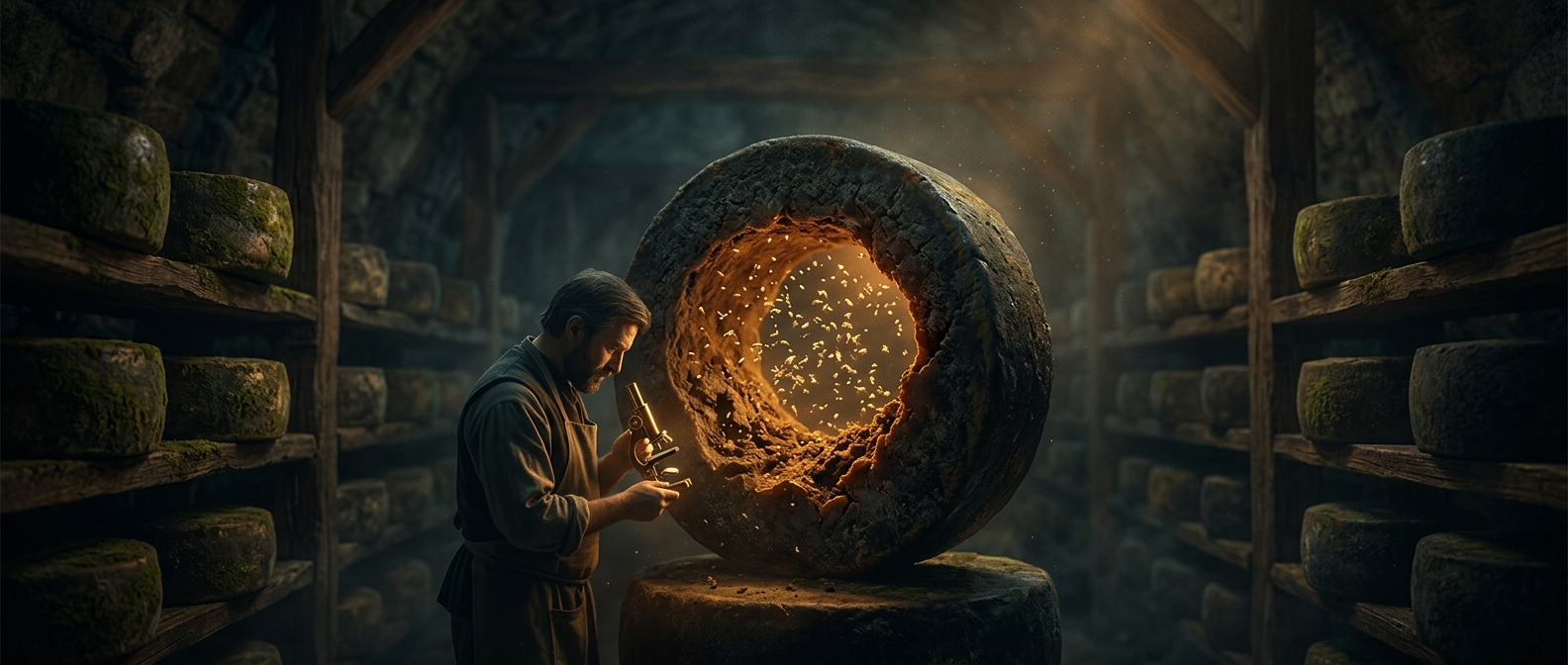
How mites turn a rind into a pitted surface
Cheese mites are tiny relatives of spiders, not insects. On an aging wheel of Mimolette, they feed and move across the outer rind, leaving a network of minute pits. The damage is concentrated at the surface: the mites do not burrow through the wheel to reach the orange paste inside.
Those pits are a visible record of activity during aging. A rind is the cheese’s outer boundary, where changes in moisture and exposure to air differ from those in the center. As the mites disturb that boundary, they can alter its texture—but the pits are not tunnels carrying the creatures into the cheese.
Why cheesemakers brush the wheels
The mites are kept in check because unchecked feeding can erode the rind too far and spoil the wheel’s protection. Brushing removes mites and debris from the surface while allowing the cheese to continue maturing. It is a balancing act: the creatures leave their mark, but the maker still has to preserve the rind.
That makes the pitted exterior more than a decorative oddity. It shows that aging is not simply time passing in a cellar; it is a managed process at the cheese’s surface, where even tiny animals can change what the finished wheel looks like.