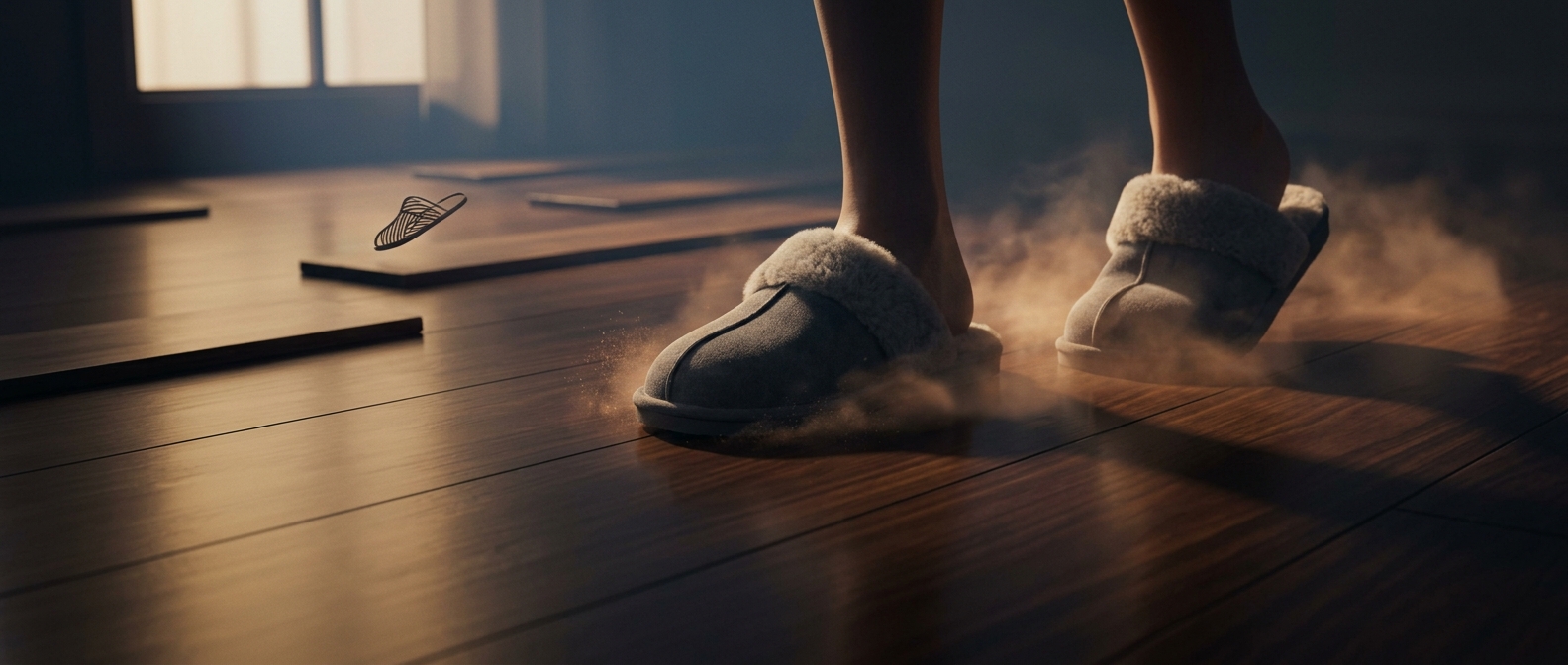
Why Slippers Glide on Hardwood
A slipper’s quiet slide comes from the pairing of its sole with the floor. Hardwood is relatively smooth, so a flat slipper sole has few surface irregularities to catch against it. Many outdoor shoes, by contrast, have patterned tread designed to grip uneven ground; that texture can resist movement when pressed against a hard, smooth floor.
The sole’s material matters too. Friction—the force that resists sliding—depends on both surfaces and how firmly they press together, not simply on whether a sole looks smooth. A slipper’s softer or less grippy underside may offer less resistance on wood than a rugged shoe sole. That makes it easier to shuffle forward without lifting each foot completely.
The Trade-Off Is Grip
Outdoor tread is useful because it helps a shoe hold on to surfaces, especially when they are rough or slippery. Indoors, that same grip can make a step feel more abrupt. A slipper favors easy movement over the firm traction an outdoor shoe is built to provide.
That glide is convenient for crossing a room, but it also means slippers can slide unexpectedly. The feature that makes a hardwood floor easy to shuffle across is, in the wrong step, a reason to walk carefully.