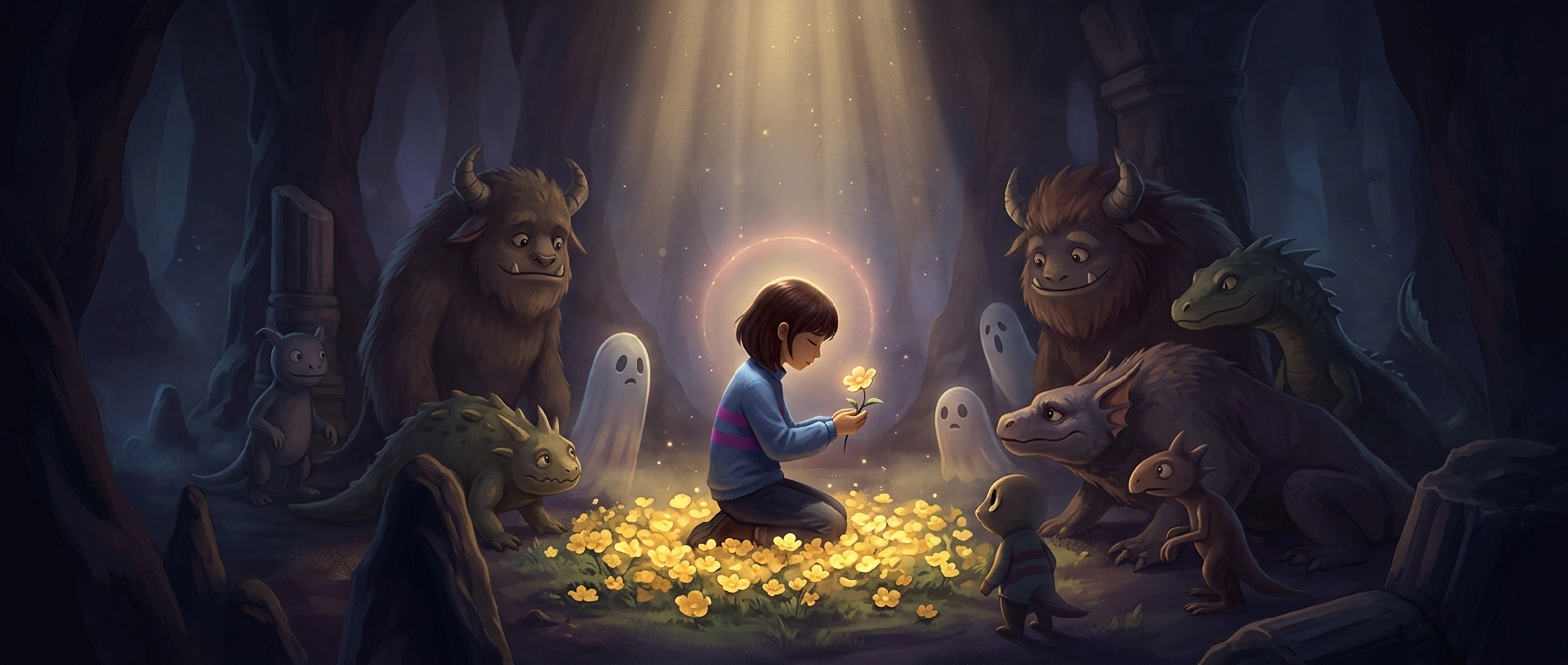
How Undertale turns a fight into a conversation
In Undertale, combat is not limited to attacking. On each turn, players can choose ACT, a menu of character-specific actions, or MERCY, which can spare an opponent once the right conditions are met. An action might mean talking, flirting, or petting; what works depends on the monster. These choices can change how it behaves and reveal what it wants, creating a route to peace rather than simply lowering its health.
The other half of a fight is a brief dodge challenge: the player moves a small heart through patterns of incoming attacks. That keeps encounters tense even when the player is trying not to hurt anyone. Choosing mercy is not the same as skipping combat; it means reading the opponent and surviving long enough to resolve the encounter without a lethal blow.
Mercy changes the story, not just the score
The game tracks whether the player kills monsters, and that decision shapes what happens beyond the battle screen. Killing earns EXP, or experience points, which make the protagonist stronger. Sparing opponents leaves that growth behind, so a no-kill approach also means facing later dangers without the rewards of violence.
More importantly, monsters are treated as characters with distinct personalities, not interchangeable obstacles. Their reactions to the player’s actions make mercy feel like a choice made in a particular relationship. The result is a game where a player can finish without killing anyone—and where the way they reach the ending helps determine what that ending means.