Why a Familiar Corner Can Feel Charged With Meaning
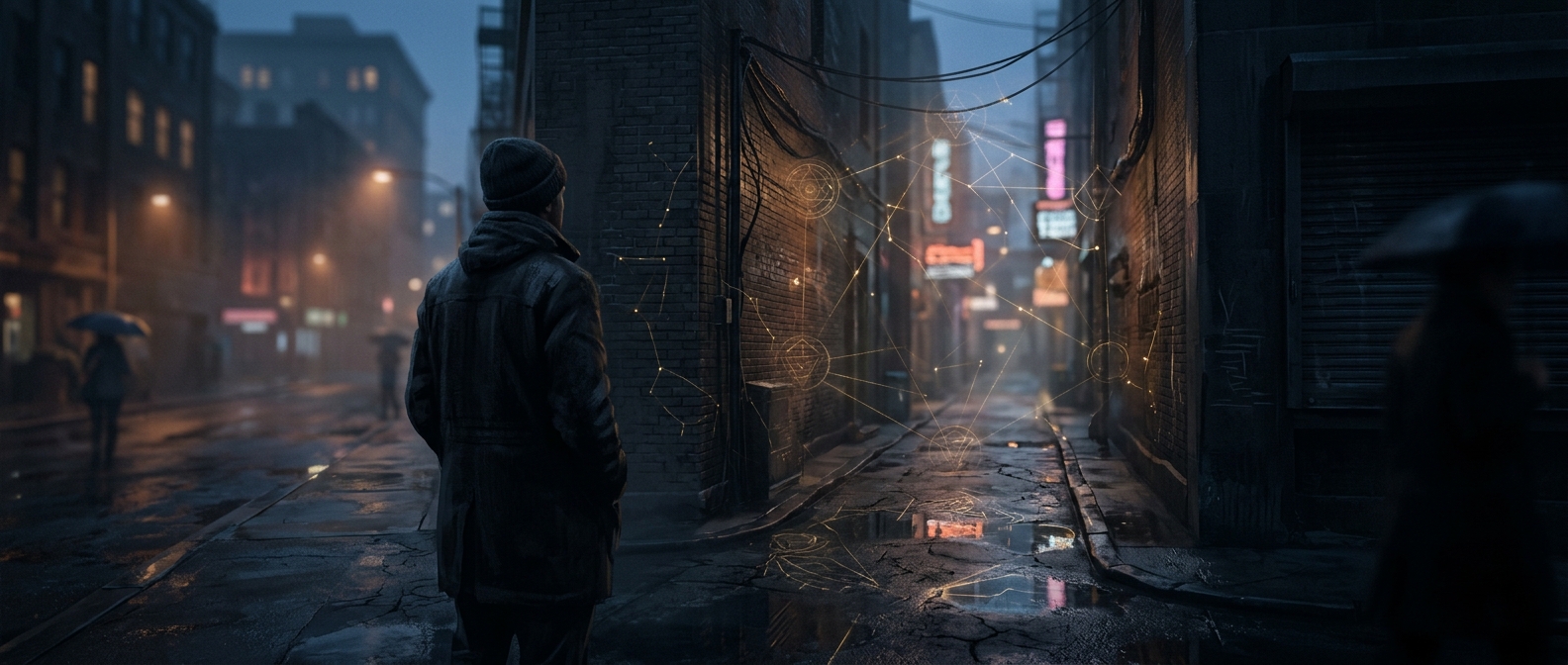
An intersection is usually just part of a route. But after you encounter it repeatedly, it can become a marker in your attention: you remember the corner, notice it more readily, and begin asking why it keeps appearing. The street has not necessarily changed; your relationship to it has.
That shift is one way people make meaning from coincidence. A recurring place can become attached to a question, worry, hope, or decision already on someone’s mind. Seeing it again may feel less like passing scenery and more like an invitation to pause. In mysticism, this kind of striking coincidence is sometimes understood as a sign—not because the corner carries an agreed-upon message, but because the encounter feels personally significant.
The Meaning Comes From the Encounter
A “sign” is often interpreted rather than decoded. The same intersection could remind one person of a difficult choice and mean nothing in particular to another. Its significance comes from the meeting between an ordinary external event and an inner concern: what the person was thinking about, what they noticed, and what the place has come to represent.
That makes the experience useful even without a single, provable interpretation. Someone might treat the repeated encounter as a prompt to reflect, rather than as an instruction to obey. The corner can matter because it helps bring a question into focus.
The next time the route passes that spot, the most revealing detail may not be the intersection itself, but the thought that arrives with it.