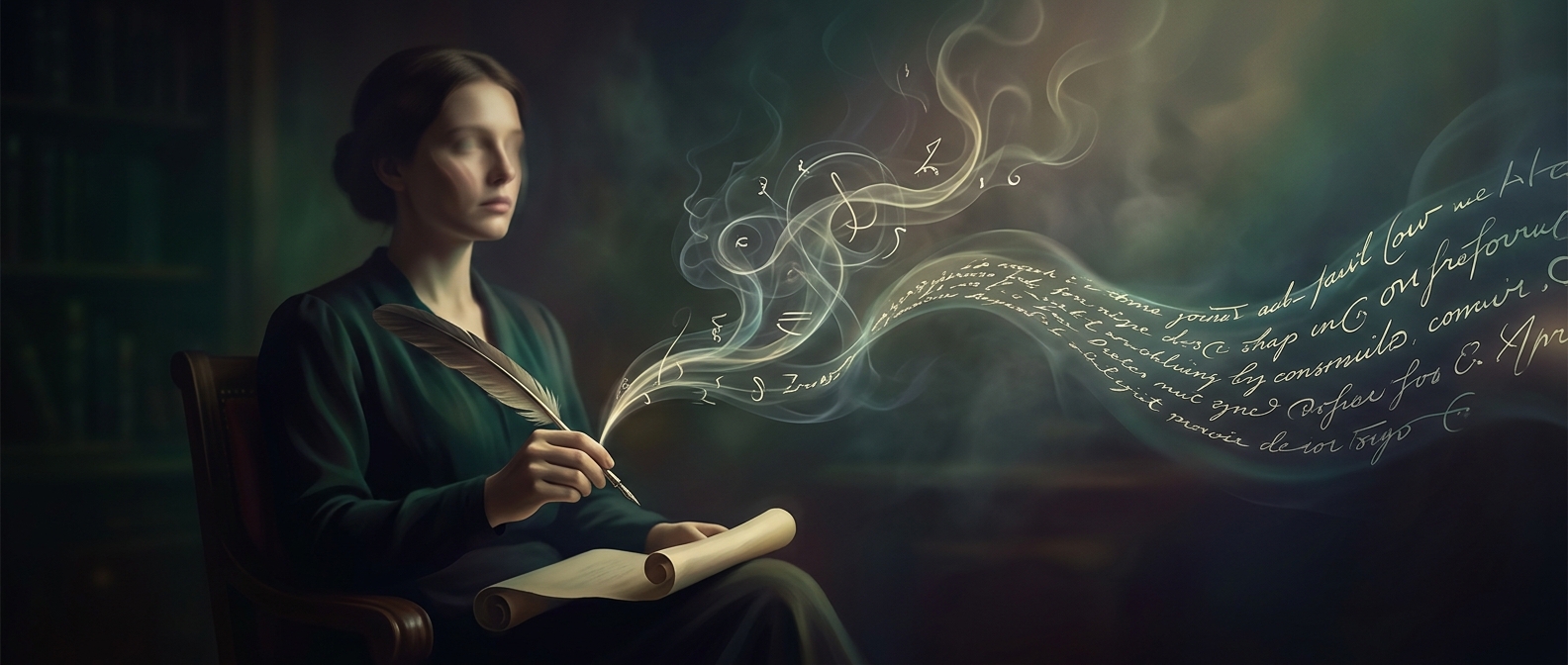
How Surrealists Tried to Write Without Editing
Surrealist writers used automatic writing as a way to loosen the grip of deliberate planning. Instead of choosing a topic, arranging sentences, and revising as they went, they tried to keep the pen moving and record whatever words or images came to mind. The aim was to reduce the conscious editor’s influence—not to switch off the mind altogether.
That distinction matters: the writer still held the pen and produced the marks. But by resisting pauses, corrections, and careful reasoning, practitioners hoped to let less deliberate associations reach the page before they were filtered into a polished, sensible account.
Why the Page Could Become Illegible
The method put speed and continuous movement ahead of readability. A hand racing to keep pace with thought could produce cramped, overlapping, or fragmentary words; if the writer focused on not stopping, neat handwriting was an afterthought. Some results were therefore less like messages waiting to be decoded than traces of an attempt to write without ordinary control.
For the Surrealists, that roughness could serve a purpose: it showed what happened when conventional standards of sense and style were temporarily relaxed. The telling detail is that “automatic” did not mean a revelation arriving from nowhere. It meant trying to leave fewer opportunities for conscious revision between an association and the mark it left on the page.