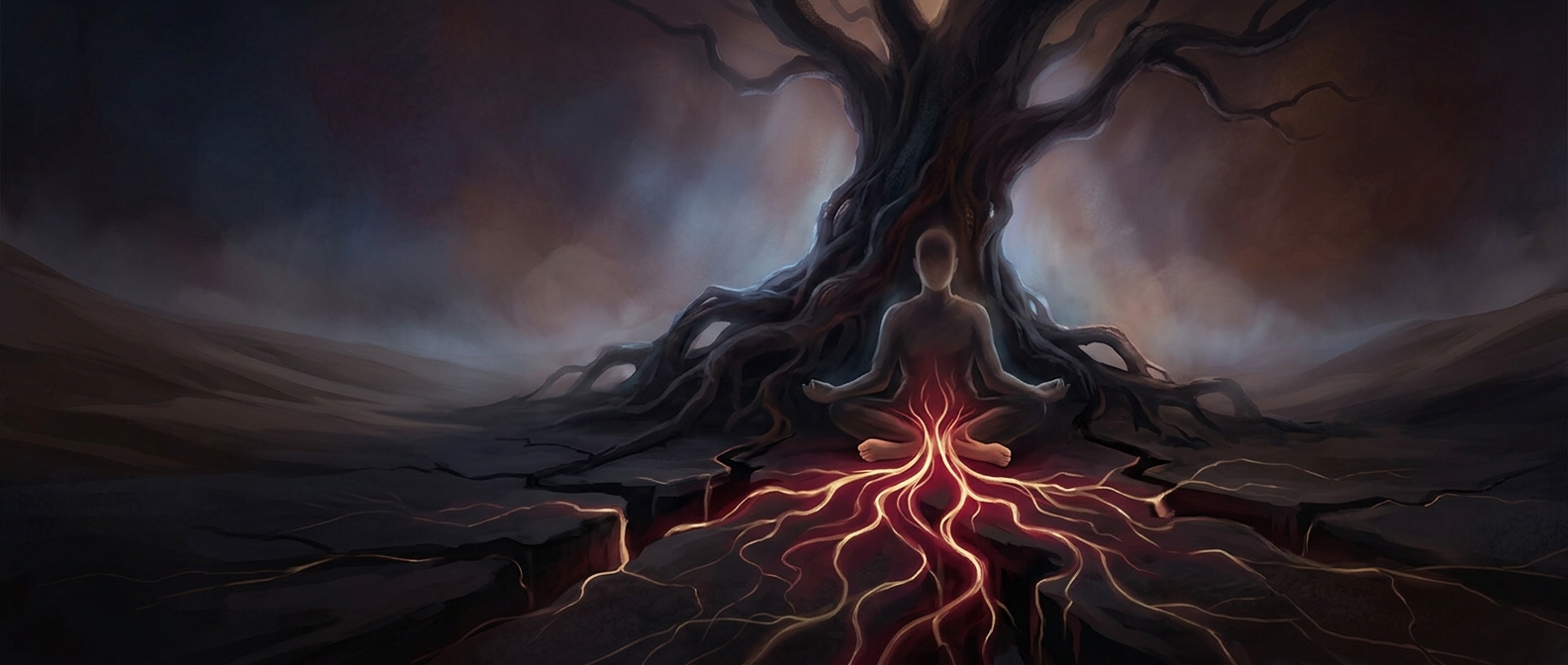
What the “root” is meant to support
In chakra traditions, the lowest energy center is commonly called Muladhara, a Sanskrit name often translated as “root support.” It is pictured at the base of the spine and associated with the earth: stability, shelter, nourishment, and the conditions that let a person feel secure enough to meet everyday life.
That symbolism makes practical concerns part of spiritual life rather than distractions from it. A person preoccupied with food, money, or a safe place to live may have little attention left for reflection or wider aspirations. In this framework, tending to basic needs can itself be a way of restoring a sense of steadiness.
What “grounded” means here
A balanced root center is not supposed to keep the body physically attached to the ground. “Grounded” describes a felt quality: being present, able to handle ordinary responsibilities, and connected to the realities of one’s circumstances. Calling the center imbalanced is a traditional way of describing the opposite—feeling insecure, scattered, or unable to manage practical demands.
Practices linked with this center may use attention to the lower body, breathing, or imagery of roots and earth. The point is to make stability tangible: notice the body, the floor beneath it, and the immediate needs that call for care. The image of a root is memorable because it turns an abstract spiritual idea into a daily question: what helps a person feel supported enough to stand firm?