Why the Root Comes First
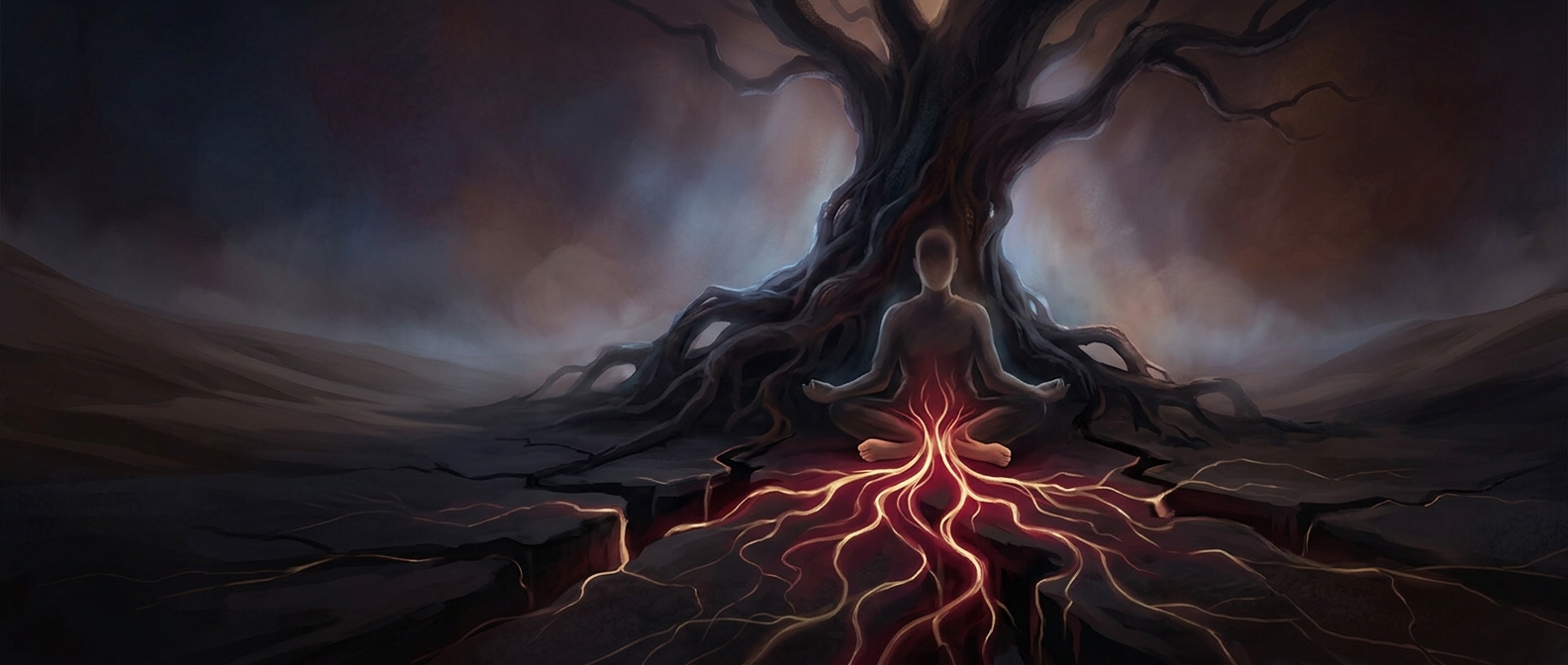
Muladhara is commonly pictured at the base of the spine, where a body’s contact with the ground makes “root” more than an abstract metaphor. In chakra traditions, the body becomes a map for spiritual practice: attention begins close to the earth and moves upward through a sequence of centers. The image suggests that seeking insight is not separate from having a place to stand, a body to care for, and basic needs to meet.
“Subtle energy” refers to a spiritual concept in these traditions, not a form of energy measured by physics. The chakra map gives practitioners a way to organize experience and practice, rather than describing a structure recognized by anatomy.
A Foundation, Not a Destination
The root center’s role is therefore relational: it gives the rest of the map a starting point. Practices associated with grounding—such as steady posture, deliberate breathing, or awareness of bodily sensations—can make that symbolism tangible. They direct attention toward steadiness before attention turns to more inward or expansive aims.
Chakra systems vary across traditions, so Muladhara does not carry one identical interpretation everywhere. But the root image preserves a practical spiritual intuition: aspirations can feel precarious when a person is disconnected from ordinary bodily life. In this framework, grounding is not a retreat from spiritual development; it is what lets the next step begin.