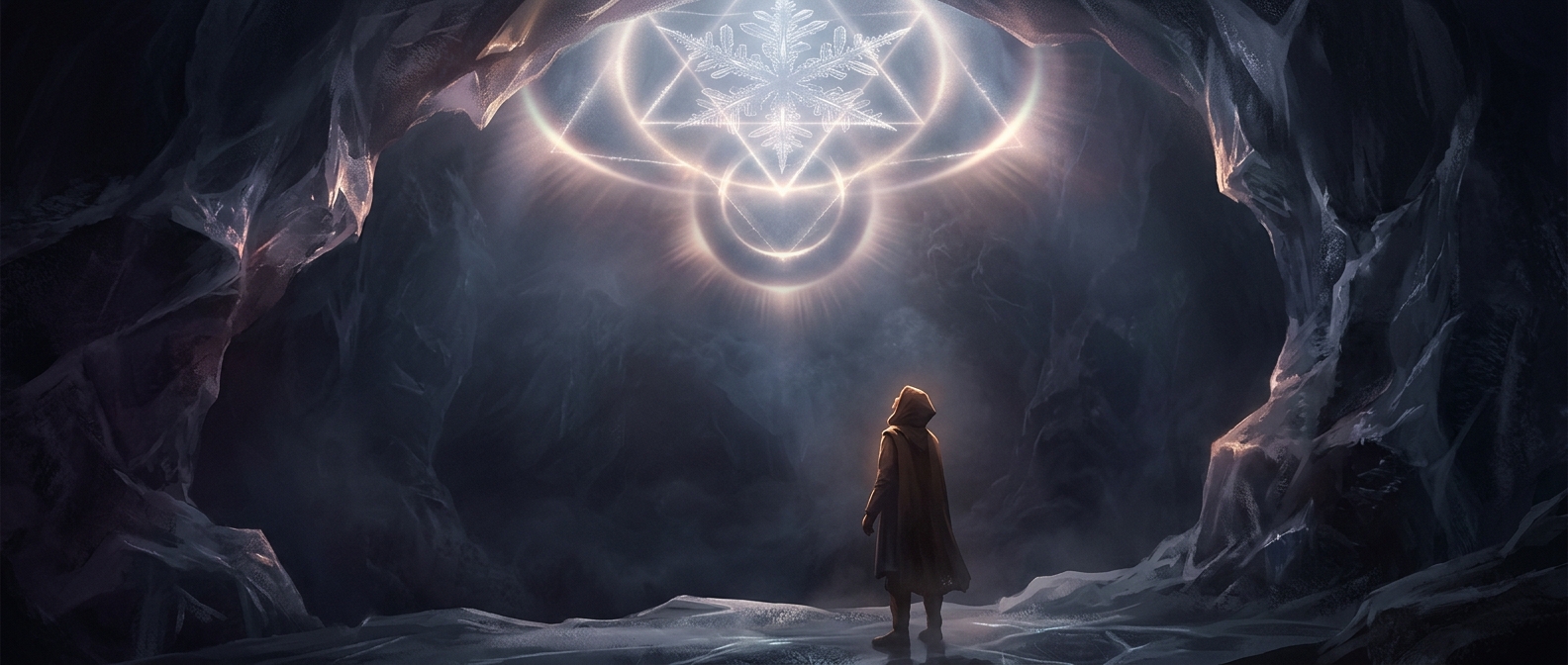
Why the heavens needed a fifth element
In Aristotle’s influential account of nature, everything below the Moon was made from four familiar elements: earth, water, air, and fire. These materials could change into one another and move toward their natural places. The stars and planets seemed different: they moved in orderly circles and, unlike earthly things, did not appear to wear out or transform.
Aether—also called the “fifth element”—gave that difference a material explanation. It was imagined as the substance of the celestial realm: pure, enduring, and suited to the heavens’ circular motion. This was not simply a poetic name for empty space. It made the sky part of an ordered physical universe while setting it apart from the changeable world below.
A changing idea, not one settled theory of light
The word’s meaning shifted across ancient and later traditions. Some writers connected aether with the brightness of the upper sky, and the idea could help make sense of how light traveled. But it is misleading to treat every ancient account as a single theory in which aether carried light in the modern scientific sense. The later proposal that light waves needed an invisible medium called “luminiferous aether” was a separate development, centuries afterward.
The ancient concept mattered because it supplied a framework for interpreting what people could observe but not yet explain: the apparent permanence of the stars and the regular paths of the planets. By giving the heavens their own substance and rules, aether helped make the contrast between sky and Earth seem like a feature of nature, not merely an impression from the ground.