Why Stock Photos Leave Room for Invisible Ideas
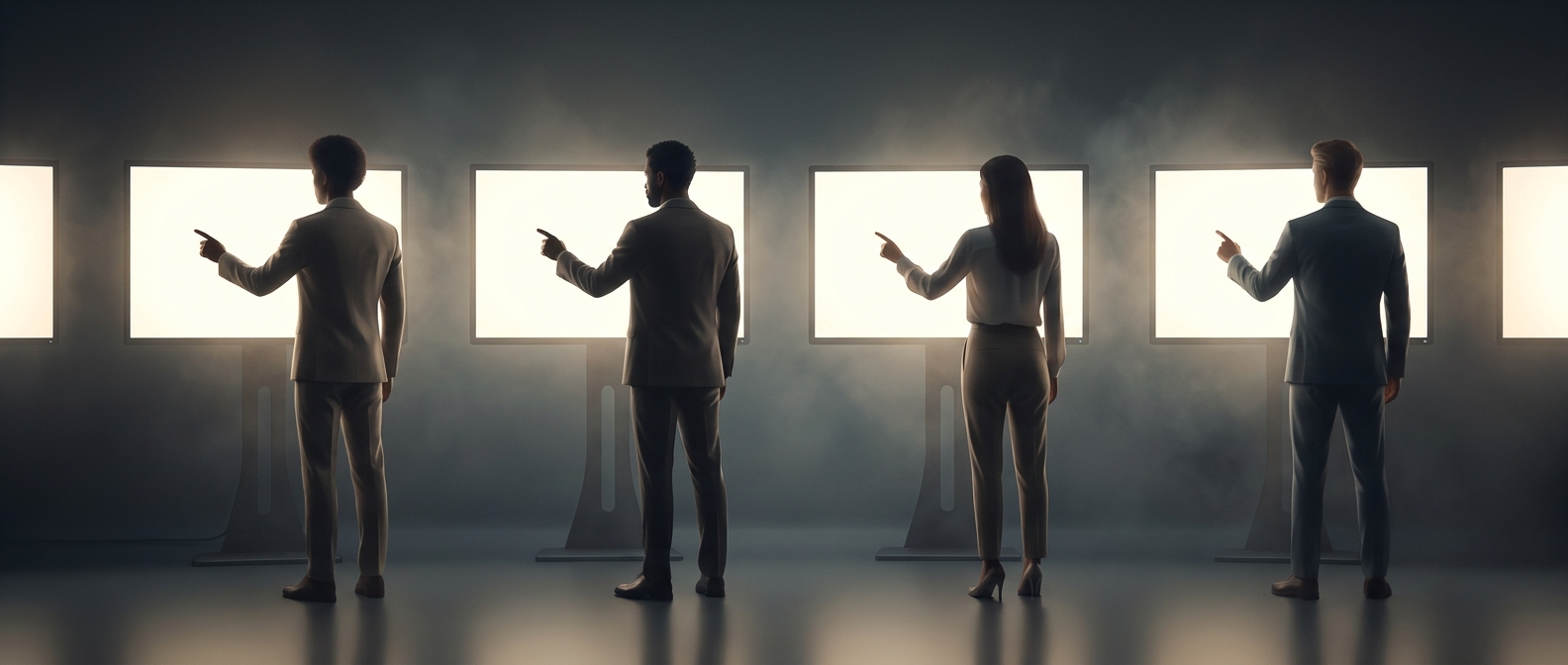
A person pointing at an empty wall can look odd in real life. In a stock photo, that blank patch is often the most useful part of the picture: a designer can add a chart, headline, or interface there later. The photographed person supplies the human reaction; the empty space supplies a flexible place for the message.
The Image Is Built for the Edit
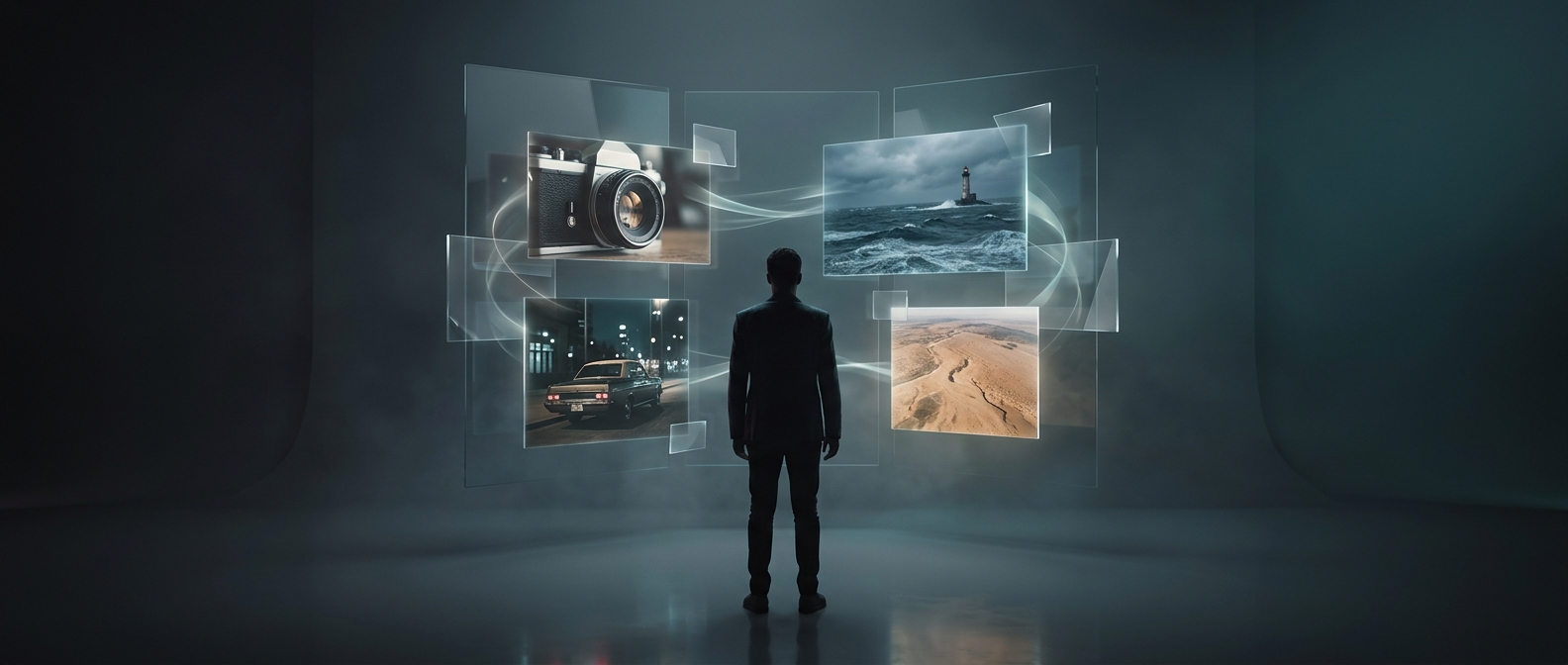
Photographers may ask models to gesture toward a blank screen, glass board, or open area beside them. They can then frame the shot with that space clearly visible, leaving room for a company to place its own graphics into the composition. A transparent board is especially convenient: it suggests a presentation without blocking the person behind it.
This is a form of negative space—an uncluttered area deliberately left around the main subject. In stock imagery, it is not merely decorative. It lets the same photograph serve different purposes: one buyer might add a sales chart, another a training slide, and another a product announcement.
Why Not Photograph a Real Presentation?
A real screen can make a picture harder to reuse. Its text may be unreadable at the size shown, irrelevant to a buyer’s business, or tied to a particular brand. A blank surface avoids those mismatches and gives whoever licenses the image more control over the final message. It also keeps the photograph from depending on details that could quickly look dated.
The result is a familiar stock-photo convention: a model appears to explain an idea the camera cannot see. The gesture is staged, but its practical purpose is real—the empty space is a placeholder, waiting for the buyer’s version of the story.