How a Tumpline Turns the Head Into a Load-Bearing Point
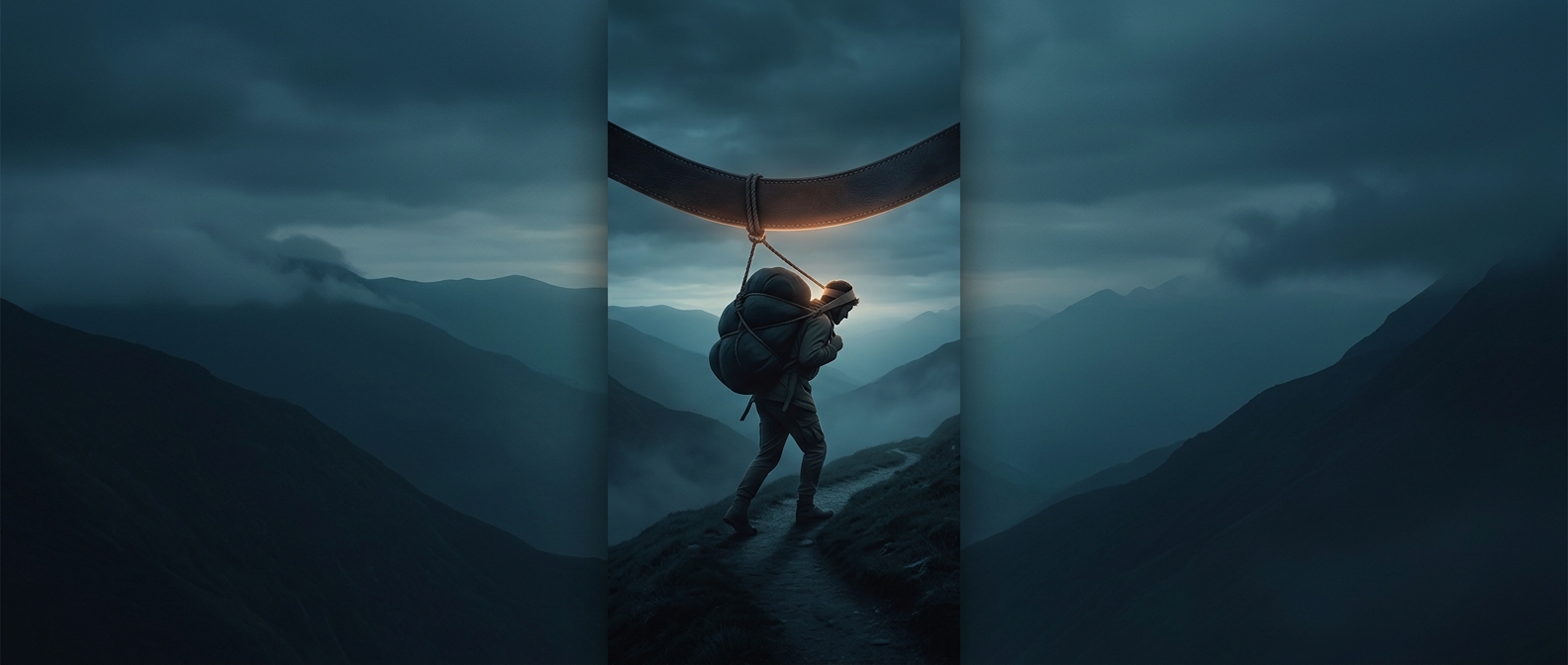
A tumpline is a broad strap that runs across the forehead and connects to a load carried behind the body. Instead of letting shoulder straps bear most of the pack’s pull, it routes that force through the head and upper back. The strap does not make the load lighter; it changes where the force is applied.
Because the pack sits behind the carrier, its weight tends to pull the torso backward. The carrier leans forward to counter that pull, keeping the combined weight of body and load balanced over the feet. The strap’s width helps spread pressure across the forehead rather than concentrating it in a thin cord.
Why That Helps on a Steep Trail
On uneven ground, free hands are useful: a carrier can steady themself, grasp a support, or manage other gear. A tumpline also avoids relying entirely on the shoulders, which can matter when a heavy load must be carried for a long stretch. Experienced carriers learn how to position the strap and adjust their posture so each step keeps the load from swinging or pulling them off balance.
The tradeoff is clear: the head and neck take forces that a conventional backpack’s shoulder straps would place elsewhere. A tumpline is not an effortless alternative, and it takes practice to carry a load comfortably and steadily. Its practical advantage is that it makes the hands available while turning the carrier’s forward-leaning posture into part of the support system.