A name built around the car
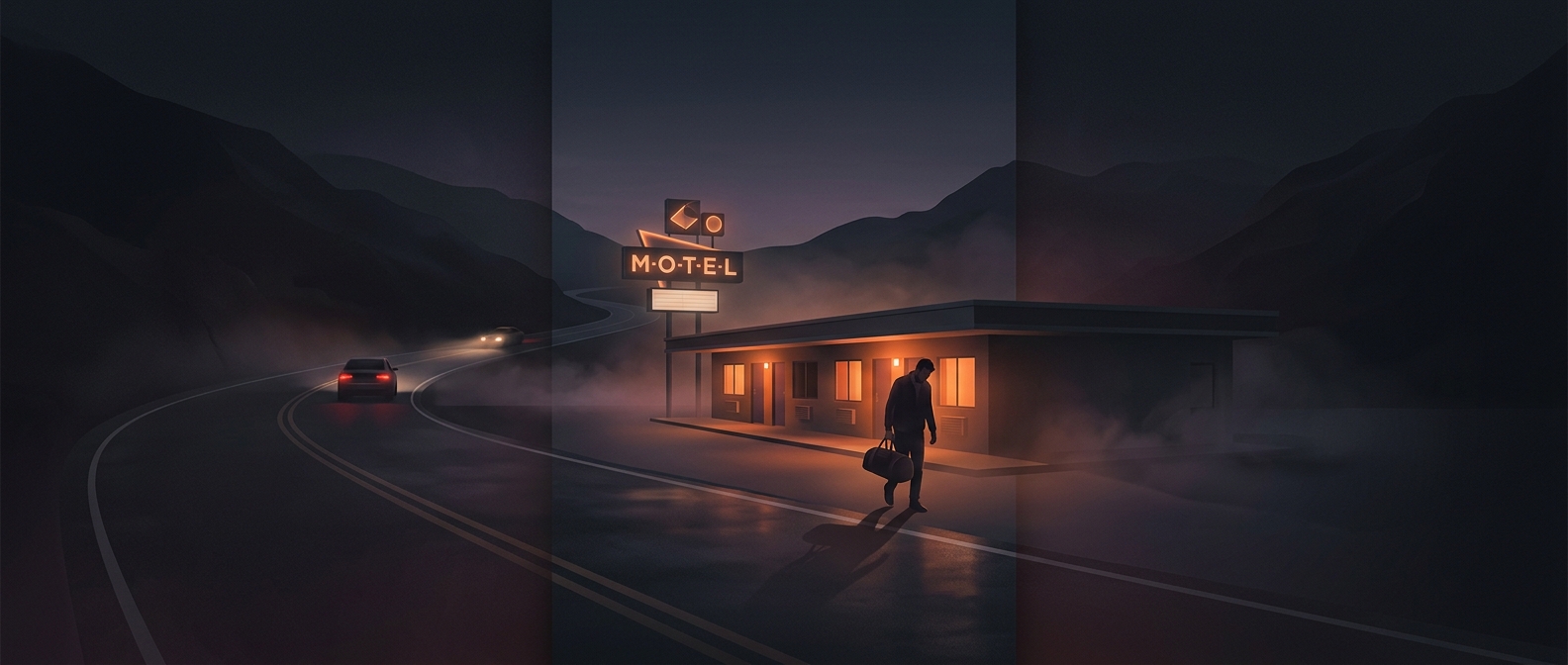
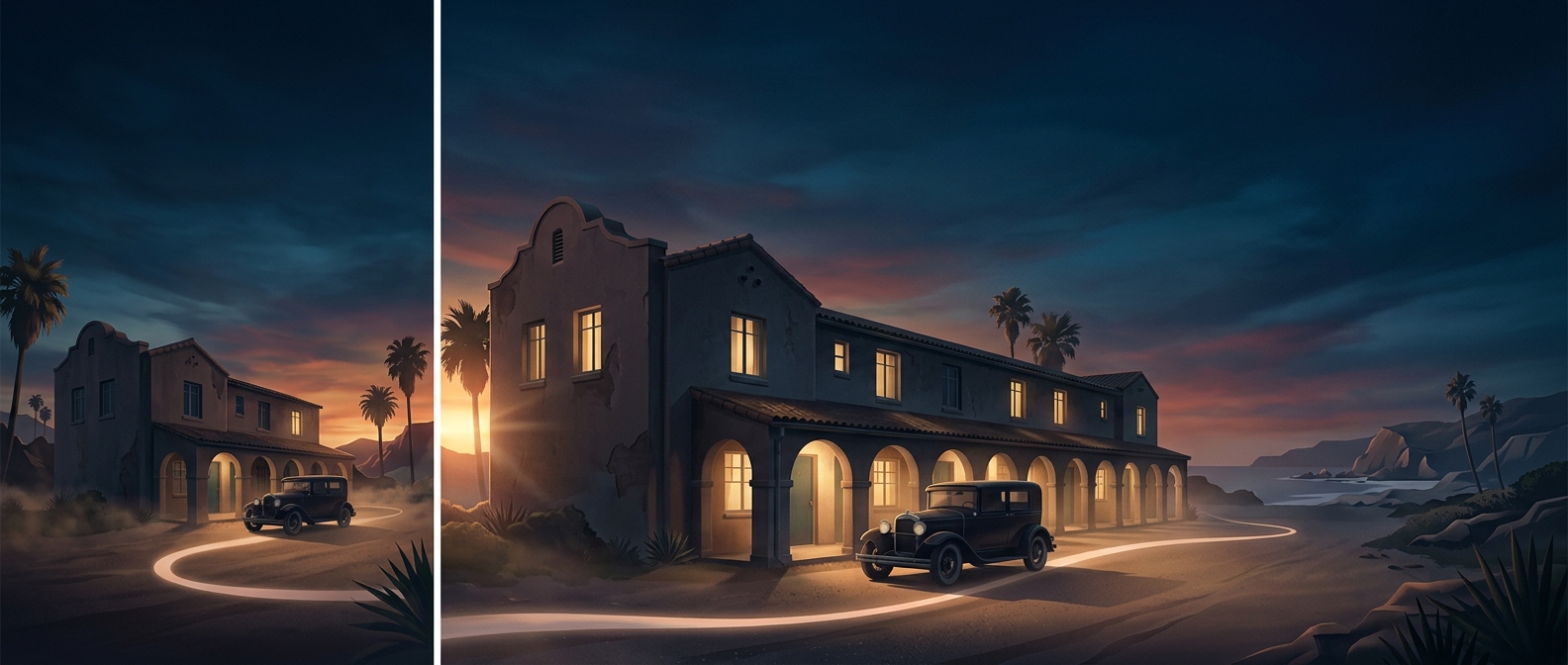
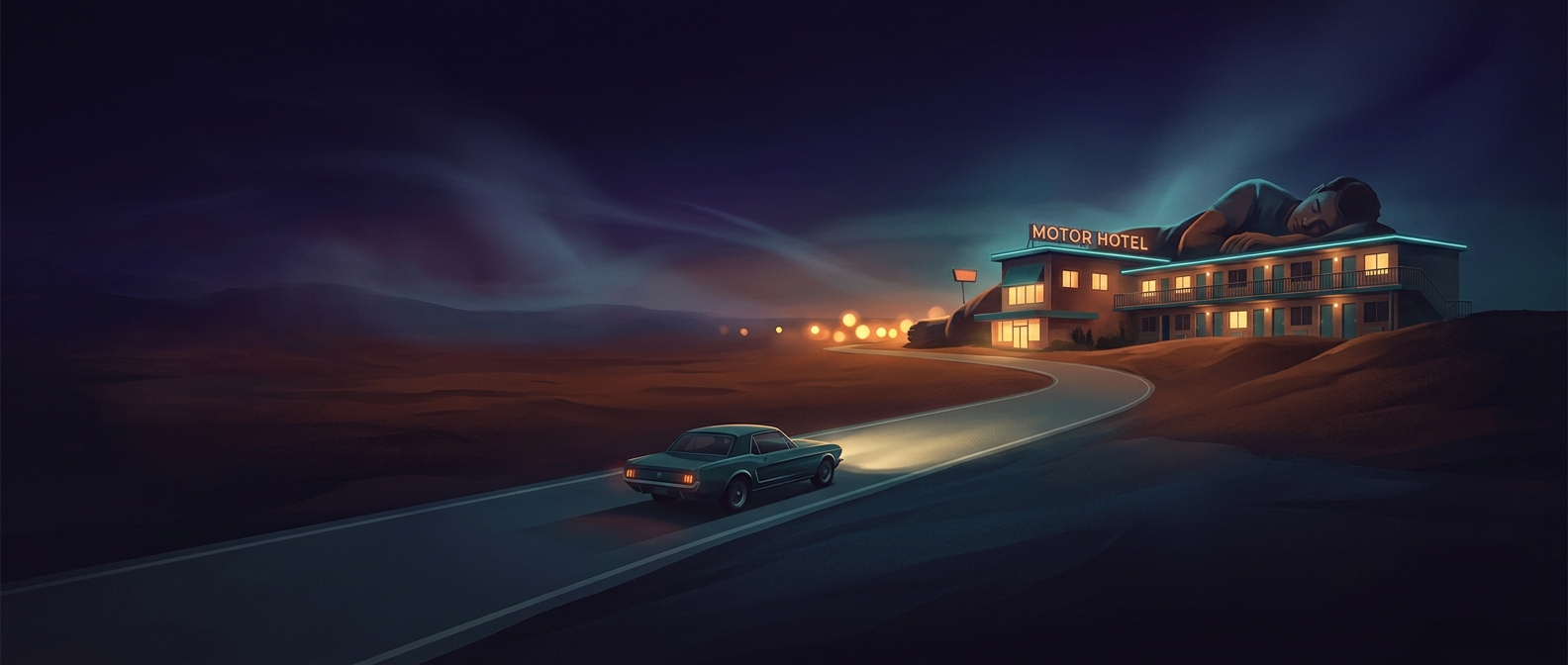
“Motel” did not begin as a casual abbreviation. In 1925, architect Arthur Heineman used “Mo-Tel” for the Milestone Mo-Tel, a roadside lodging property in San Luis Obispo, California. The compressed name joined “motor” and “hotel”—and captured a new kind of travel, in which guests arrived by car rather than by train or on foot.
Why the layout mattered
A traditional hotel often gathered guests around a central entrance, lobby, and corridors. Roadside inns could instead arrange rooms so travelers parked close by and reached their doors directly. That made it easier to unload luggage, come and go on a road trip, and stop for a night without navigating a large building.
The design and the name reinforced each other: “motor” described both the customer’s way of arriving and the practical link between car and room. As roadside lodging spread, “motel” became the everyday word for this form of accommodation. The original “Mo-Tel” was more than a catchy shortening; it labeled a building organized around the freedom—and the needs—of traveling by car.