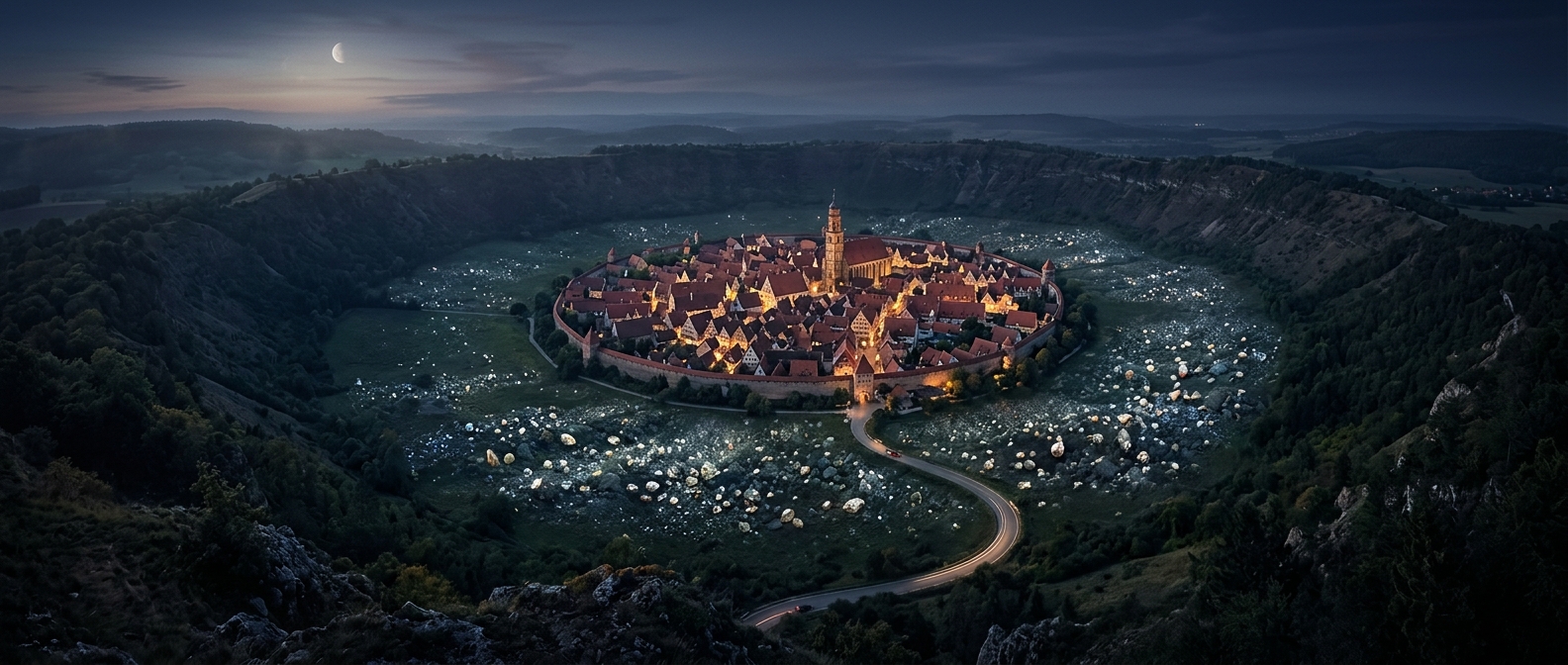
How an impact crater became building stone
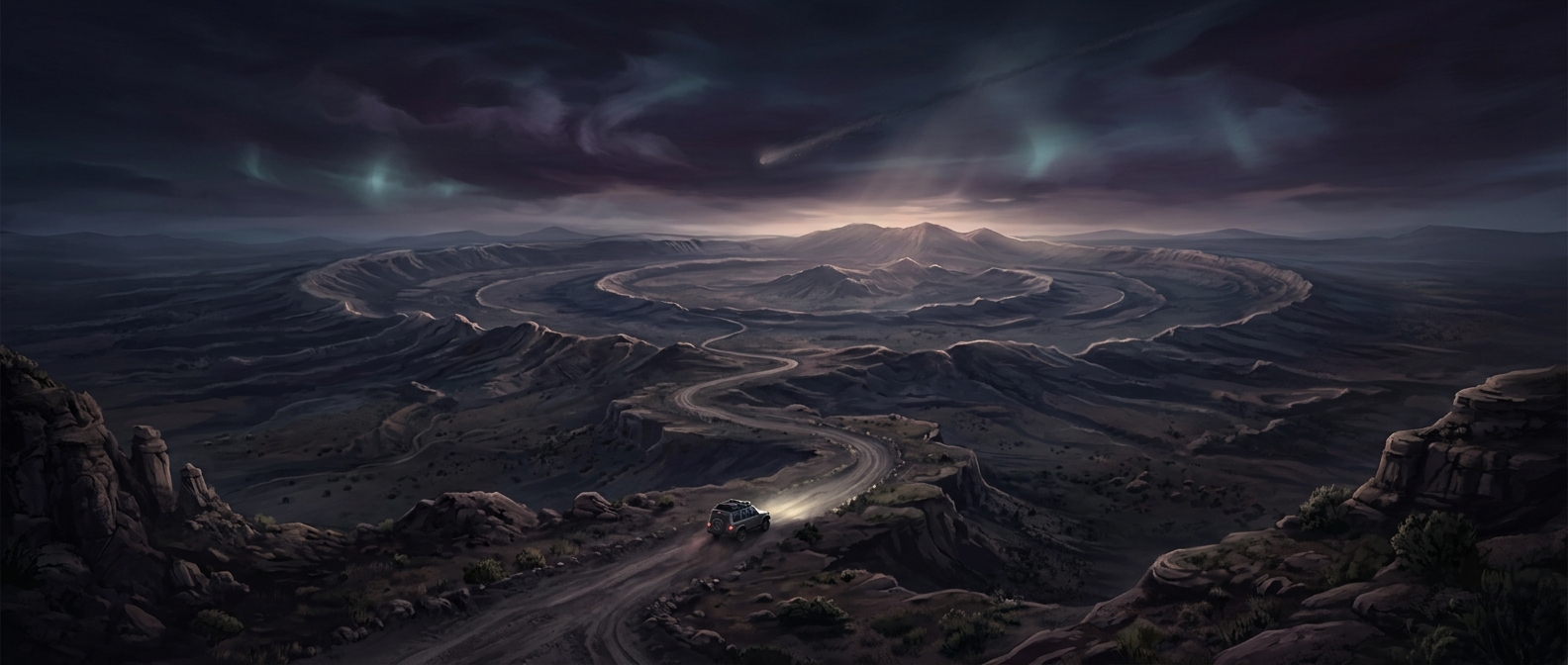
The rock beneath Nördlingen is part of the Ries impact structure, a broad crater left when an asteroid struck the region roughly 15 million years ago. The collision crushed and heated the ground so violently that it fused fragments of different rocks into suevite—a coarse stone made of broken rock embedded in a melted, glassy material.
As the shock wave passed through carbon-bearing rock, some graphite was transformed into tiny diamonds. These grains are far too small to see in a building wall, but they are preserved inside suevite quarried in the area.
The crater in the town’s walls
For centuries, suevite was a practical local construction material: it was available nearby and could be cut into blocks. Builders used it in Nördlingen’s houses and civic structures, including the walls that still encircle much of the old town. The stone’s importance here is less its sparkle than its origin: ordinary masonry carries fragments of a landscape reshaped by an impact.
The crater is also unusually legible in the surrounding countryside. Its rim forms a broad ring of higher ground around the town, while the central basin contains the settlement and nearby fields. From the streets, the crater’s scale is easy to miss; the stone underfoot is a more intimate record of the collision.
A geological souvenir, not a jewel
The diamonds in suevite are microscopic and dispersed through the rock, not gem-quality stones waiting to be found in the walls. Their significance is geological: they are evidence of the extreme pressure generated by the impact. In Nördlingen, that evidence ended up built into the fabric of daily life—one reason the town’s historic masonry is also a record of the force that made its setting.