The Story Is Built From Mismatched Pieces
In Consequences, each player contributes a fragment of a shared story, often by filling in a different prompt: a character, an action, a place, or a result. The prompts give the fragments enough structure to fit together on the page, but players do not coordinate their ideas. A choice that seems sensible on its own can become absurd when paired with someone else’s choice.
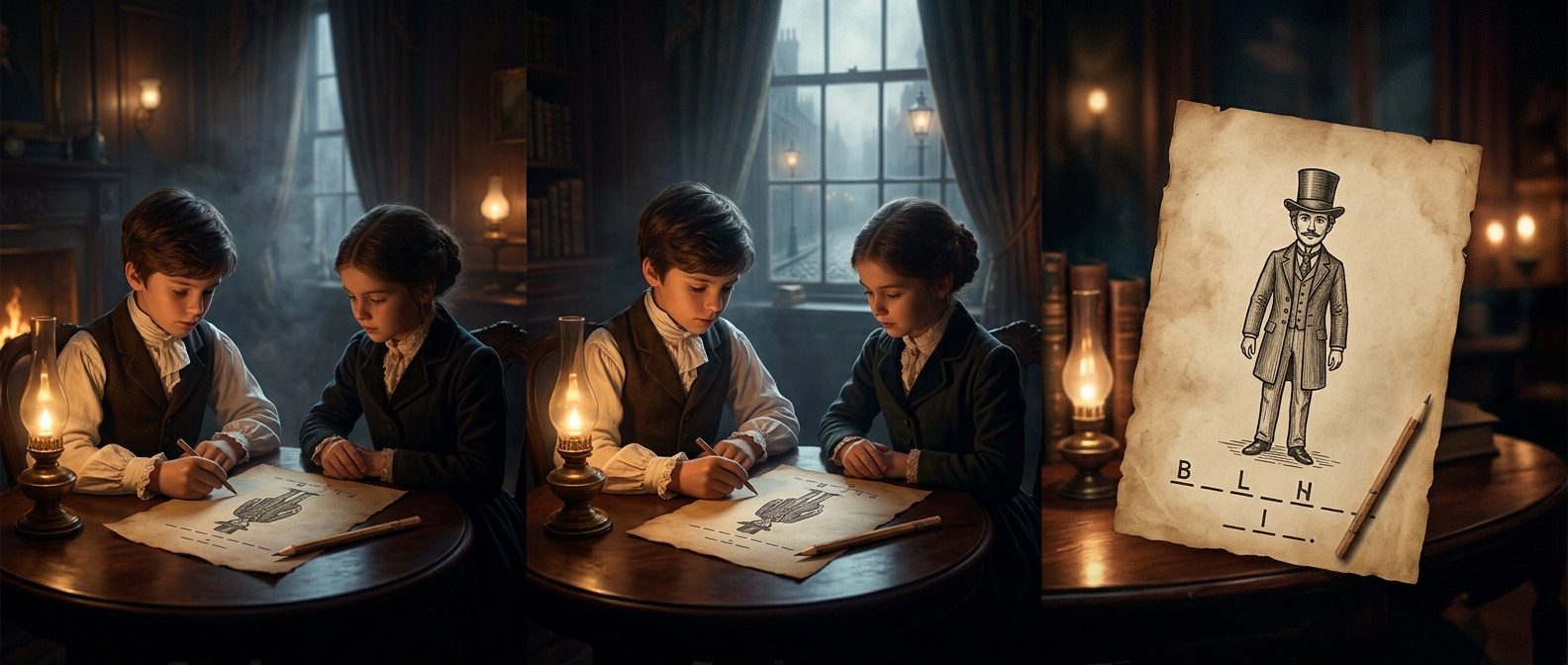
The paper works like a simple memory barrier. After writing a fragment, a player folds the sheet so the next person cannot read it, then passes it along. By the time the final entry is added, the story has been assembled without any player holding the full plot in mind.
The Reveal Is the Punchline
When the paper is unfolded and read aloud, the group discovers how the separate decisions collide. A character may end up in an unexpected situation, or a later action may make no sense in light of what came before. That gap between the story’s orderly prompts and its chaotic result is the game’s central joke.
The format also changes what counts as a good contribution. Players are not trying to write a polished story; they are supplying one small piece without knowing what it must connect to. The incoherence is not a failure of the game—it is the result the hidden handoffs are designed to produce.