Why a Trash Can Is Never Quite Far Away
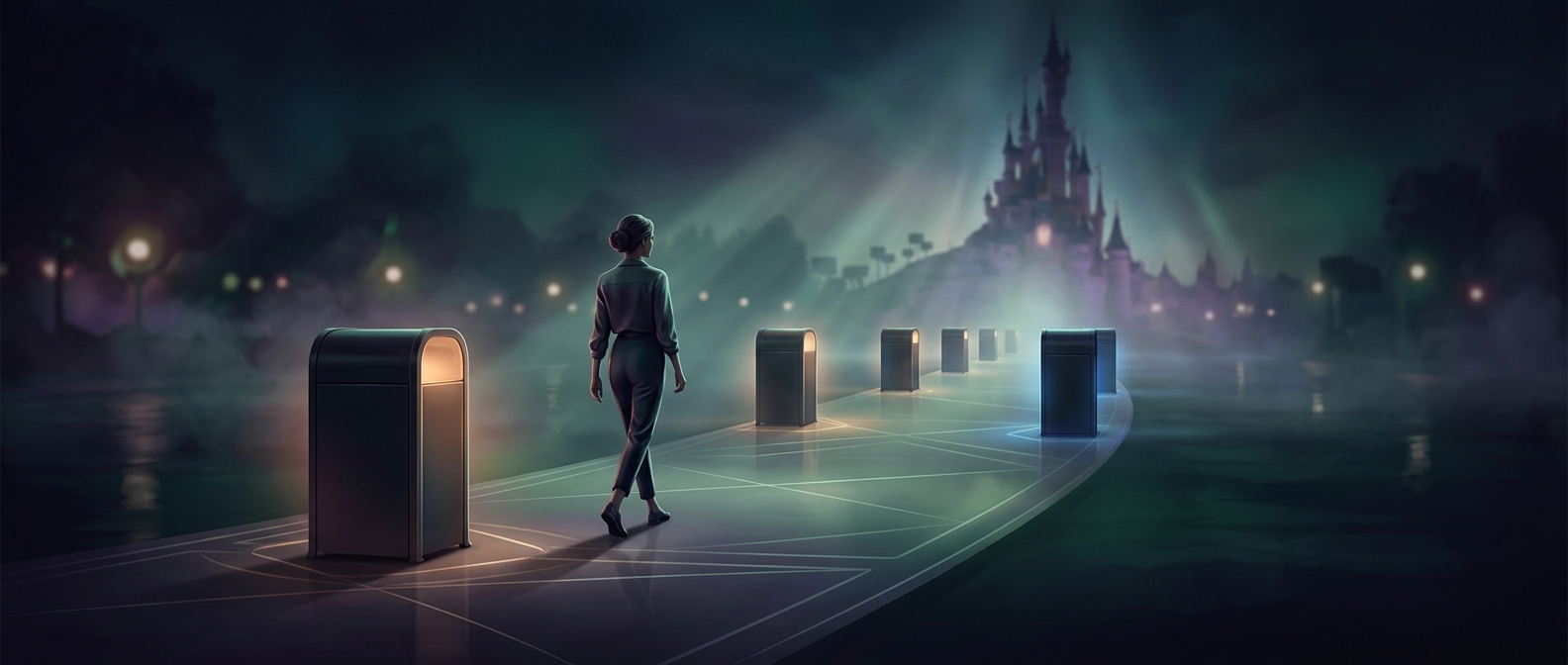
A clean park depends not only on how often staff empty bins, but also on whether guests can find one before litter becomes inconvenient to carry. Disney’s planners treated that as a placement problem: estimate how far visitors would typically walk before wanting to throw something away, then use that distance to guide where cans belong.
Designing Around a Visitor’s Routine
The useful distance is shaped by what people are doing. A guest carrying a snack wrapper may be willing to hold it briefly, but not for a long stretch through a crowded path. Near food stalls, seating areas, and other places where people finish eating, a bin placed along the natural route can catch that wrapper before the guest has to search for one.
That makes the park’s layout part of the calculation. Planners need to account for where guests pause, which paths they follow, and how long they spend in different areas—not simply space cans at equal intervals. The goal is to put disposal within easy reach without crowding every walkway with equipment.
Small Placement, Visible Consequence
A misplaced bin can be easy to overlook: too far from a busy spot, and a guest may carry rubbish onward or leave it behind; in the wrong place, it can obstruct movement. Thoughtful spacing helps keep paths clear and makes the park feel cared for, while also giving maintenance crews practical locations to service.
The deceptively simple question—how long will someone carry this before looking for a bin?—turns a mundane fixture into part of the visitor experience. A guest may never notice the planning, because the can is already there when they need it.