A Turnaround Is a Coordinated Handoff
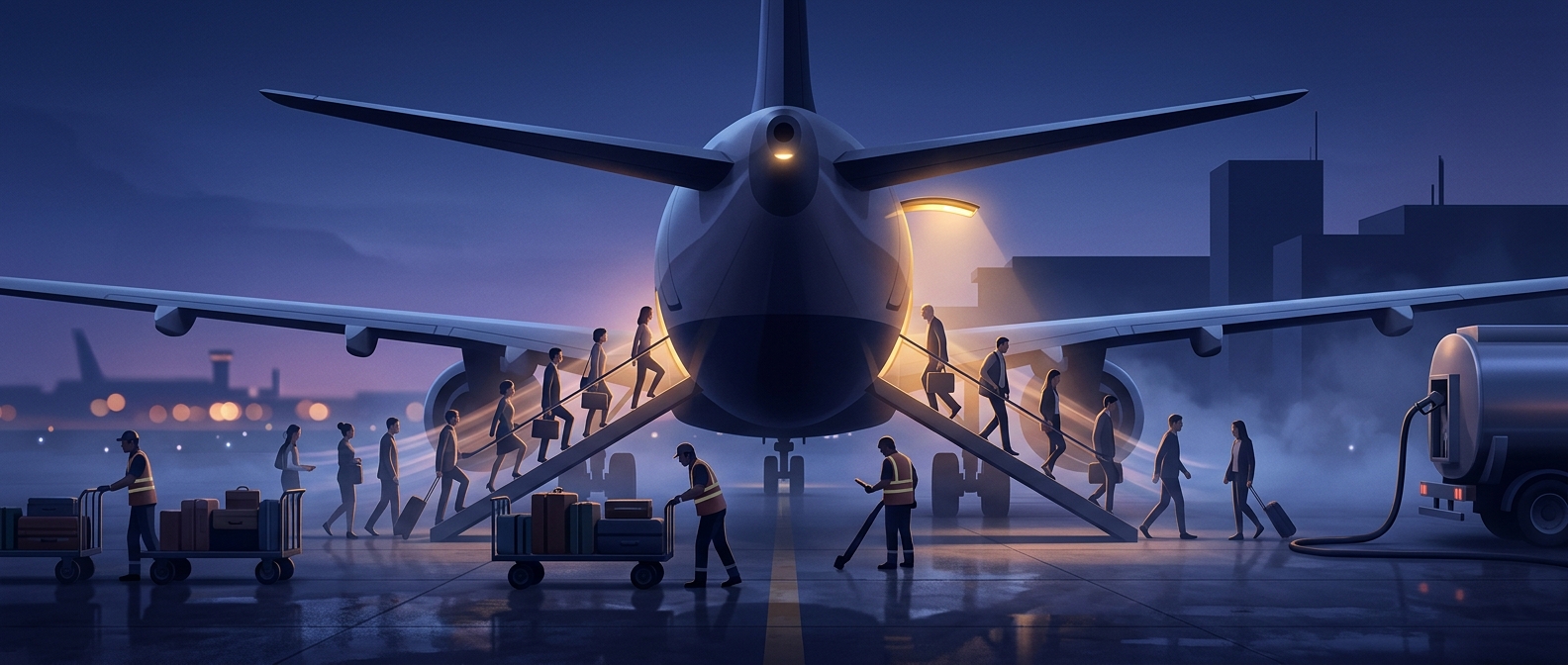
A quick aircraft turnaround works because the next flight is prepared while the previous one is being cleared. As passengers leave, ground staff can begin unloading bags and checking the cabin. Fueling, baggage handling, and passenger boarding are separate jobs, so some can happen at the same time rather than waiting in a single line. The airline’s schedule depends on those teams, the gate, and the aircraft all being ready together.
Small Delays Can Break the Sequence
The short interval leaves little room for a late-arriving plane, a slow baggage transfer, or a problem found during the cabin check. If one task blocks another—for example, boarding cannot proceed until the cabin is ready—the delay can ripple into the next flight. Airlines therefore rely on predictable procedures and quick communication, not on skipping required safety checks.
The tradeoff is less time for work that is not essential to dispatching the next flight. A rapid visual check can catch obvious mess or damage, but it is not the same as a deep clean. The schedule favors tasks needed to get the aircraft safely ready for departure; more extensive cleaning and maintenance may need to happen during a longer stop.
The Plane Is Only One Part of the Clock
A tight turnaround is as much a ground-operation challenge as a flying one. The aircraft may be ready, but the flight still cannot leave until passengers, bags, fuel, crew, and departure preparations are in place. That is why a delay in one seemingly small handoff can matter: there may be no spare minutes before the next departure.