How a storm outside the airport delays a flight
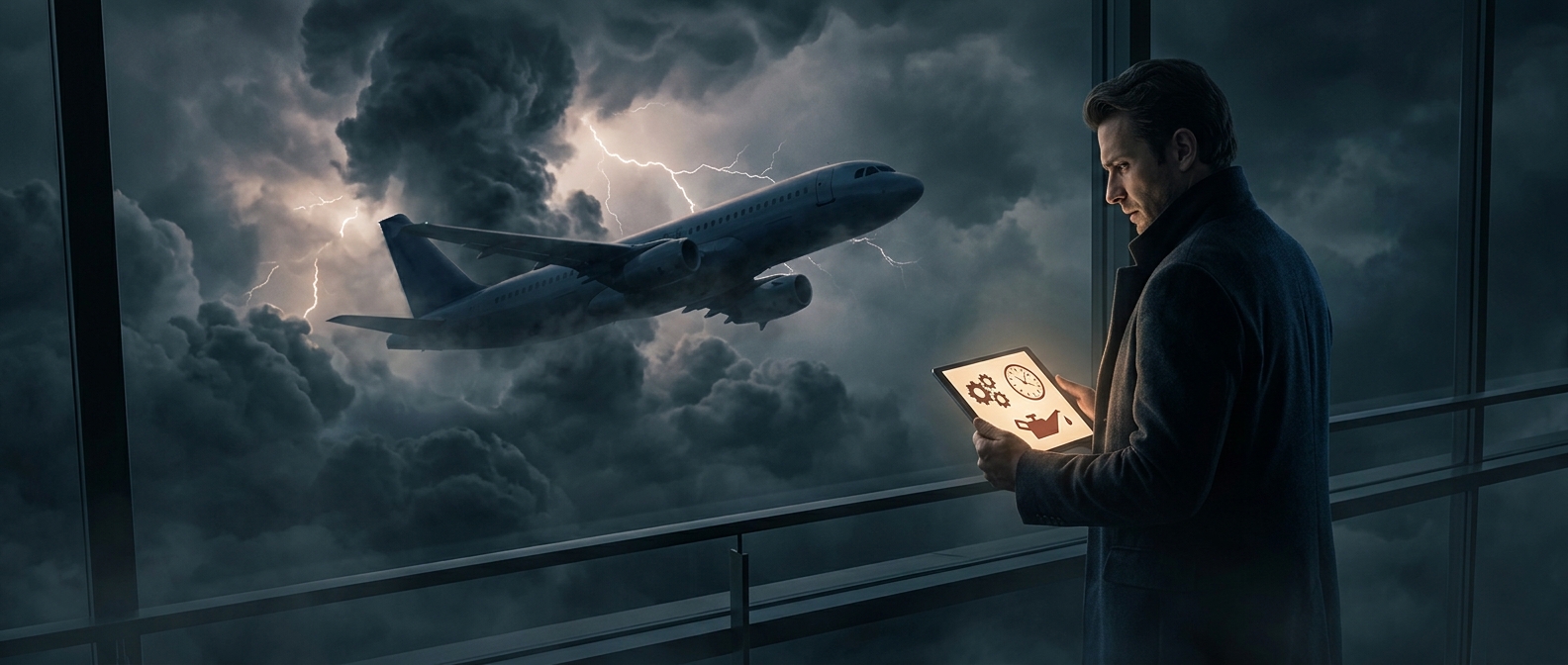
A flight can be ready to go while weather elsewhere is already constraining its route. Thunderstorms can make parts of the sky unsafe to cross, and heavy weather at a destination can reduce how many planes can land there. Air-traffic controllers may then hold departures, reroute aircraft, or space them farther apart. The airport on the departure board can look clear even as the wider airspace slows down.
Those restrictions also unsettle the schedule behind the flight. An incoming aircraft may arrive late, leaving less time for cleaning and boarding; its crew may be delayed as well. Because planes and crews serve multiple flights in sequence, one weather-related disruption can ripple to later departures after the storm has moved on.
Why the explanation may sound vague
“Operational issues” describes a problem with running the flight, not necessarily the original trigger. An airline may use that broad wording when the immediate issue is a late aircraft, a crew out of position, or a schedule adjustment caused by weather-related limits elsewhere. The phrase can also be less informative than naming the weather, but it does not by itself show that weather played no part.
A delay often has more than one link in its chain: a storm restricts a route, an aircraft arrives behind schedule, and the next flight cannot depart on time. The announcement may name the last link, while passengers want to know what started the chain. That gap is why a flight can be delayed by distant weather even when the airline’s explanation sounds like an internal operating problem.