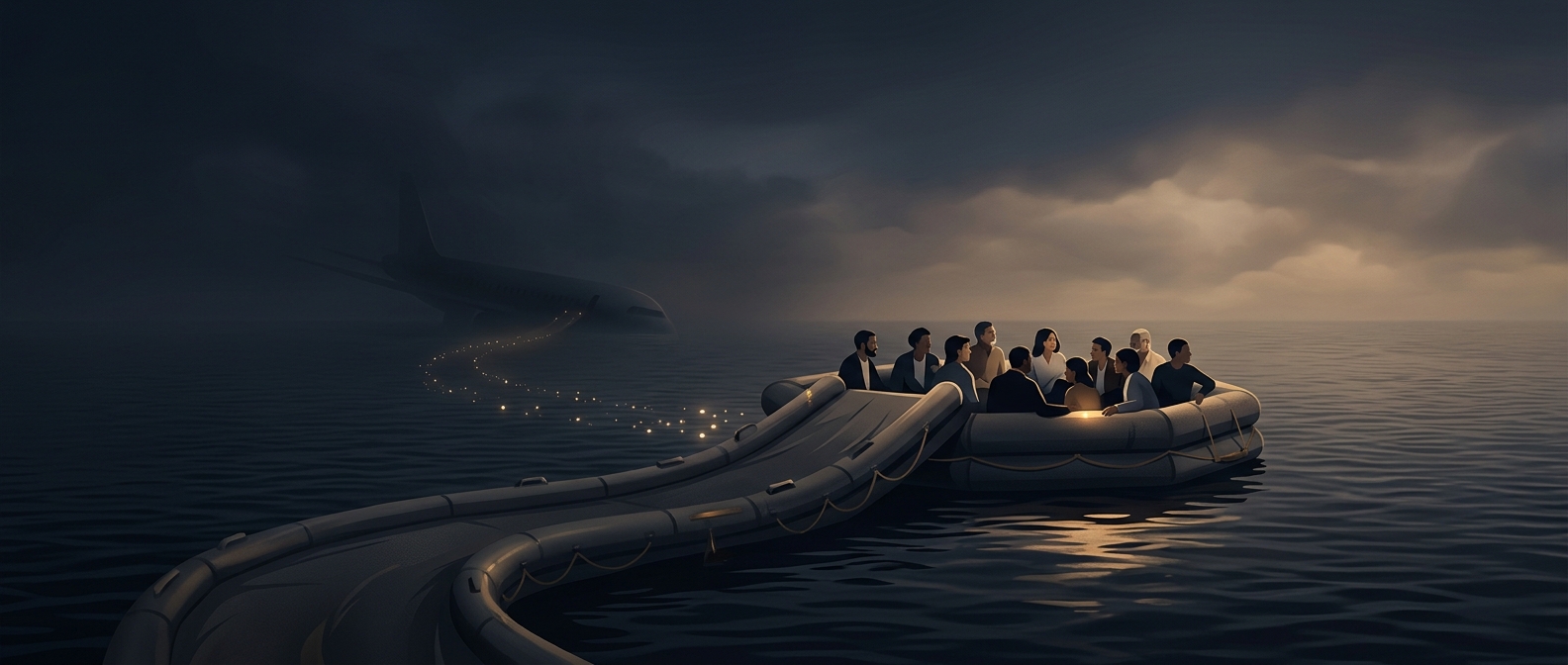
How an evacuation slide becomes a raft
On aircraft equipped with a slide-raft, the inflatable escape route has a second job: once it reaches the water, it can serve as a floating platform. The key is that it is designed to be detached from the airplane. A slide that remains connected could be dragged or damaged as the aircraft shifts, so crew procedures include releasing the raft when conditions call for it.
This dual use matters because an ocean evacuation does not end when passengers leave the cabin. People need somewhere stable to gather while they wait for rescue. A raft keeps them together and out of the water, where exposure and exhaustion can quickly become dangers.
From escape equipment to survival equipment
A slide-raft can carry supplies intended for the wait after evacuation, such as survival kits and flares. The kit can support basic needs, while a flare gives survivors a way to signal rescuers. Some rafts also have a canopy, which provides shelter from sun, wind, or spray.
The arrangement reflects a practical constraint: aircraft cannot carry a separate lifeboat for every emergency scenario without adding equipment and weight. A slide-raft combines two functions in one device—getting people out quickly, then giving them a place to stay. The same inflated structure that helps passengers escape the aircraft may become their first refuge after they reach the water.