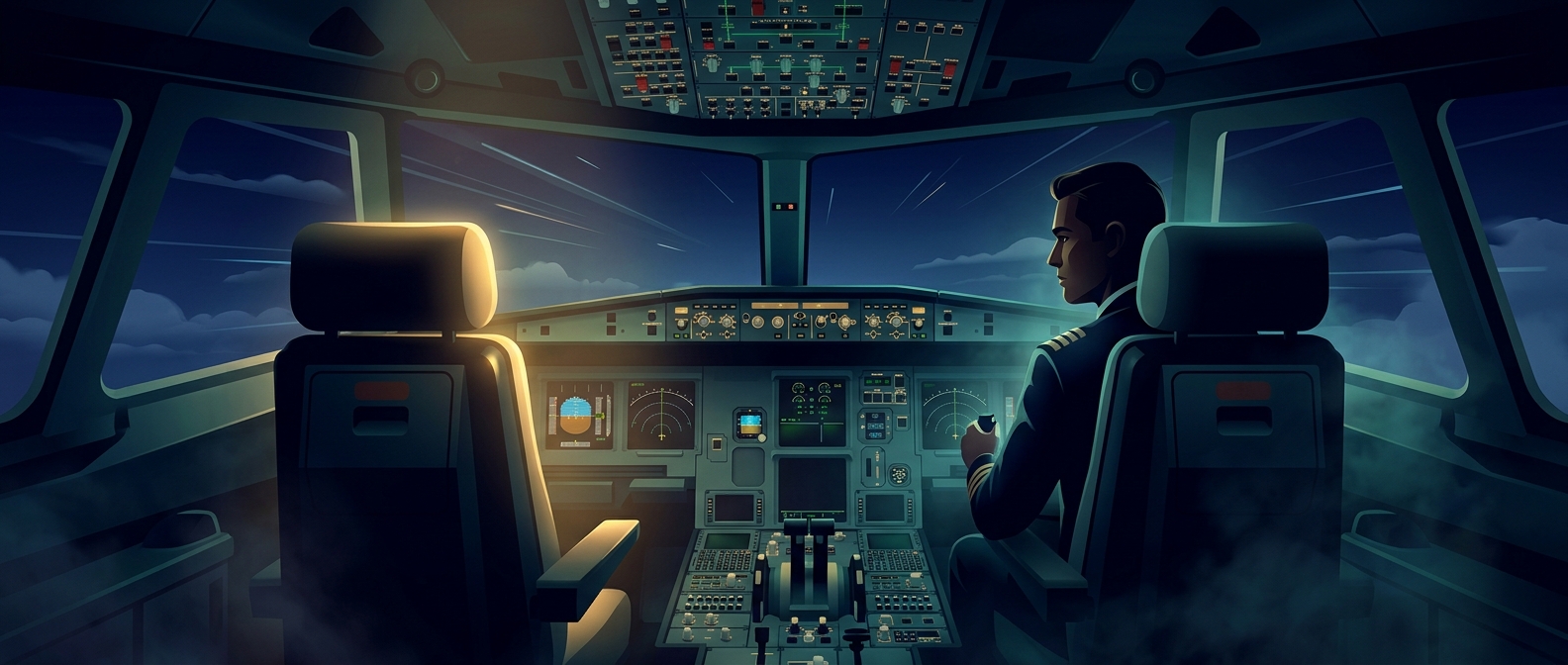
Two Pilots, One Set of Flying Skills
An airline cockpit is not arranged like a classroom, with the captain doing the real work and the first officer merely observing. Both are trained and licensed commercial pilots, and either can take control of the aircraft. The first officer—often called the co-pilot—is a working pilot, not a passenger-side assistant.
How the Work Is Shared
On a flight, one pilot is designated to fly while the other monitors the aircraft, handles communications, and checks that procedures are followed. The pilots may switch roles between legs of a trip, so the same person does not necessarily do every takeoff and landing. Sharing these tasks gives each pilot an active role while keeping a second trained professional focused on catching problems.
That division also explains why the person at the controls is not always the captain. A first officer may be flying while the captain monitors; on another leg, they may trade places. The arrangement is built around coordinated work, not a permanent hierarchy of “pilot” and “helper.”
What the Captain’s Responsibility Means
The captain still has ultimate authority and legal responsibility for the flight. That does not mean the captain must physically fly every moment. It means the captain is accountable for decisions about the aircraft and its operation, including when to change the plan or intervene.
In practical terms, passengers can see one pilot in command while both pilots contribute to getting the aircraft safely from departure to arrival. The captain’s responsibility is singular; the flying work is shared.