How Two Runways Keep a Global Hub Moving
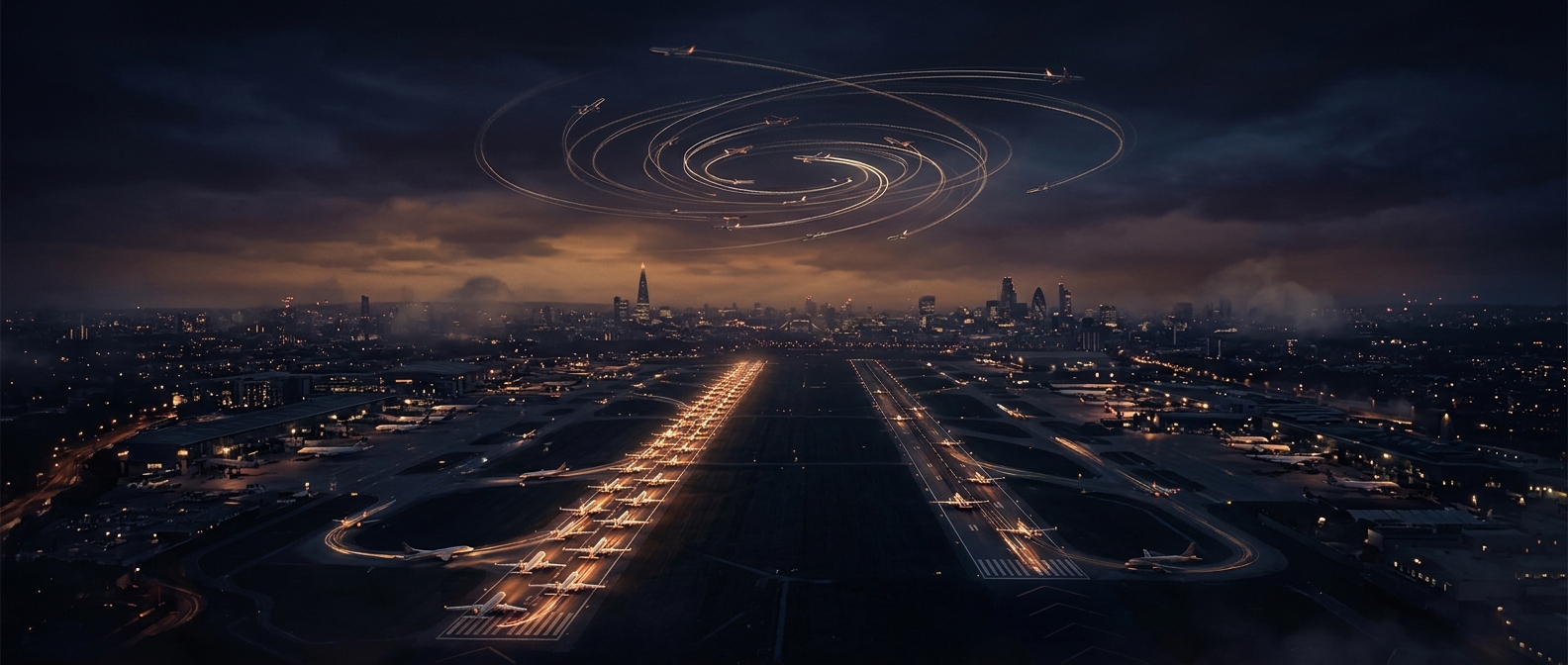
Heathrow’s two runways are parallel, so aircraft can use them at the same time. In busy periods, controllers generally dedicate one to arrivals and the other to departures. That division keeps landing aircraft from waiting behind planes that are preparing to take off, while allowing outbound flights to depart in an orderly stream.
The runways are not simply fixed as “arrival” and “departure” lanes all day. Their roles can switch, helping manage noise for nearby communities by changing which areas are under the flight paths. Each change has to be coordinated with air traffic control and the airport’s tightly timed schedule.
Why a Small Disruption Spreads
A runway is only one part of the system. Before an aircraft can use it, it needs a clear approach or departure path, and the right sequence of aircraft must be maintained. Weather, an aircraft that needs extra time, or a problem on the ground can slow that sequence. Because flights are scheduled closely together, even a brief pause can leave arriving aircraft waiting or push departures behind schedule.
The knock-on effects can travel beyond the airport. A delayed aircraft may be due to operate another flight later, and passengers connecting between flights can lose time too. Heathrow’s limited runway layout therefore makes coordination especially important: keeping traffic flowing depends on preventing small interruptions from becoming gaps in the whole schedule.