What changes when the reversers deploy
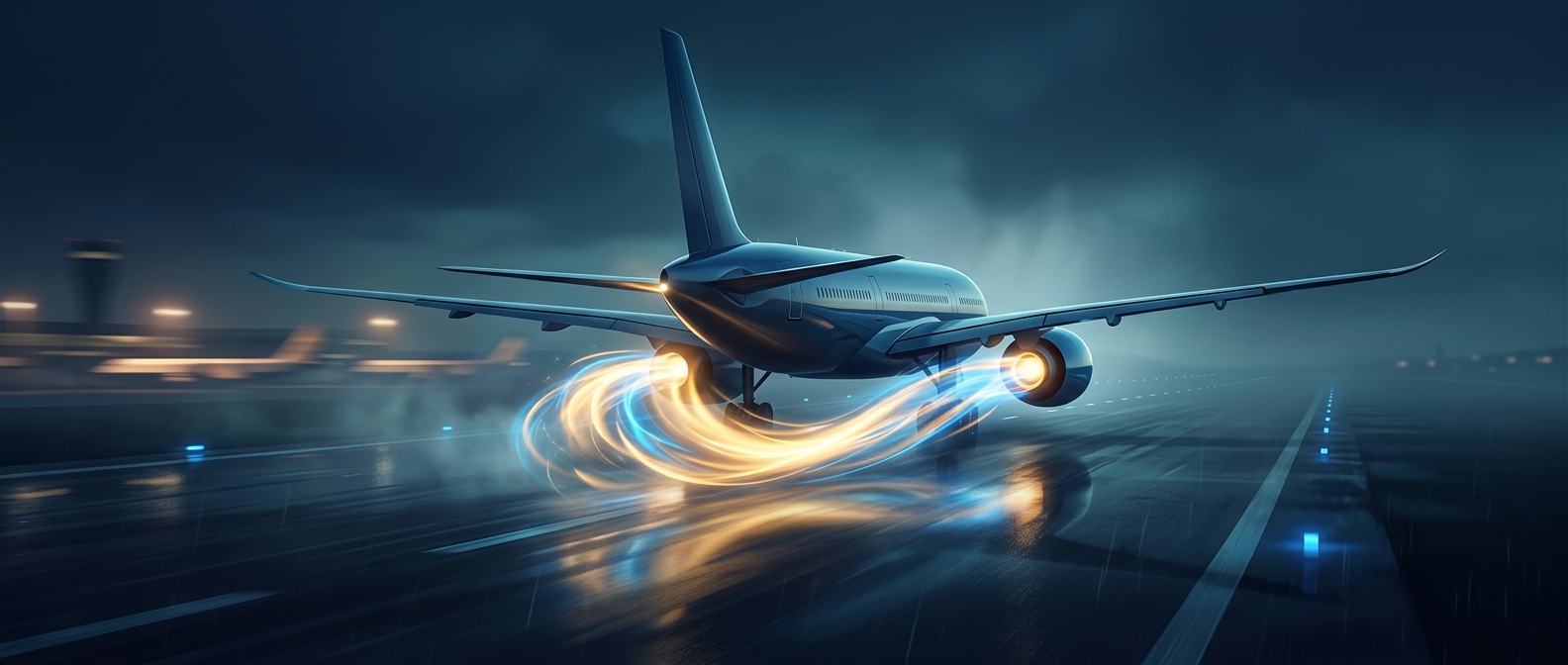
On many jetliners, the loudest part of the engine’s airflow normally exits toward the rear. After landing, movable panels or vanes can redirect some of that flow outward and forward. The exact hardware varies: on many modern high-bypass engines, the reverser redirects the large stream of air moved by the fan around the engine core, rather than turning the hot exhaust from the core itself.
That change makes the airflow turbulent and sends it in new directions, producing the sudden, rough roar passengers hear. The sound is especially noticeable because the engines are still running at substantial power while the aircraft is moving quickly.
Reverse thrust is one part of the slowdown
A landing is a coordinated braking job. The aircraft’s spoilers—the panels that rise on the wings after touchdown—help reduce lift and press the wheels more firmly onto the runway. Wheel brakes then do much of the routine stopping, while reverse thrust adds drag and can help slow the aircraft, particularly early in the rollout.
Pilots use reversers according to the aircraft and landing conditions; they are not a substitute for the wheel brakes, and their use can vary. Once the plane has slowed enough, the reversers are stowed and the engines return to their normal forward-flow configuration. The roar therefore comes in a brief, purposeful burst: the engines are being configured for the fastest, safest part of the rollout, not simply left at full power.