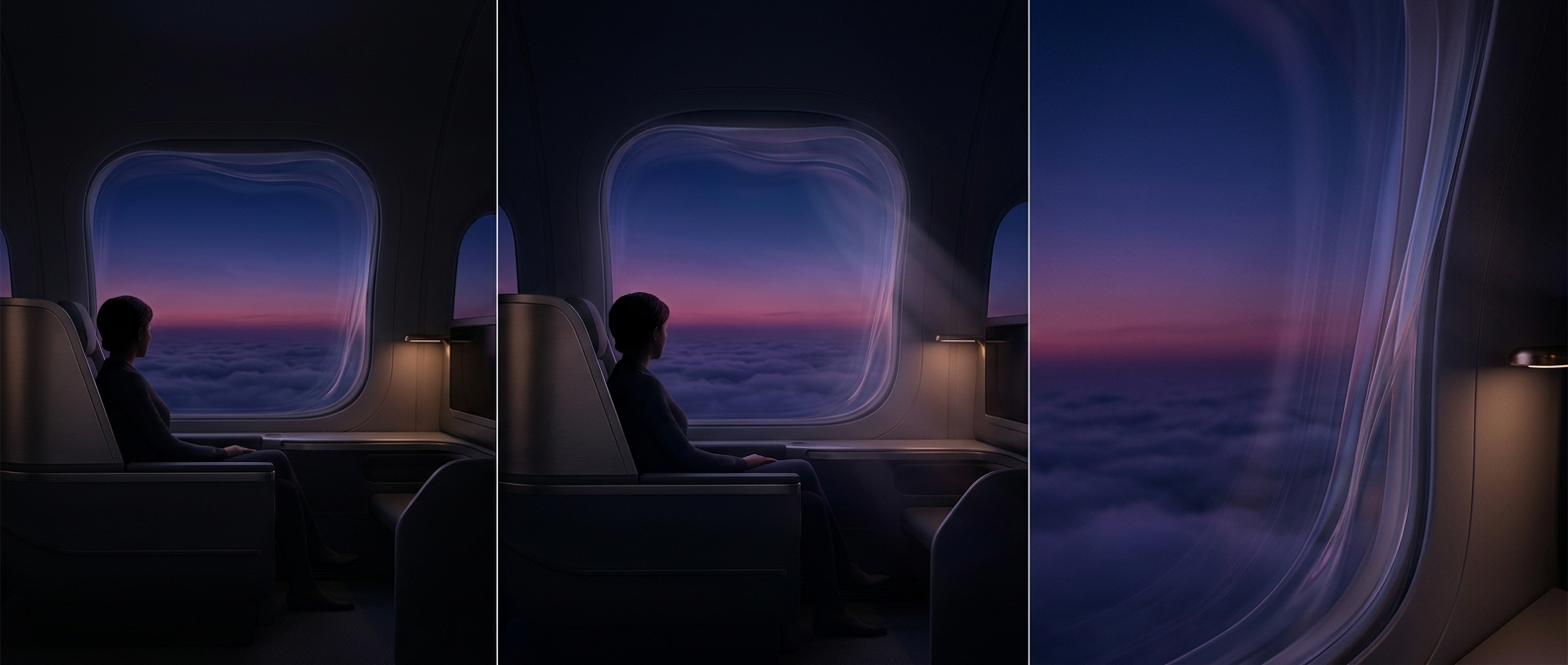
Why an Aircraft Window Has Layers
An airplane window is not a single pane holding back the sky. In a typical passenger cabin, several clear panels sit in a frame, each with a different job. The outer pane is the main pressure barrier; an inner pane protects it from scratches and from passengers’ hands. Acrylic—a transparent, lightweight plastic—is used because it can flex under changing loads instead of behaving like brittle glass.
That matters because cabin pressure is higher than the thin air outside at cruising altitude. The difference pushes outward on the windows and fuselage. A window must tolerate that repeated force as an aircraft climbs and descends, while adding as little weight as possible. Acrylic’s combination of low weight and toughness makes it useful for that demanding role.
The Small Hole Has a Job
Look closely at many cabin windows and you may notice a tiny hole in the inner pane. It is not a leak to the outside. It lets air move between the cabin and the space behind that pane, so the inner panel does not trap a pressure difference. The outer pane remains the primary barrier against outside pressure.
This layered design also means a passenger’s scratch or smudge is usually on the replaceable interior surface, not the structural pane. What looks like one simple window is really a lightweight pressure-bearing assembly: the plastic can give slightly under load, while the layers divide protection and maintenance duties.