A bow built for repeated impacts
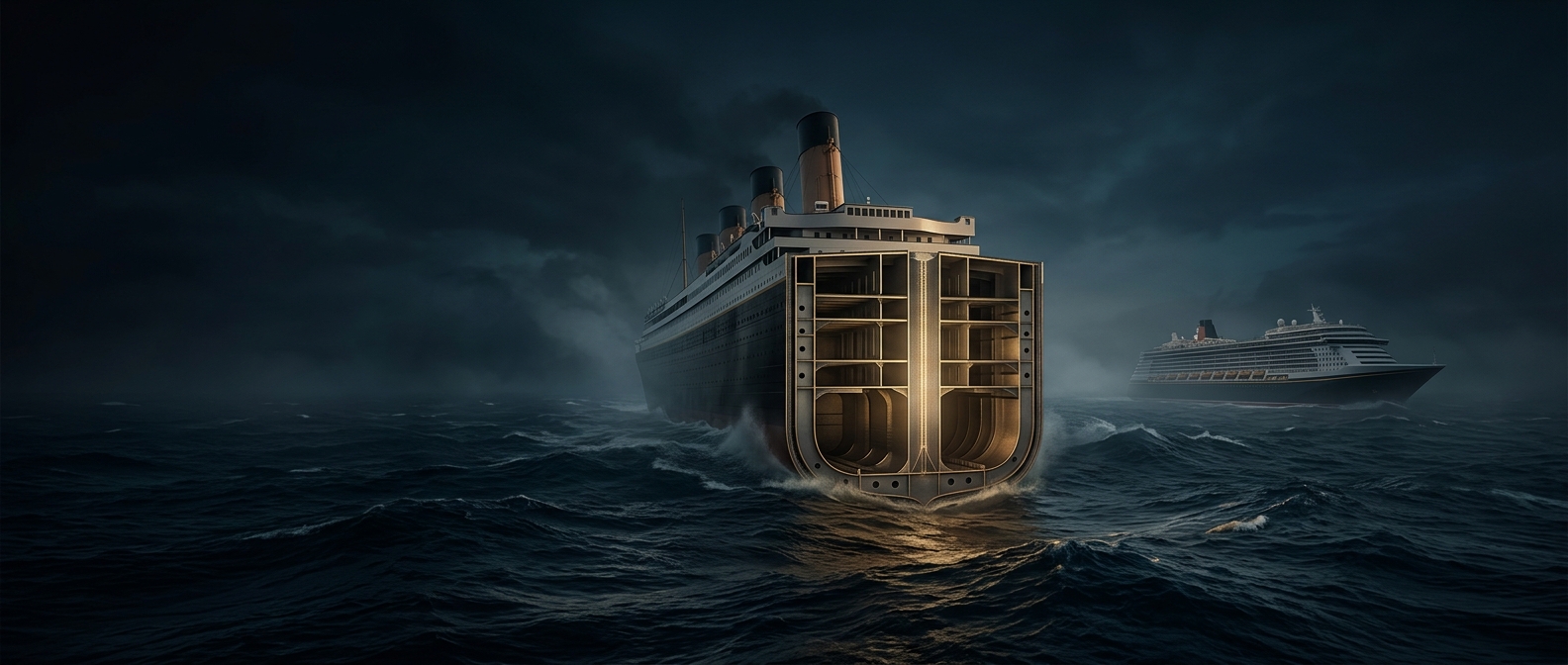
A ship crossing open ocean cannot choose to avoid every large wave. As it pitches, the bow may rise above the water and then meet the next wave with a hard impact, a force called slamming. The pressure is concentrated on the forward hull, where water can strike plates from outside while the ship’s weight and motion load the structure from within.
That is why a liner’s bow is more than a pointed shell. Steel plating is supported by closely spaced ribs and beams, which spread local impacts across a larger part of the hull. The forward compartments and bulkheads—the walls dividing the ship into sections—also help limit the consequences if damage does occur.
Strength has to work with the shape
The bow’s shape helps determine how it meets waves. A narrow, fine entry can part water efficiently, while the rising sides of a flared bow help lift the front of the ship and keep water from washing over it. Designers balance these features against the vessel’s size, speed, and expected conditions; a hull that is simply made heavier would carry extra weight everywhere, not just where it is most useful.
The “battering ram” comparison is therefore about structural toughness, not a blunt nose meant to smash through seas. Ocean liners are built for long passages in which wave impacts can recur for hours, so the bow and its supporting framework must withstand repeated stress—not just one dramatic encounter. That hidden reinforcement is what lets the ship keep moving after the sea has delivered the same blow again and again.