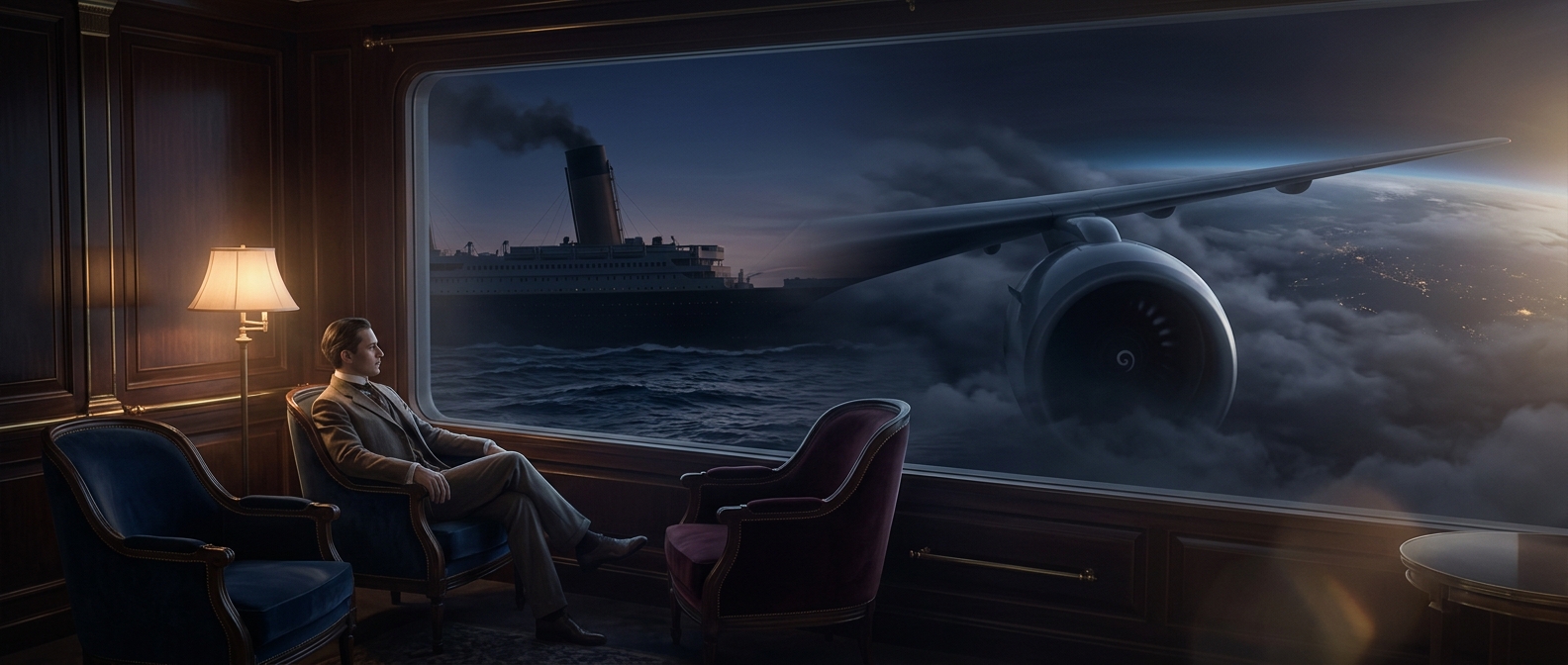
Why “first class” belonged to ships before aircraft
Long before passenger flights became practical, ocean liners carried people across continents—and divided them by what they could afford. A ship had to house everyone for days or weeks, so differences in ticket price could be built into the vessel itself. The best-paid passengers received private cabins and access to comfortable shared rooms; cheaper passengers were placed in more crowded, less private quarters, often lower in the ship.
That arrangement made class more than a label on a ticket. It shaped where travelers slept, ate, and spent their time. A first-class passenger’s journey could feel like a stay in a hotel, while people in lower-priced accommodations faced tighter space and fewer amenities.
How the idea carried into air travel
Airlines inherited the vocabulary of passenger travel, including “first class,” when they began selling different levels of comfort and service. But an airplane could not reproduce a ship’s elaborate separation of decks, cabins, and lounges: its cabin was far smaller, and every seat competed for limited space and weight. Airlines therefore expressed the same basic distinction through seat space, service, and access to preferred parts of the cabin.
The lasting connection is that first class began as a way to organize a long journey around unequal comfort—not as a particular kind of seat. On ships, the distinction could determine which world of the vessel a traveler inhabited.