A bell that failed its first test
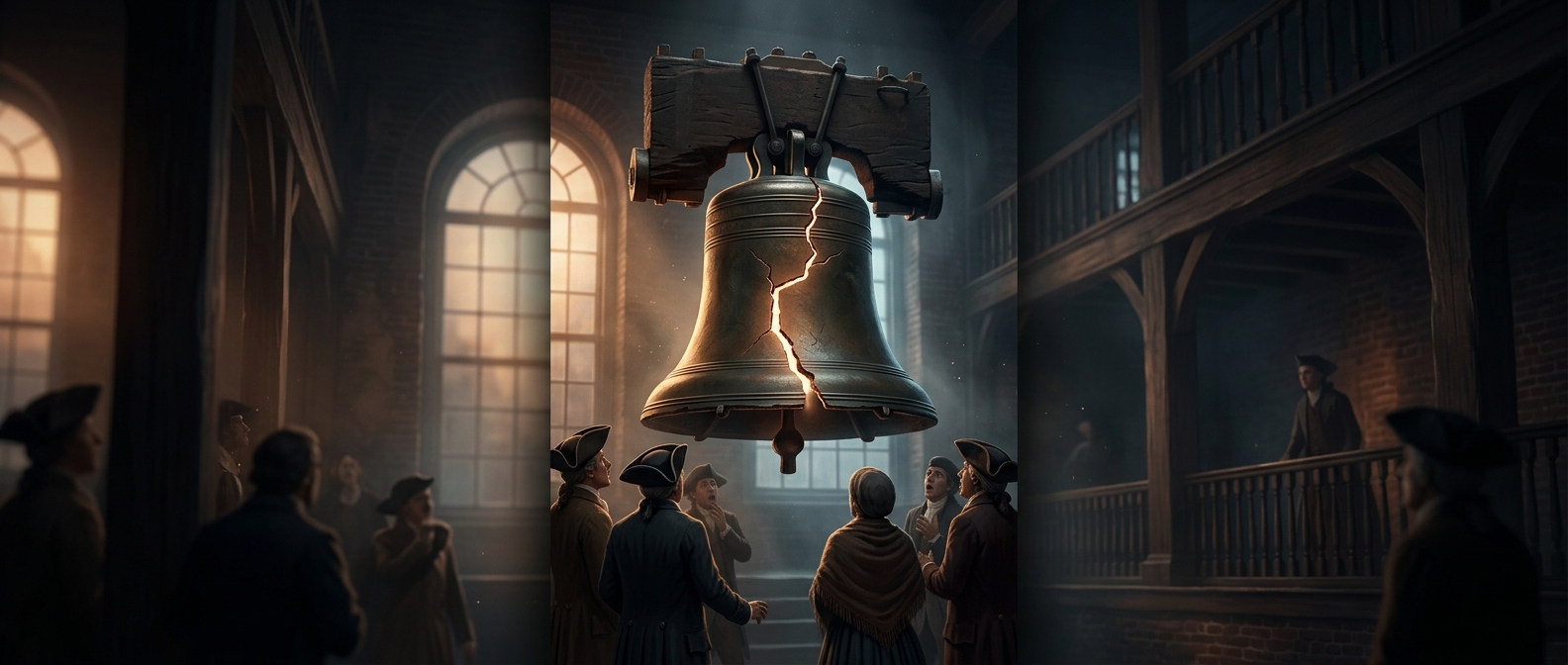
The Liberty Bell’s trouble began before it became a symbol. Its first casting—the process of pouring molten metal into a mold—was flawed. After the bell reached Philadelphia, it cracked soon after it was first rung. A crack in a bell is more than a visible break: it disrupts the metal’s vibration, changing the sound and weakening the structure.
Why the repair meant starting over
A bell has to vibrate as a single, carefully shaped piece to produce its characteristic tone. Rather than simply patch the damaged spot, local founders John Pass and John Stow melted the bell down and cast it again. That attempt did not settle the matter; the founders recast it once more, adjusting the metal mixture in hopes of making a bell that would sound and hold up better.
Each recasting was a fresh gamble. The metal had to flow into the mold evenly and cool into the right shape; flaws in the casting could leave weak points that might crack under the shock of ringing. The familiar bell in Philadelphia, then, was not a flawless object rescued by one quick repair. It was the result of repeated local efforts to make a failed casting usable—and its early damage became part of the history visitors encounter at Independence Hall.