When a lighting experiment became a souvenir
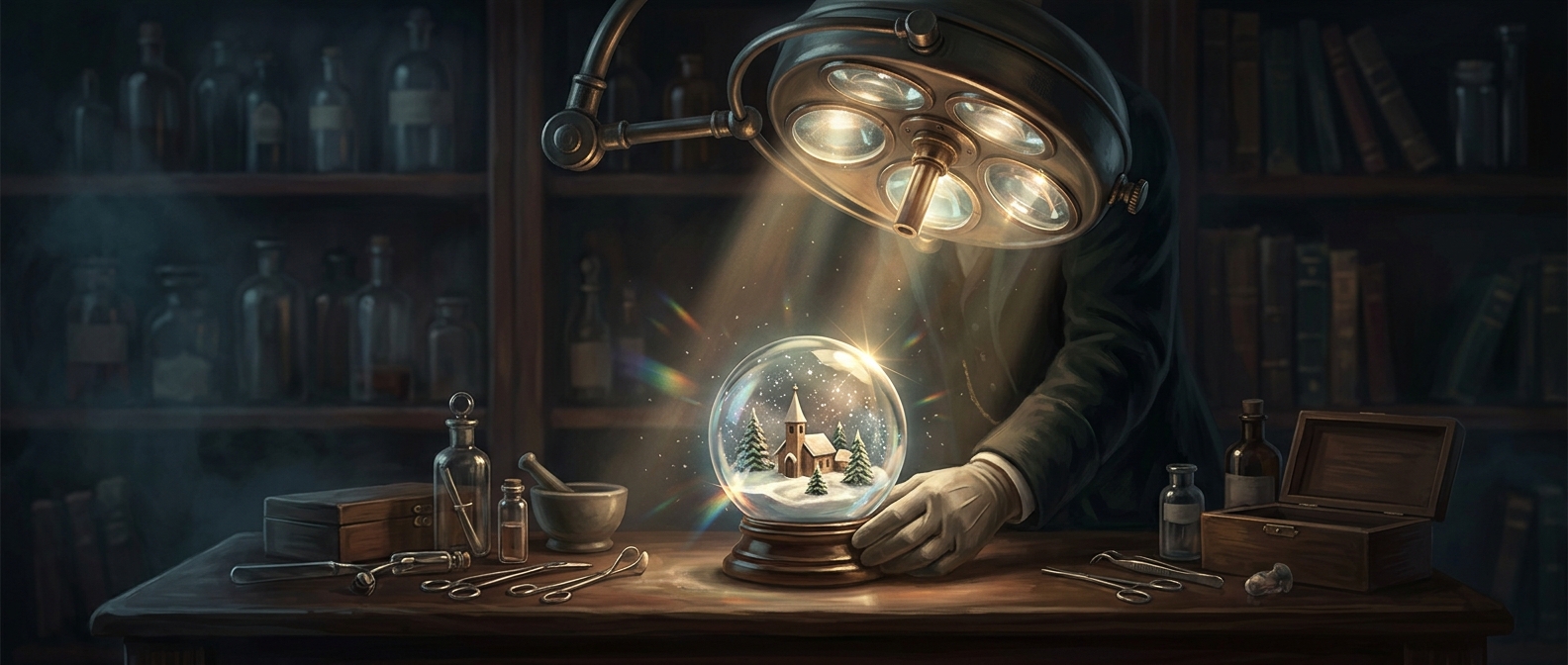
Erwin Perzy, a Viennese instrument maker, was trying to improve surgical lighting—not invent a keepsake. While experimenting with a water-filled glass globe, he added particles to reflect and scatter light. Instead of making the view clearer, the particles drifted slowly through the water, creating the effect of falling snow.
That unintended motion changed the object’s purpose. A device meant to help someone see had become something pleasant to watch. The globe’s appeal lay not in what it illuminated, but in the small, self-contained scene unfolding inside it.
A miniature scene that travels
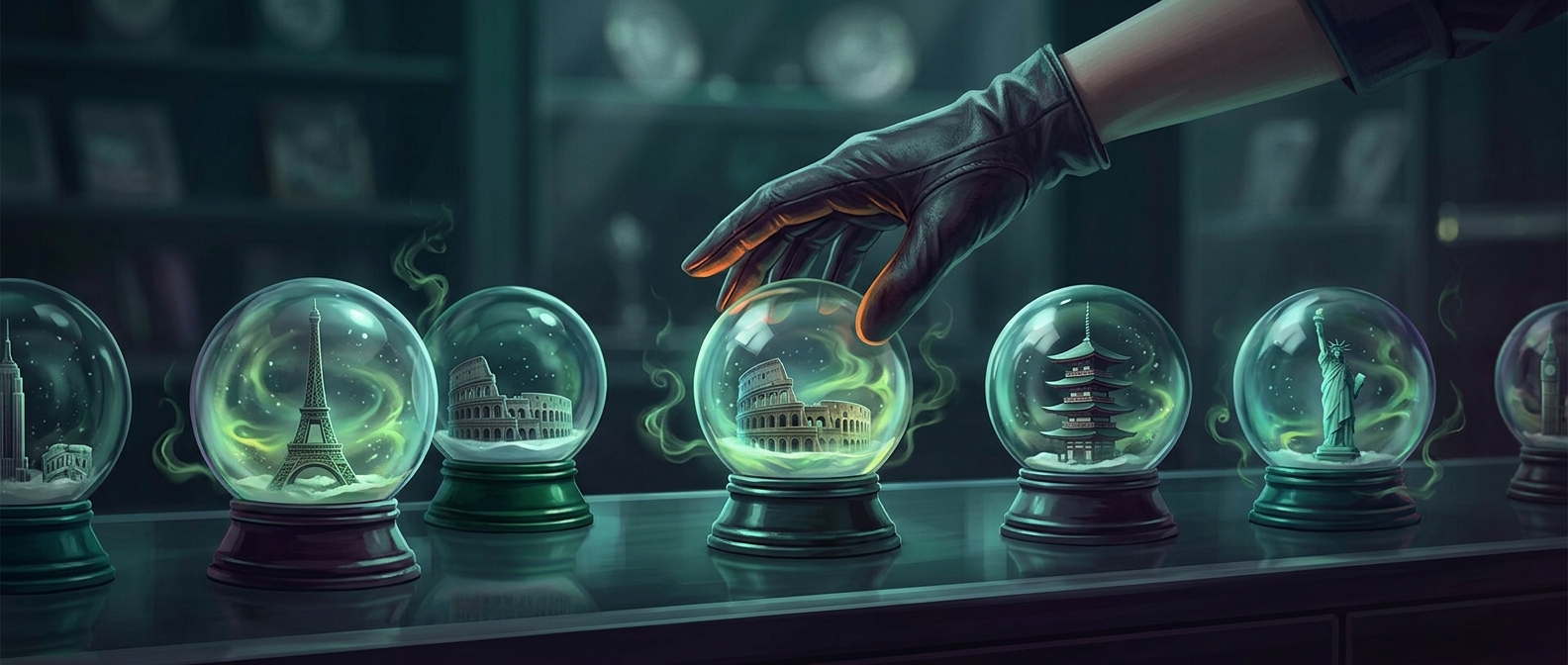
The snow globe turns a fleeting effect into a portable display: shake it, and the particles rise; wait, and they settle again. That simple cycle gives the object a beginning and an end, so even a tiny scene can feel animated. Its glass shell also makes the scene easy to carry and show, qualities that suit a souvenir.
The shift from instrument-making to gift-making is the telling part of Perzy’s experiment. The particles did not solve the problem he had set out to address. They revealed a different kind of value: an effect people might enjoy for its own sake. A failed attempt to improve visibility thus pointed toward a product built around watching.