Why a souvenir penny is different from a counterfeit coin
The key legal distinction is fraudulent intent, not whether a coin has been changed. Federal law targets people who alter coins with intent to defraud—for example, to make them pass as something more valuable. A tourist who feeds a penny into a souvenir machine is making an obvious keepsake, not trying to fool anyone about its value.
So the machine is not really exploiting a blanket ban on altering money. It is producing a visibly transformed souvenir in circumstances that do not involve fraud.
How the machine makes the medallion
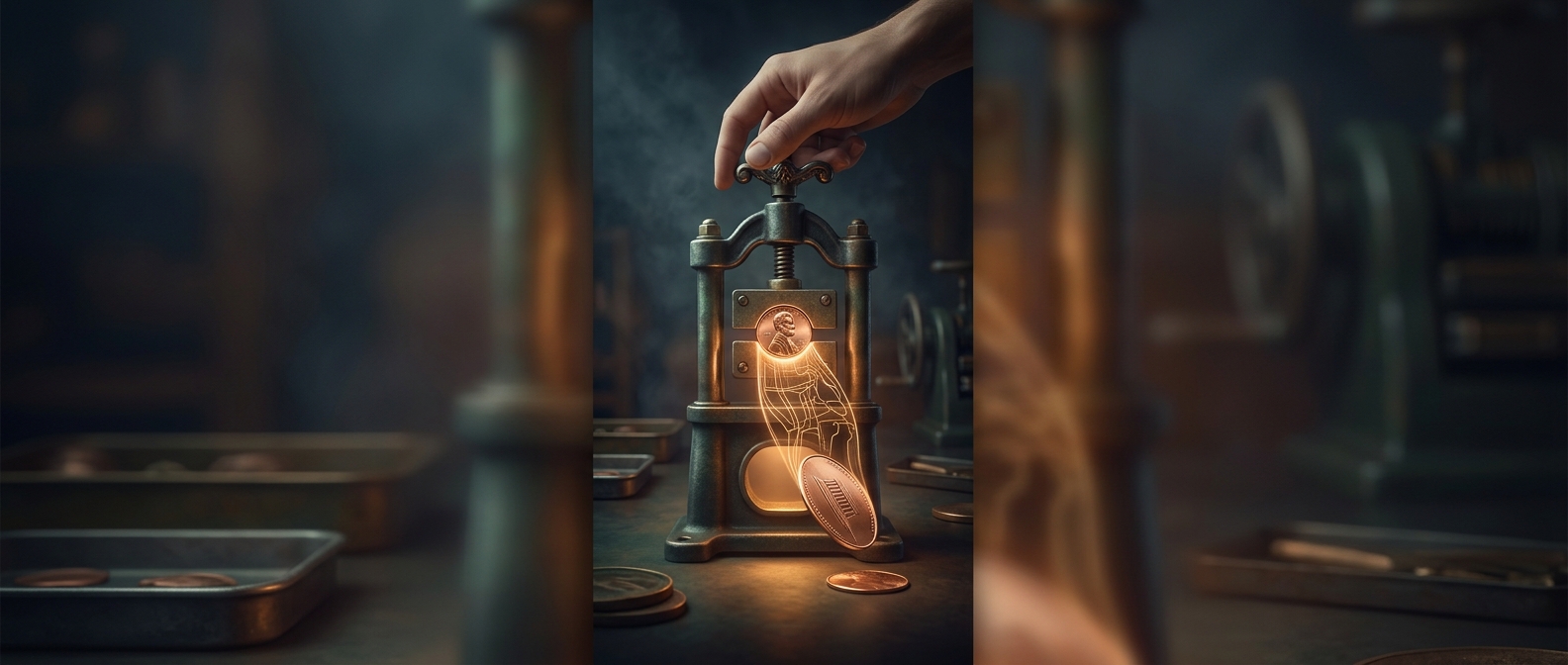
Inside a traditional crank-operated machine, the penny is pressed between hard rollers. As the user turns the handle, the rollers flatten and stretch the coin while forcing it against a raised design. That design leaves a shallow impression in the metal, often a landmark, animal, or local emblem.
The penny comes out longer and thinner, with the new image plainly visible. That obvious change is part of what makes the souvenir work: it is no longer likely to be mistaken for an ordinary penny, much less a more valuable coin. At a landmark, the machine turns a small piece of pocket change into a memento stamped with where it was made.